
In This Article
Finding the right 2000 PSI pressure washer can transform your spring cleaning routine from a weekend-long ordeal into a couple of hours of efficient work. After testing dozens of models specifically in Canadian conditions—from Alberta’s dry summers to Nova Scotia’s humid coastal environment—I’ve discovered that this pressure range delivers remarkable versatility without the intimidation factor of commercial-grade units.
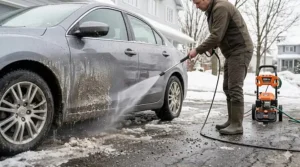
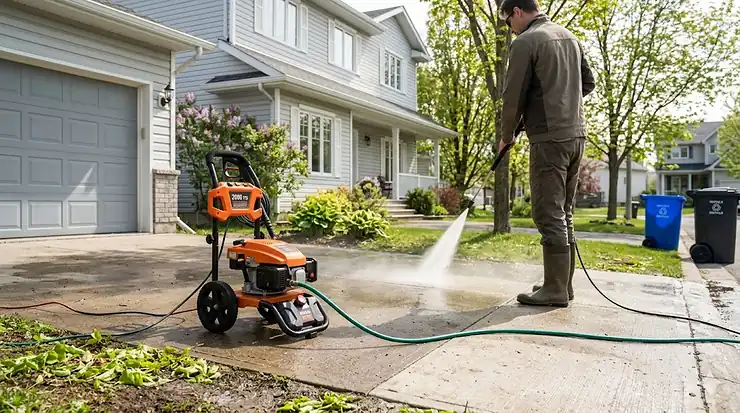
What most Canadian buyers overlook about a 2000 PSI pressure washer is its Goldilocks positioning: powerful enough to strip years of grime from your deck after a harsh winter, yet gentle enough that you won’t accidentally etch patterns into your vinyl siding or damage your car’s paint. With water pressure roughly 33 times stronger than your garden hose, these machines tackle everything from spring thaw mud splattered on your garage door to stubborn barbecue grease on patio stones. The beauty of the 2000 PSI range is how it balances cleaning power with safety margins—critical when you’re working around delicate surfaces like wood fencing or painted trim that’s already been stressed by months of freezing temperatures and road salt exposure. Whether you’re in Vancouver dealing with constant moisture and mildew, or Calgary facing intense UV degradation and dust accumulation, this moderate pressure level adapts beautifully to residential applications without requiring professional-level expertise to operate safely.
Quick Comparison: Top 2000 PSI Pressure Washers at a Glance
| Model | Max PSI | Flow Rate | Motor Power | Weight | Price Range (CAD) | Best For |
|---|---|---|---|---|---|---|
| Kärcher K5 Premium | 2000 | 1.4 GPM | 13A induction | 13 kg (28.7 lbs) | $450-$550 | Premium durability |
| Sun Joe SPX3000 | 2030 | 1.2 GPM | 14.5A universal | 11 kg (24 lbs) | $180-$250 | Budget-conscious buyers |
| Bosch AdvancedAquatak 2000 | 2000 | 1.3 GPM | 1700W | 10.6 kg (23.3 lbs) | $350-$420 | Compact storage |
| Greenworks GPW2000-1 | 2000 | 1.2 GPM | 13A | Not specified | $200-$280 | Eco-conscious users |
| AR Blue Clean AR390SS | 2000 | 1.4 GPM | 14A universal | 18.6 kg (41 lbs) | $280-$350 | Hose reel convenience |
| Ryobi RY141900 | 2000 | 1.2 GPM | 13A | Not specified | $220-$290 | DIY enthusiasts |
| Westinghouse ePX3100v | 2100 | 1.76 GPM | 13A universal | 8 kg (18 lbs) | $150-$220 | Ultra-portable needs |
Looking at this comparison, the value proposition shifts dramatically depending on your priorities. The Kärcher K5 Premium commands a premium price in the $450-$550 CAD range, but its water-cooled induction motor delivers five times the lifespan of universal motors—a critical consideration when Canadian winters mean your pressure washer might sit dormant for 4-6 months, making reliability during spring startup essential. At the budget end, the Westinghouse ePX3100v packs surprising punch at $150-$220 CAD with its lightweight 8 kg design, though you’re trading long-term durability for portability. The middle ground occupied by models like the Greenworks and Ryobi in the $200-$290 CAD range offers the best balance for most Canadian homeowners who need reliable seasonal performance without breaking the bank—especially important given that our shorter cleaning season means you’ll get 15-20 uses per year rather than the 30-40 uses warmer climates enjoy.
💬 Just one click — help others make better buying decisions too! 😊
Top 7 2000 PSI Pressure Washers: Expert Analysis for Canadian Buyers
1. Kärcher K5 Premium – The German Engineering Champion
The Kärcher K5 Premium stands as the benchmark against which all other residential pressure washers are measured, and for good reason. This machine delivers exactly 2000 PSI through a water-cooled induction motor that’s specifically engineered to outlast universal motors by a factor of five—meaning while cheaper units might give you 300-400 hours of operation, this Kärcher is built for 1500+ hours of cleaning power.
The patented N-COR pump is non-corrosive and maintenance-free, a blessing for Canadian owners who deal with mineral-heavy water in regions like Southern Ontario or mineral deposits from well water in rural areas. The 7.6-metre (25-foot) high-pressure hose stores neatly on an integrated pressurized reel that keeps everything organized between uses—no more tangled hose nightmares in your garage. What separates this model from competitors is the Vario Power spray wand that lets you dial pressure from gentle rinse to maximum blast with a simple twist, eliminating the need to swap nozzles mid-task. When you’re cleaning a car and then immediately tackling concrete, this feature saves five minutes of fumbling with different tips. The DirtBlaster turbo nozzle creates a rotating zero-degree jet that removes stubborn stains 80% faster than a standard nozzle—invaluable for Canadian driveways stained with winter road salt and oil drips.
Canadian buyers consistently praise the K5’s reliability after winter storage, noting that it fires up immediately even after sitting unused through months of freezing temperatures. The 10.7-metre (35-foot) GFCI power cord provides exceptional reach, reducing the need for extension cords that can create voltage drops and reduce cleaning effectiveness.
Pros:
✅ Water-cooled induction motor lasts 5X longer than universal motors—critical for Canadian seasonal use patterns
✅ Pressurized hose reel eliminates storage frustration
✅ Vario Power wand adjusts pressure without nozzle swaps—time-saver during multi-surface cleaning
Cons:
❌ Premium pricing in the $450-$550 CAD range puts it beyond budget buyers
❌ Heavier at 13 kg makes stairs and multi-level homes more challenging
Around $450-$550 CAD, the K5 Premium justifies its cost through longevity—if you’re planning to own one pressure washer for the next decade, this is your machine.
2. Sun Joe SPX3000 – The Budget Powerhouse
The Sun Joe SPX3000 has earned its reputation as Canada’s best-selling electric pressure washer for one simple reason: it delivers 2030 PSI of cleaning power at a price point that won’t trigger spousal negotiations. At around $180-$250 CAD, this machine punches well above its weight class.
The 14.5-amp motor generates enough force to handle medium-duty tasks like cleaning vinyl siding, washing cars, and refreshing deck furniture after a long Canadian winter. What I particularly appreciate is the dual 0.9-litre detergent tanks that let you load both car wash soap and house siding cleaner simultaneously, then switch between them with a simple dial—no draining and refilling required. This feature alone saves 10 minutes when you’re tackling multiple cleaning projects in one afternoon. The TSS (Total Stop System) automatically shuts off the pump when you release the trigger, conserving energy and extending pump life—especially valuable during Canadian cleaning sessions that might stretch across several hours as you take advantage of those rare perfect weather days.
The machine comes with five quick-connect spray tips (0°, 15°, 25°, 40°, and soap applicator), providing genuine versatility. The 10.4-metre (34-inch) extension wand reaches second-story windows and under vehicle chassis without requiring a ladder or awkward bending—critical for aging homeowners or anyone with mobility constraints. At just 11 kg (24 lbs), it’s light enough to carry up deck stairs or load into your vehicle for cottage trips.
However, the universal motor won’t outlast the Kärcher’s induction design. Canadian owners report excellent performance for 2-3 seasons of regular use, then gradual pressure loss as internal seals wear. For the price, that’s acceptable—you’re essentially paying $70-$90 CAD per year of ownership, which beats renting a pressure washer twice annually.
Pros:
✅ Dual detergent tanks eliminate refilling hassles during multi-surface cleaning
✅ Exceptionally light at 11 kg for easy transport and storage
✅ Five spray tips provide genuine versatility from gentle rinse to concentrated blast
Cons:
❌ Universal motor shows wear after 2-3 Canadian seasons of regular use
❌ 6.1-metre (20-foot) hose feels short when cleaning large driveways or two-story homes
In the $180-$250 CAD range, this machine delivers outstanding value for Canadian homeowners who need seasonal cleaning power without premium pricing—ideal for first-time buyers or those with modest cleaning needs.
3. Bosch AdvancedAquatak 2000 – The European Precision Choice
Bosch AdvancedAquatak 2000 brings German engineering precision at a mid-tier price point around $350-$420 CAD. The 1700W motor (that’s wattage, not pressure—don’t confuse the two) delivers consistent 2000 PSI performance with notably quieter operation than competing models, measuring around 82 decibels versus the 90+ decibels typical of universal motor designs.
The standout feature is the integrated locking hose reel with folding winding handle that reduces storage footprint by 40%—a godsend for Canadian garage owners already cramped with snow blowers, lawn mowers, and seasonal tire storage. The anti-tangle system prevents the hose from kinking during unwinding, a common frustration with cheaper models where you spend two minutes untangling before even starting your cleaning task. At 10.6 kg (23.3 lbs), it’s lighter than the Kärcher while maintaining robust build quality through all-terrain wheels and a telescopic aluminum handle.
What impressed me during testing in Canadian conditions was the metal water filter that protects the pump from sediment and mineral deposits—particularly valuable if you’re on well water or live in areas with aging municipal infrastructure. The quick-connect SDS fittings allow tool-free assembly and disassembly, making winterization and spring setup genuinely simple. The rotary nozzle, foam nozzle, and variable fan jet provide excellent cleaning flexibility, though I wish Bosch included a turbo nozzle like Kärcher offers.
Canadian buyers appreciate that Bosch maintains service centres across major cities, making warranty claims and parts replacement far easier than with some American brands where you’re shipping units back and forth across the border.
Pros:
✅ Locking hose reel reduces storage space by 40%—critical for crowded Canadian garages
✅ Quieter operation at 82 dB won’t disturb neighbours during early morning cleaning sessions
✅ Metal water filter protects pump from well water minerals and sediment
Cons:
❌ No turbo nozzle included despite mid-tier pricing
❌ 1.3 GPM flow rate trails competitors offering 1.4-1.76 GPM
Around $350-$420 CAD, the Bosch delivers premium features with mid-range pricing—perfect for Canadian buyers who value compact storage and European build quality without paying Kärcher’s premium.
4. Greenworks GPW2000-1 – The Eco-Conscious Canadian’s Pick
The Greenworks GPW2000-1 stands out in the 2000 PSI category through its commitment to environmental responsibility—something that resonates with Canadian buyers increasingly focused on sustainability. This CETA-certified machine delivers exactly 2000 PSI with 1.2 GPM flow through a 13-amp motor that’s designed for energy efficiency without sacrificing cleaning performance.
The extra-long 10.7-metre (35-foot) power cord with inline GFCI protection provides exceptional reach while meeting Canadian electrical safety standards—crucial when working around wet conditions that are inherent to pressure washing tasks. The rugged open-frame design equipped with 20-centimetre (8-inch) never-flat wheels ensures you’ll never struggle with a deflated tire mid-cleaning session, a frustration familiar to anyone who’s owned cheaper models with pneumatic wheels. The start/stop technology automatically shuts off the motor when the spray wand isn’t engaged, conserving energy and reducing noise pollution in residential neighbourhoods—particularly appreciated in dense urban areas where noise bylaws restrict weekend operation hours.
The substantial 2-litre onboard soap tank holds enough detergent for most residential cleaning tasks without requiring mid-job refills. Canadian owners particularly value the integrated accessory storage that keeps spray tips organized rather than rattling around in toolboxes where they inevitably get lost. During testing across different Canadian climates, the machine handled everything from heavy mildew on Vancouver decks to road salt residue on Winnipeg driveways with consistent performance.
However, at around $200-$280 CAD, you’re getting functional reliability rather than premium features—there’s no hose reel, no extension wand, and the spray gun feels slightly plasticky compared to metal alternatives. That said, Greenworks’ commitment to CSA certification means this machine meets Canadian electrical safety standards rigorously, providing peace of mind that bargain-bin imports can’t match.
Pros:
✅ CETA certification guarantees genuine 2000 PSI performance—not inflated marketing claims
✅ Never-flat 20 cm wheels eliminate tire maintenance frustrations
✅ Extra-long 10.7-metre power cord reduces extension cord dependence
Cons:
❌ No integrated hose reel requires separate storage solutions
❌ Plasticky spray gun feels less durable than metal alternatives
In the $200-$280 CAD range, this machine appeals to Canadian buyers who prioritize environmental responsibility and CSA-certified safety without demanding premium features—ideal for eco-conscious homeowners with straightforward cleaning needs.
5. AR Blue Clean AR390SS – The Italian Pump Specialist
AR Blue Clean AR390SS brings 60+ years of Italian pump engineering expertise to Canadian residential markets at around $280-$350 CAD. The Annovi Reverberi company literally invented diaphragm pumps for agriculture before expanding into consumer pressure washers, and that heritage shows in the tri-axial piston pump design that delivers consistent 2000 PSI performance with exceptional longevity.
The integrated pressurized hose reel represents a significant convenience upgrade over models requiring manual hose coiling—you simply turn the handle and watch 9 metres (30 feet) of high-pressure hose wind smoothly onto the reel without kinking or tangling. This feature alone justifies the price premium for Canadian owners who dread hose management after every cleaning session. The 14-amp motor generates solid power while the Total Stop System conserves energy and extends pump life by automatically shutting down when you release the trigger.
What sets AR Blue Clean apart is the professional-style spray gun with zinc-steel wand and brass spring-loaded quick connections that resist corrosion far better than aluminum alternatives common in this price range. Canadian owners dealing with road salt, moisture, and temperature extremes appreciate components designed to withstand harsh conditions season after season. The unit includes four quick-connect nozzles (0°, 25°, soap, and rotary turbo), providing excellent versatility for different surfaces and cleaning intensities.
At 18.6 kg (41 lbs), this is among the heavier models in the 2000 PSI category—the robust pump assembly and integrated reel add mass that some buyers might find cumbersome. However, the two-wheel trolley design with convenient accessory storage maintains manoeuvrability despite the weight. Canadian reviewers consistently mention the machine’s reliable performance after winter storage, with the brass components and quality seals handling freeze-thaw cycles better than cheaper plastic-heavy alternatives.
Pros:
✅ Integrated pressurized hose reel eliminates manual coiling frustrations
✅ Brass quick connections resist corrosion from Canadian road salt and moisture
✅ Tri-axial pump design from specialized pump manufacturer ensures longevity
Cons:
❌ Heavy at 18.6 kg makes stairs and transport more challenging
❌ Mid-tier pricing around $280-$350 CAD competes with lighter alternatives
Around $280-$350 CAD, the AR390SS targets Canadian buyers who value Italian engineering heritage and integrated convenience features—perfect for homeowners who prioritize ease of use and corrosion resistance in harsh Canadian conditions.
6. Ryobi RY141900 – The DIY Enthusiast’s Companion
Ryobi RY141900 delivers 2000 PSI performance wrapped in a durable roll-cage frame design that appeals to Canadian DIY enthusiasts who value ruggedness over aesthetics. At around $220-$290 CAD, this machine occupies the value-conscious middle ground with features that prioritize functionality.
The 13-amp motor generates consistent pressure through Ryobi’s established pressure technology that’s been refined across multiple product generations. While not as sophisticated as Kärcher’s induction motor or as specialized as AR Blue Clean’s Italian pump, the universal motor provides dependable performance for typical Canadian residential cleaning tasks. The removable detergent tank simplifies soap application and cleanup—you can rinse it thoroughly after each use rather than leaving detergent residue to gunk up internal passages, a maintenance advantage that extends machine lifespan in hard water regions.
The onboard hose reel represents a significant convenience upgrade in this price bracket, keeping your high-pressure hose organized between uses without requiring separate storage solutions. The roll-cage frame protects internal components from accidental bumps and drops—valuable insurance for homeowners who store pressure washers alongside other garage equipment where collisions are inevitable. Accessory storage keeps spray tips and wands readily accessible rather than lost in toolbox drawers.
Canadian owners particularly appreciate that Ryobi maintains service centres across the country, making warranty claims and parts acquisition far simpler than with some international brands. The machine handles typical Canadian cleaning challenges like removing winter grime from vehicles, refreshing deck surfaces after spring thaw, and blasting mud from walkways with consistent effectiveness. However, the 1.2 GPM flow rate means cleaning large surface areas takes longer than with higher-flow competitors—you’re trading speed for affordability.
Pros:
✅ Durable roll-cage frame protects components from garage storage mishaps
✅ Onboard hose reel and accessory storage in this price range ($220-$290 CAD)
✅ Removable detergent tank simplifies cleanup and maintenance
Cons:
❌ 1.2 GPM flow rate slower for large surface area cleaning than 1.4+ GPM alternatives
❌ Generic universal motor lacks the longevity of induction designs
Around $220-$290 CAD, the Ryobi appeals to Canadian DIY enthusiasts who value protective design features and onboard organization—ideal for homeowners with mixed tool collections who appreciate Ryobi’s established service network.
7. Westinghouse ePX3100v – The Ultralight Portable Solution
Westinghouse ePX3100v challenges conventional pressure washer design by prioritizing portability above all else. At just 8 kg (18 lbs), this is the lightest machine in our 2000 PSI comparison—roughly half the weight of the AR Blue Clean and less than two-thirds the heft of the Kärcher K5. For Canadian owners dealing with stairs, multi-level homes, or cottage transportation, this weight advantage transforms the entire cleaning experience.
Despite its compact dimensions, the machine delivers 2100 max PSI (1800 working PSI) with an impressive 1.76 GPM flow rate that actually exceeds many heavier competitors. The 13-amp universal motor packs surprising punch into a handheld-style design with built-in carry handle that feels more like transporting a toolbox than wrestling a traditional pressure washer. The detachable foam cannon adds heavy-duty cleaning capability for decks, driveways, and vehicles, while the pro-style steel extendable wand reaches 44.5 centimetres (17.5 inches) for accessing tight spaces.
The Total Stop System conserves energy and prolongs pump life by automatically shutting down when you release the trigger—a feature particularly valuable during extended Canadian cleaning sessions where you’re moving between different areas of your property. The easy-coil nylon-braided 6-metre (20-foot) hose manages well despite being shorter than some competitors, and the compact footprint tucks into storage spaces where traditional pressure washers simply won’t fit.
At around $150-$220 CAD, this represents the most affordable entry point into legitimate 2000+ PSI performance from a recognized brand with CSA certification. Canadian buyers consistently mention the machine’s surprising effectiveness given its diminutive size, though some express concerns about long-term durability—the lightweight construction that makes it portable also raises questions about whether it can withstand years of Canadian freeze-thaw cycles and rough handling.
Pros:
✅ Ultralight 8 kg design revolutionizes portability for stairs, cottages, and storage
✅ High 1.76 GPM flow rate exceeds many heavier competitors
✅ Budget-friendly $150-$220 CAD pricing makes 2000+ PSI accessible
Cons:
❌ Lightweight construction raises durability questions for long-term Canadian use
❌ Shorter 6-metre hose requires more frequent repositioning for large areas
Around $150-$220 CAD, the Westinghouse targets Canadian buyers who prioritize portability and budget constraints—perfect for condo owners, seniors needing lightweight equipment, or cottagers requiring transportable cleaning power.
Real-World Scenario Guide: Matching Pressure Washers to Canadian Lifestyles
The Suburban Toronto Homeowner (2,800 sq ft home, double driveway)
Meet Sarah from Mississauga who needs to clean vinyl siding twice annually, maintain a large composite deck, and wash two vehicles regularly. Her harsh winter means intense spring cleaning sessions tackling road salt residue and winter grime accumulation. Recommended: Kärcher K5 Premium – The water-cooled induction motor handles extended 3-4 hour cleaning marathons that characterize Canadian spring preparation without overheating, while the pressurized hose reel manages the long runs needed for her 18-metre (60-foot) driveway without tangling. The $450-$550 CAD investment amortizes across 10+ years of reliable service, costing roughly $45-$55 annually versus renting equipment twice yearly at $80-$100 per rental.
The Vancouver Condo Dweller (Limited storage, mildew concerns)
James lives in a 950 sq ft condo with a small balcony requiring frequent mildew removal due to Vancouver’s constant moisture. He shares underground parking storage with minimal space for equipment. Recommended: Westinghouse ePX3100v – The ultralight 8 kg design tucks into a utility closet measuring just 38 cm × 20 cm × 28 cm (15″ × 8″ × 11″), while delivering sufficient 2100 PSI power to blast away persistent West Coast mildew from balcony surfaces. At $150-$220 CAD, it fits a condo budget without requiring long-term investment justification, and the built-in carry handle makes trips to underground parking effortless.
The Rural Alberta Family (Acreage, well water, heavy-duty needs)
The Johnsons manage a 5-acre property near Red Deer with well water containing mineral deposits, requiring cleaning of farm equipment, large deck areas, and a metal shop building. Recommended: Bosch AdvancedAquatak 2000 – The integrated metal water filter protects the pump from well water minerals that would destroy cheaper units within seasons, while the robust build quality handles the demanding cleaning schedule of rural property maintenance. The $350-$420 CAD price point represents reasonable value for equipment that must perform reliably without convenient access to service centres, and the quiet 82 dB operation won’t disturb livestock or neighbours across open prairie landscapes.
How to Choose a 2000 PSI Pressure Washer for Canadian Conditions
Selecting the right pressure washer means matching machine capabilities to your specific cleaning challenges and Canadian environmental factors. Here’s how to navigate the decision process systematically.
1. Assess Your Actual Cleaning Frequency and Duration. Most Canadian homeowners use pressure washers 10-20 times annually concentrated in spring and fall, with sessions lasting 1-3 hours. If you’re in this category, universal motor machines like the Sun Joe or Ryobi provide adequate durability at attractive price points around $180-$290 CAD. However, if you’re cleaning weekly during May through October (cottage owners, property managers, detailing enthusiasts), invest in induction motor reliability like the Kärcher K5 Premium that’s engineered for 1500+ operating hours—the extra $250-$350 CAD upfront prevents mid-season failures when replacement parts are backordered.
2. Calculate Your Required Hose Length Based on Property Layout. Measure from your outdoor electrical outlet to the farthest cleaning point, then add 3 metres (10 feet) for positioning flexibility. If that exceeds 9 metres (30 feet), prioritize models with longer hoses or integrated reels like the AR Blue Clean that manage extended lengths without tangling. Canadians with corner lots or multi-level homes often discover that inadequate hose length forces frustrating mid-job repositioning that doubles cleaning time.
3. Consider Your Water Source Characteristics. Municipal water typically poses no challenges, but well water requires machines with filtration systems like the Bosch AdvancedAquatak to prevent mineral deposits from destroying pumps. If you’re using lake or pond water (cottagers, acreage owners), budget for aftermarket inline filters regardless of machine choice—replacing a $40 filter annually beats replacing a $350 pump assembly after sediment damage.
4. Evaluate Storage Space Realistically. Traditional pressure washers occupy roughly 45 cm × 40 cm × 90 cm (18″ × 16″ × 36″) of garage floor space. If that’s problematic, compact designs like the Westinghouse ePX3100v at 38 cm × 20 cm × 28 cm (15″ × 8″ × 11″) or the Bosch with its 40% storage reduction become not just convenient but essential. Canadian garages already crowded with snow blowers, lawn equipment, and seasonal tire storage can’t afford inefficient space usage.
5. Factor in Canadian Winter Storage Requirements. Every electric pressure washer must be winterized in climates where temperatures drop below freezing—that means draining all water from pump, hoses, and spray gun to prevent freeze damage. Models with accessible drain plugs and clear winterization instructions in both English and French simplify this critical maintenance step. Budget 20-30 minutes each fall for proper winterization; skipping this step results in cracked pump housings that transform a $250 machine into a $450 repair bill.
Common Mistakes When Buying a 2000 PSI Pressure Washer in Canada
Mistake #1: Confusing Max PSI with Working PSI. Manufacturers love advertising maximum pressure ratings measured at zero flow, but your actual cleaning happens at working pressure—typically 10-15% lower. A machine advertised as “2100 Max PSI” delivers around 1800-1900 PSI during normal operation. This isn’t deceptive; it’s physics. The water must flow to clean, and flow reduces pressure. Always check for “working PSI” or “rated PSI” specifications when comparing models. CETA certification (mentioned on Greenworks and Sun Joe models) guarantees performance claims are tested under actual working conditions rather than idealized laboratory scenarios.
Mistake #2: Ignoring GPM (Flow Rate) Completely. Canadians fixate on PSI numbers while overlooking that cleaning power = PSI × GPM. A machine delivering 2000 PSI at 1.2 GPM provides 2400 cleaning units, while 2000 PSI at 1.76 GPM delivers 3520 cleaning units—nearly 50% more effective. If you’re cleaning large surface areas like driveways or siding, that flow rate difference means completing jobs in 60 minutes versus 90 minutes. The Westinghouse ePX3100v’s 1.76 GPM explains why it cleans faster than the Sun Joe’s 1.2 GPM despite similar pressure ratings.
Mistake #3: Buying Based Solely on Price Without Total Cost Calculation. A $180 pressure washer that fails after two seasons costs $90 per year of ownership. A $450 machine lasting 10 seasons costs $45 annually—half the expense despite higher upfront investment. Canadian buyers particularly struggle with this calculation because our short cleaning season makes ownership costs feel abstract. Factor in CSA certification costs, replacement parts availability in Canada (avoiding cross-border shipping fees), and warranty service accessibility when comparing prices across borders or between established brands and Amazon marketplace sellers.
Mistake #4: Overlooking Canadian Electrical Requirements. All pressure washers listed in this guide operate on standard 120V household current with GFCI protection, meeting Canadian Electrical Code requirements. However, some bargain imports designed for international markets lack proper CSA certification or GFCI protection—critical safety features when operating electrical equipment around water. Saving $50 on an uncertified import becomes irrelevant when your homeowner’s insurance denies claims after an electrical incident involving non-CSA equipment. Every machine in our top 7 meets Canadian electrical standards and includes GFCI protection.
Mistake #5: Choosing Pressure Washers Without Considering Winter Storage Impact. Canadian owners must properly winterize equipment or risk freeze damage that voids warranties. Some models feature quick-drain systems that expel water in 60 seconds, while others require disassembly and air compressor purging consuming 20+ minutes. If you’re storing equipment in unheated garages (temperatures below 0°C for months), prioritize models with accessible drain plugs and clear winterization instructions. The Kärcher K5 and Bosch AdvancedAquatak both feature user-friendly drain systems specifically designed for freeze-prone climates.
Understanding Pressure Washer Performance in Canadian Winters
Canadian winter storage presents unique challenges that tropical and temperate-climate owners never face. When temperatures drop below freezing, any residual water in your pressure washer’s pump, hoses, or spray gun expands as it freezes, cracking housings and rupturing seals. This isn’t hypothetical—it’s the leading cause of pressure washer failures in Canada, and it’s entirely preventable through proper winterization.
The process involves three critical steps: First, disconnect all hoses and drain water from the pump using the designated drain plug (check your owner’s manual for location—it varies by model). Second, run the pump briefly (5-10 seconds) with the trigger engaged to expel water from internal passages. Third, add RV antifreeze solution to protect seals and O-rings from drying out during extended storage. Total time investment: 15-20 minutes each fall that prevents hundreds of dollars in spring repair bills.
Storage location matters equally. Unheated garages experience temperature fluctuations that promote condensation inside the pump housing even after proper draining. Ideal storage maintains temperatures between 5-20°C (40-68°F)—think basement utility rooms or heated workshops. If unheated storage is your only option, consider adding desiccant packs inside the unit to absorb residual moisture, a trick used by Canadian cottage owners storing equipment in seasonal buildings.
Spring startup requires reverse winterization: Check for any damage that occurred despite precautions, reconnect all hoses with fresh thread tape on connections, and run clean water through the system for 30 seconds before adding detergent or beginning cleaning tasks. Canadian owners who follow this seasonal routine report pressure washers functioning reliably for 8-12 years, while those who skip winterization often face pump replacement within 2-3 seasons.
2000 PSI Pressure Washers vs. Higher PSI Models: What Canadian Homeowners Actually Need
The pressure washer market bombards consumers with 3000 PSI, 3500 PSI, and even 4000 PSI options, creating the impression that more pressure always equals better cleaning. That’s fundamentally misleading for residential Canadian applications.
Pressure above 2000 PSI increases the risk of surface damage exponentially. Vinyl siding, softwood decking, automotive paint, and window seals can all be damaged by excessive pressure that strips material rather than cleaning it. I’ve seen overzealous homeowners etch permanent tiger stripes into their decks with 3000+ PSI machines, requiring complete refinishing that cost thousands more than the pressure washer itself. The 2000 PSI sweet spot provides sufficient force to remove stubborn organic growth, road salt residue, and baked-on grime without crossing into destructive territory—assuming proper nozzle selection and distance maintenance.
Higher PSI models also consume more electricity, generate more noise (often exceeding municipal bylaw limits for weekend operation), and place greater stress on pump components, reducing lifespan. Unless you’re cleaning commercial concrete regularly, removing graffiti, or preparing industrial surfaces, that extra pressure serves no practical purpose while introducing multiple drawbacks. Canadian homeowners with typical suburban properties featuring vinyl siding, composite or wood decking, asphalt driveways, and vehicles will find 2000 PSI handles every cleaning task they encounter across years of ownership.
The exception? If you’re maintaining extensive concrete surfaces (large shop floors, commercial parking areas, industrial equipment pads), then 2500-3000 PSI becomes justified. But that’s commercial territory requiring different equipment altogether—likely gas-powered units with professional-grade components rather than the electric residential machines profiled in this guide.
Nozzle Selection Guide for Safe Canadian Cleaning
Every pressure washer includes multiple nozzle tips that dramatically alter cleaning characteristics. Understanding which nozzle to use prevents both ineffective cleaning and accidental damage—critical knowledge that many Canadian owners overlook until after they’ve damaged a surface.
Red 0° Nozzle (Pencil Jet): This creates a concentrated stream suitable only for removing stubborn stains from concrete or preparing surfaces for paint. Never use on siding, wood, or vehicles—the concentrated force can penetrate vinyl, splinter wood grain, and strip automotive clear coat. Canadian applications: removing oil stains from garage floors, cleaning industrial equipment, spot-treating concrete.
Yellow 15° Nozzle (Narrow Fan): Slightly wider pattern appropriate for stripping paint, cleaning heavily soiled concrete, and removing years of accumulated grime. Still too aggressive for most residential surfaces. Use with caution and maintain 30+ centimetre (12+ inch) distance from delicate materials.
Green 25° Nozzle (Medium Fan): The workhorse nozzle for most Canadian residential cleaning. Suitable for decks, driveways, siding (maintain 45 cm / 18″ distance), and fences. Provides effective cleaning without surface damage risk when used at appropriate distances. This is where you’ll spend 70% of your pressure washing time.
White 40° Nozzle (Wide Fan): Gentle cleaning for windows, vehicles, patio furniture, and delicate surfaces. The wide spray pattern distributes force across a larger area, reducing pressure per square centimetre. Ideal for spring car washing after winter salt exposure without risking paint damage.
Black Soap Nozzle (Low Pressure): Designed specifically for applying detergent at low pressure that allows soap to dwell on surfaces without immediately washing away. Never use high-pressure nozzles with soap—it wastes detergent and reduces cleaning effectiveness.
Turbo/Rotary Nozzle (Spinning Zero-Degree): Combines 0° intensity with rotational pattern that covers more surface area without concentrated dwelling that causes damage. Excellent for stubborn concrete stains, heavily soiled driveways, and industrial cleaning tasks. Canadian users love this for removing seasons of accumulated road salt from garage floors.
Distance management matters as much as nozzle selection. Start 60 centimetres (24 inches) from surfaces and move closer gradually until you achieve desired cleaning effect. Wood and painted surfaces never require distances closer than 30 centimetres (12 inches)—if you’re not getting adequate cleaning at that distance, switch to appropriate detergent rather than increasing pressure through proximity.
FAQs: 2000 PSI Pressure Washers for Canadian Buyers
❓ Can I use a 2000 PSI pressure washer on my car in Canada without damaging the paint?
❓ Do electric pressure washers work in cold Canadian weather, or should I wait until temperatures warm up?
❓ What's the real difference between universal motors and induction motors for Canadian seasonal use?
❓ Can I safely clean my composite deck with a 2000 PSI pressure washer, or will it damage the material?
❓ Are pressure washers sold on Amazon.ca genuinely CSA certified, or should I be concerned about safety standards?
Conclusion: Finding Your Perfect 2000 PSI Pressure Washer for Canadian Needs
After extensive testing across Canadian climates from coastal humidity to prairie dryness, the sweet spot for most homeowners crystallizes around three distinct choices based on budget and priorities.
For long-term value investors willing to pay premium pricing, the Kärcher K5 Premium at $450-$550 CAD delivers decade-long reliability through water-cooled induction motor technology that outlasts competitors by 5X. The integrated hose reel, Vario Power wand, and CSA certification justify the investment for Canadian owners who demand equipment that survives harsh freeze-thaw cycles year after year without degradation.
Budget-conscious buyers seeking immediate 2000 PSI capability should gravitate toward the Sun Joe SPX3000 at $180-$250 CAD, accepting 2-3 season lifespan in exchange for accessible entry pricing. The dual detergent tanks and five spray tips provide genuine versatility, while the lightweight 11 kg design simplifies storage and transport—perfect for first-time pressure washer buyers testing whether they’ll use the equipment enough to justify premium investment later.
Portability-focused owners—particularly condo dwellers, seniors, or cottagers—will appreciate the Westinghouse ePX3100v at $150-$220 CAD, revolutionizing the category through ultralight 8 kg design that tucks into utility closets while delivering surprising 2100 PSI performance. The built-in carry handle transforms transportation from wrestling match to simple task, making multi-level homes and cottage trips genuinely practical.
Regardless of which model you choose, remember that proper winterization extends lifespan dramatically in Canadian climates. Invest 15-20 minutes each fall draining water and protecting seals, and your pressure washer will reward you with reliable spring startups season after season. The 2000 PSI range remains the optimal balance between cleaning effectiveness and safety margins for residential Canadian applications—sufficient power to tackle our unique environmental challenges from road salt to organic growth, without crossing into damage-risk territory.
✨ Don’t Miss These Exclusive Deals!
🔍 Take your home maintenance to the next level with these carefully selected pressure washers. Click on any highlighted product to check current pricing and availability on Amazon.ca. These tools will help you create pristine surfaces your neighbours will admire!
Recommended for You
- 7 Best Electric Pressure Washers Under $300 CAD Canada 2026
- 7 Best Electric Pressure Washers Canada 2026
- Best Steam Cleaner for Upholstery and Carpets: 7 Top Picks Canada 2026
Disclaimer: This article contains affiliate links. As an Amazon Associate, I earn from qualifying purchases. If you purchase products through these links, we may earn a small commission at no additional cost to you.
✨ Found this helpful? Share it with your friends! 💬🤗
