
In This Article
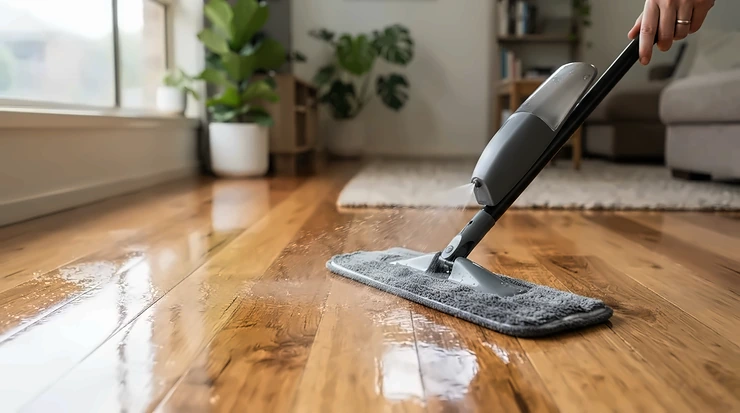
A microfibre spray mop for hardwood floors is a flat-headed mop with a built-in trigger sprayer, a refillable bottle or cartridge, and a washable microfibre pad. It releases a fine mist of cleaner instead of a flood of water. For finished wood that dislikes moisture, that difference is everything.
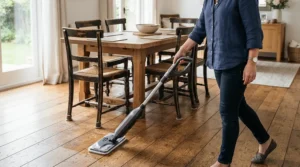
Hardwood is gorgeous and a little dramatic. Water seeps into seams, swells fibres, and leaves cupped boards that no cleaning product can undo. Everyone who has ever swapped a bucket of grey mop water for a fine mist has had the same small revelation: the floor looks better, and it’s dry before you’ve put the mop away.
If you’ve landed here, you probably have one of three problems. Your current mop leaves streaks. You’re nervous about water near your finish. Or you’ve bought a “wood-safe” mop that turned out to be a glorified paper-towel holder. This guide tackles all three. You’ll get seven real, widely sold spray mops, honest analysis grounded in published specs and aggregated review themes, and practical know-how for Canadian conditions, from dry February air to salt-tracked entryways.
One note on how this article is built. I haven’t personally used these mops, so you won’t find invented “I tested it for six weeks” stories. What you will find is spec interpretation, patterns that recur in real customer reviews, and clear reasoning about who each mop suits. When something can’t be verified, I’ll say so. Prices appear as ranges only, in Canadian dollars. Check current pricing and availability on amazon.ca before you buy.
Choosing wisely also means reading environmental labels critically. Third-party marks such as Canada’s EcoLogo (Environmental Choice Program), established in 1988, are far more meaningful than a green leaf printed by the manufacturer. We’ll come back to that in the cleaning-solution section.
Quick Comparison: Microfibre Spray Mop for Hardwood Floors at a Glance
| Product | Pad Style | Solution Setup | Best For |
|---|---|---|---|
| Bona Premium Spray Mop for Hardwood Floors | Extra-large dual-zone pad | Pressurized refillable cartridge | Dedicated hardwood care |
| Vileda ProMist Max Microfibre Spray Mop | Double-sided flip pad | Refillable bottle, you add cleaner | Mixed floors, large rooms |
| Rubbermaid Reveal Spray Mop | Thick pad plus scrubber | 650 ml refillable bottle | DIY-solution fans |
| Libman Freedom Spray Mop | Hook-and-loop microfibre pad | Refillable reservoir | Easy pad swaps |
| FRANK Reusable Microfibre Spray Mop | Standard microfibre pad | Refillable tank | Tight budgets |
| MEXERRIS Microfiber Spray Mop for Hardwood Floors | Washable pads, wet or dry | Sealed refillable bottle | Value multipacks |
| Bona PowerPlus Premium Motion Spray Mop | Vibrating head with pad | Bona PowerPlus solution | Stubborn grime |
Read the table as three tiers rather than seven rivals. The Bona Premium Spray Mop for Hardwood Floors and the Bona PowerPlus Premium Motion Spray Mop belong to a “system” tier, where the cleaner and mop are designed as a pair. The Vileda ProMist Max Microfibre Spray Mop, Rubbermaid Reveal Spray Mop, and Libman Freedom Spray Mop are open-solution mops, meaning you choose the liquid. The FRANK Reusable Microfibre Spray Mop and MEXERRIS Microfiber Spray Mop for Hardwood Floors are the budget-friendly end of the pool. If your floors are polyurethane-finished and you want the lowest-effort routine, the system tier is where I’d start.
💬 Just one click: help others make better buying decisions too! 😊
Top 7 Microfibre Spray Mop for Hardwood Floors: Expert Analysis
1. Bona Premium Spray Mop for Hardwood Floors — best all-round hardwood pick
The headline feature here is the pairing. Bona built the mop around a pressurized, refillable cartridge of its own hardwood floor cleaner, so the mist rate, the pad and the formula are matched.
On paper, the mop head measures about 42 cm (16.5 in) and carries an extra-large dual-zone pad of roughly 46 cm (18 in). That means fewer passes per room, which also means fewer chances for moisture to linger in one spot. The cartridge holds about one litre (34 fl oz) and refills from Bona’s economy bottles or concentrate packets, so it behaves like a refillable spray mop rather than a disposable one. The pad is rated by the maker for up to 500 washes, and the cleaner is described as pH neutral and residue-free.
Based on the spec comparison, this is the mop I’d point most polyurethane-finished floor owners toward. It’s the one with the clearest hardwood positioning, and it avoids the “mix your own solution” guesswork. Note that Bona states it’s for unwaxed, unoiled, polyurethane-finished wood only.
Reviewers consistently describe it as easy to assemble and noticeably more convenient than a bucket. A recurring complaint concerns plastic durability, with a few users reporting that the handle joint cracked after light use. The listing on Rona showed a rating of about 4.5 out of 5 at the time of research, though some reviews there were collected through a promotion.
Pros:
- ✅ Wide pad covers floor quickly
- ✅ Cleaner and mop engineered as a pair
- ✅ Washable pad with a long rated lifespan
Cons:
- ❌ Some reviewers report handle-joint breakage
- ❌ Cleaner choice is effectively locked to one brand
Expect roughly the C$35–C$55 range depending on kit and retailer. Check current price; the value verdict is strong for hardwood-only homes.
2. Vileda ProMist Max Microfibre Spray Mop — double-sided pad, a Canadian household name
The standout here is the flip-over pad. Use one side until it’s loaded, then turn it over and keep going. That’s a small design choice with real consequences on a large kitchen-to-hallway run.
The brand’s Canadian listing describes a handle of about 125 cm (49 in) with a metal shaft and a refillable bottle; you add roughly two teaspoons of your preferred cleaner to water. There are no batteries to charge, and the pad is machine washable. Vileda also claims it removes over 99% of common bacteria with just water on pre-finished hardwood and ceramic tile, as tested by an independent lab. That’s a manufacturer claim, so treat it as marketing context rather than a guarantee.
What the spec sheet won’t tell you, but customer questions reveal, is that owners often wonder about replacement bottles and extra pads. One listing question notes that pads are recommended for replacement about every three months, which is useful budgeting information. Vileda also describes the mop as safe on all hard surfaces, which makes it an easy fit for homes with hardwood, tile and laminate. It is not, however, a hardwood-only system, so you take on responsibility for choosing a floor-appropriate cleaner.
Reviewers broadly describe it as easy to use. Some report a sprayer flaw in the Q&A, though details are scattered, so I can’t verify a single dominant defect.
Pros:
- ✅ Double-sided pad doubles working surface
- ✅ No batteries, simple trigger control
- ✅ Replacement pads widely available in Canada
Cons:
- ❌ You must choose and mix your own cleaner
- ❌ Pad replacement is a recurring cost
Ballpark: the mid-C$30s at Canadian retailers when researched; confirm on amazon.ca. Excellent value for mixed-floor homes.
3. Rubbermaid Reveal Spray Mop — best for mixing your own solution
If you like control, this one is for you. The Rubbermaid Reveal Spray Mop comes with an empty 650 ml (22 oz) bottle and expects you to fill it with hot water and about two teaspoons of cleaner.
That’s a deliberate trade. You gain freedom (choose a pH-neutral hardwood cleaner, or plain water for light dusting) but lose the “everything in the box” convenience. The thick microfibre pad is rated by the maker for up to 100 machine washes, and a non-scratch scrubbing pad helps loosen stuck-on spots. The trigger is non-battery, so you pump out as much or as little solution as the job calls for.
What most buyers overlook is how much that variable control helps on hardwood. Because you decide how many squeezes to give, you can run nearly dry across a sensitive floor and add more only on a sticky patch. The scrubbing pad, however, deserves caution on polyurethane finish. Test it somewhere hidden first, or reserve it for tile.
Review themes lean positive on ease of use, and shoppers on a Canadian retailer’s page repeatedly ask how to remove the bottle for refilling. The answer is to detach it from the mop and remove the rotating cap. That’s a minor learning curve rather than a defect.
Pros:
- ✅ Full control over solution type and amount
- ✅ Reusable pad rated for around 100 washes
- ✅ Lightweight and trigger-controlled
Cons:
- ❌ Bottle refilling confuses first-time users
- ❌ Scrubber needs caution on wood finishes
Expect roughly C$25–C$40. A sensible value pick for hands-on cleaners.
4. Libman Freedom Spray Mop — thick pad, easy hook-and-loop swaps
Libman is a familiar name in Canadian cleaning aisles, and the Libman Freedom Spray Mop leans on a pad that comes off in a second.
The published refill specifications show a thick microfibre pad about 39 cm (15 in) long, attached by hook and loop, weighing under 100 g. The maker says it’s machine washable up to 100 times and works on wood, laminate, tile, marble and stone. Like Vileda‘s, its antibacterial claim is limited to use with water and is a manufacturer statement.
Here’s why the hook-and-loop attachment matters on hardwood. Grit trapped in a pad is the main scratch risk, and an easy swap means you’ll actually change pads between rooms. A pad that’s a pain to remove tends to get reused until it’s gritty. The Libman Freedom Spray Mop makes the better habit the lazy one.
I couldn’t verify a large pool of recent reviews for this specific model, so I won’t summarize sentiment I can’t see. The practical takeaway from the spec sheet is that pads are inexpensive to stock, and you can dedicate one per room. For a house with hardwood in the living area and tile in the kitchen, that’s a hygiene win.
Pros:
- ✅ Quick pad swaps encourage clean-pad habits
- ✅ Thick, absorbent microfibre
- ✅ Washable and reusable pads
Cons:
- ❌ Narrower pad than the Bona Premium class
- ❌ Few verifiable recent reviews to lean on
Typically around the C$25–C$40 range. Solid mid-tier value.
5. FRANK Reusable Microfibre Spray Mop — budget-friendly bucket replacement
Think of this as the no-drama starter. The FRANK Reusable Microfibre Spray Mop replaces a mop bucket with a squeeze-lever sprayer and a wide-angle mist.
Per the maker, it includes a microfibre pad and a refillable container, and you can machine wash the pad in warm water on a delicate cycle, then air dry. The spray pattern is wide, which helps with coverage but also means you need to watch overspray along baseboards.
The honest read is that this is a “get what you pay for” option. Some reviewers say it works as expected but doesn’t feel as solid as pricier mops of the same style. Customer questions also point to two recurring snags: dripping from beneath the spray hole, and confusion about how to remove the refillable bottle. If the mop dribbles, it dumps concentrated water in one spot. On hardwood, that’s exactly what we’re trying to avoid.
So who’s it for? Renters, first apartments, or anyone who needs a stopgap while deciding on a higher-end mop. Run it on the lightest spray, keep the pad barely damp, and wipe up any dripping instantly. If your floors are valuable or newly refinished, I’d lean toward the Bona Premium Spray Mop for Hardwood Floors or Vileda ProMist Max Microfibre Spray Mop instead.
Pros:
- ✅ Affordable entry into spray mopping
- ✅ Wide-angle mist for quick coverage
- ✅ Machine-washable pad
Cons:
- ❌ Reports of dripping and flimsy feel
- ❌ Bottle removal is unintuitive
Roughly C$20–C$30 at the time of research. Good for light duty, with caveats.
6. MEXERRIS Microfiber Spray Mop for Hardwood Floors — sealed bottle, wet and dry use
Among Amazon-first brands, the MEXERRIS Microfiber Spray Mop for Hardwood Floors shows up repeatedly in roundups, usually for its sealed bottle and its flexibility.
Review-style summaries describe a fully sealed bottle, a moisture-efficient spray and compatibility with both wet and dry pads. A sealed bottle matters more than it sounds. Leaks and drips are the classic spray-mop failure, and a tight seal at the reservoir is the first place cheaper mops give out. Multi-pad kits, which are commonly sold with this style of mop, also let you rotate clean pads through a week of cleaning.
Because I can’t pull a verified review count for this exact listing, I’d caution you to read the current reviews on amazon.ca before buying. Specifically look for complaints about sprayer clogging, pad attachment and handle wobble. Those are the three failure modes common to this category. Use the dry pad for the first pass to lift dust and pet hair, then switch to a barely damp pad for finishing.
Pad choice is where many buyers go wrong on hardwood. A dense, soft microfibre is gentle; a rough, scrubby weave can dull a satin finish over time.
Pros:
- ✅ Sealed bottle design reduces leak risk
- ✅ Works as both dry duster and damp mop
- ✅ Multi-pad kits support room-by-room rotation
Cons:
- ❌ Limited verifiable long-term durability data
- ❌ Pad weave quality varies by kit
Expect something like C$30–C$45. Worth a look if you want extra pads included.
7. Bona PowerPlus Premium Motion Spray Mop — premium vibrating head for stubborn grime
This is the upgrade pick. The Bona PowerPlus Premium Motion Spray Mop adds a vibrating mop head to the Bona formula, bundled with PowerPlus hardwood floor cleaning solution and a PowerPlus microfibre pad.
The idea is simple: gentle oscillation helps loosen dried-on spills without you scrubbing harder. On a hardwood floor, that matters because pressing harder with a pad is exactly how grit gets dragged across a finish. A powered head shifts the work from your arms to the mop.
Here’s the trade-off, and it’s worth taking seriously. More mechanical action means more moving parts, and moving parts break. Check the listing for the power source and battery details, and look closely at long-term reviews for motor or head durability. I couldn’t verify a large pool of reviews for this model while researching, so treat the vibrating head as promising but unproven in my sample.
If your floors are mostly dust and light footprints, you’d be paying extra for a feature you won’t use, and the Bona Premium Spray Mop for Hardwood Floors is the more sensible choice. If you have kids, pets, a kitchen with sticky traffic lanes, or an open-plan living space that collects daily grime, the motion head earns its keep.
Pros:
- ✅ Vibrating head eases dried-on residue
- ✅ Matched solution and pad in the box
- ✅ Same hardwood-focused brand ecosystem
Cons:
- ❌ Premium price over manual spray mops
- ❌ More mechanisms to wear out over time
Likely around C$60–C$90, so check current price. Worth it only for demanding floors.
Specs Side by Side
| Product | Approx. Reservoir | Pad Washability (maker claim) | Solution Included? | Best For |
|---|---|---|---|---|
| Bona Premium Spray Mop for Hardwood Floors | About 1 L cartridge | Up to 500 washes | Yes | Hardwood purists |
| Vileda ProMist Max Microfibre Spray Mop | Refillable bottle | Machine washable | No | Large mixed floors |
| Rubbermaid Reveal Spray Mop | 650 ml bottle | Up to 100 washes | No | Custom solutions |
| Libman Freedom Spray Mop | Refillable reservoir | Up to 100 washes | No | Quick pad swaps |
| FRANK Reusable Microfibre Spray Mop | Refillable tank | Machine washable | No | Budget buyers |
| MEXERRIS Microfiber Spray Mop for Hardwood Floors | Sealed bottle | Washable pads | Varies | Pad multipacks |
| Bona PowerPlus Premium Motion Spray Mop | Solution bundled | Washable pad | Yes | Sticky traffic zones |
Two things jump out. First, only the Bona mops ship with cleaner as part of the design, which is convenient but ties you to one brand’s refills. Second, the 500-wash claim on the Bona Premium Spray Mop for Hardwood Floors pad versus roughly 100 on the Rubbermaid Reveal Spray Mop and Libman Freedom Spray Mop only matters if you’re mopping several times a week, since most households will replace pads for hygiene or wear long before hitting any rated limit. If you’re torn, the table suggests the Vileda ProMist Max Microfibre Spray Mop as the flexible all-rounder and the Bona Premium as the specialist.
How to Choose a Microfibre Spray Mop for Hardwood Floors
Seven steps, in the order that actually saves you money.
- Confirm your finish first. Polyurethane-finished floors are the safe default for spray mops. Oiled, waxed or unsealed floors need a different approach, and most spray-mop makers say so plainly.
- Choose the solution strategy. Do you want a matched system or an open reservoir? Matched systems reduce guesswork. Open reservoirs reduce long-term cost.
- Check the reservoir fill method. A bottle you can’t figure out how to refill is a mop you’ll stop using. Read the instructions before the first fill.
- Look at pad size and softness. A wider pad means fewer passes. A softer, denser weave means a gentler touch on your finish.
- Match the handle to your height and storage. Adjustable or one-piece handles matter more than most buyers think, particularly for tall users in cramped closets.
- Count the replacement pad cost. Pads wear out, and some brands recommend replacement every few months.
- Read the one-star reviews. Skip the five-star glow and look for patterns in the complaints. Repeated reports of the same failure, such as dripping or a snapped joint, tell you more than any spec sheet.
Applied to the picks above, step two splits the field cleanly. The Bona Premium Spray Mop for Hardwood Floors wins on simplicity, while the Rubbermaid Reveal Spray Mop and Libman Freedom Spray Mop win on flexibility.
What Makes a Spray Mop Hardwood Safe in Canada
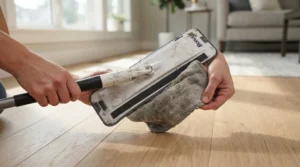
“Hardwood safe” is a marketing phrase, not a regulated certification, so it helps to understand what it should actually mean. A spray mop hardwood safe Canada shoppers can trust does three things: it delivers a fine, controllable mist; it uses a soft microfibre pad; and it pairs with a cleaner that leaves no film.
Moisture control is the big one. Sealed hardwood tolerates a light mist; it does not tolerate puddles. Finish matters too. Makers consistently state that spray mops are not for unsealed, waxed or oiled wood. The flooring-trade guidance I found points the same way: use a damp, not sopping, mop and avoid steam. One National Wood Flooring Association representative has been quoted saying steam is hard on wood because it can open the pores and damage the finish, so a “steam spray hybrid” isn’t a shortcut here.
Canadian conditions add a second layer. Our floors live through dry winters and humid summers, so wood moves. Health Canada’s indoor relative humidity factsheet notes that humidity in homes tends to run lower in winter and higher in summer. Secondary sources citing Health Canada put the typical winter target at roughly 30–35% relative humidity. Some flooring makers recommend a somewhat higher, steadier band of 35–55%. Either way, the lesson for mopping is the same.
In dry winter air, boards shrink slightly and finish edges can be more vulnerable, so keep the pad barely damp. In humid summers, wood is already holding more moisture, so extra dampness has nowhere to go. That’s why a spray mop hardwood safe Canada homeowners can use year-round is one that lets you dial water down to nearly nothing.
Finally, entryways deserve a special mention. Salt and grit tracked in during winter act like sandpaper under a pad. Place boot trays and mats at doors, vacuum or dry-dust before spraying, and never mop over gritty floors. The best microfibre spray mop for hardwood floors can’t compensate for sand in the pad.
Refillable Spray Mop Economics: Long-Term Cost & Maintenance
The refillable spray mop concept is where the real savings live. Disposable-pad systems keep charging you every week. A refillable spray mop with a washable pad turns most of that recurring cost into a one-off purchase plus a few pennies of cleaner.
Consider what recurs in each design. With a matched system like the Bona Premium Spray Mop for Hardwood Floors, you buy cleaner refills or concentrate packets, plus the odd replacement pad. With an open-reservoir mop like the Vileda ProMist Max Microfibre Spray Mop, you buy whatever cleaner you prefer and replacement pads (the brand’s own customers note about every three months is the suggested schedule). With budget models like the FRANK Reusable Microfibre Spray Mop, you accept a shorter hardware lifespan in exchange for a low entry price.
| Cost Factor | Matched System (e.g., Bona Premium) | Open Reservoir (e.g., Vileda ProMist Max, Rubbermaid Reveal) | Budget (e.g., FRANK, MEXERRIS) |
|---|---|---|---|
| Upfront cost | Higher | Mid | Lowest |
| Cleaner cost | Brand refills | Your choice, cheap | Your choice, cheap |
| Pad replacement | Rare, long rated life | Every few months | Varies by kit |
| Hardware risk | Moderate | Low to moderate | Higher |
| Best For | Hardwood-only homes | Mixed floors | Light, occasional use |
The numbers tell a clear story, even without exact prices. Over a few years, the difference between a C$25 mop and a C$50 mop is small compared with the cost of one cupped-board repair. Looking at the table above, the value winner isn’t the cheapest mop; it’s the one you’ll actually use gently and consistently. For most hardwood owners, that means a matched system or a well-reviewed open-reservoir mop, with a stock of two or three spare pads.
Maintenance is minimal but non-negotiable. Empty and rinse the reservoir if you leave the mop unused for weeks. Wash pads after every use. Store the mop with the pad off the floor so it dries fully. Finally, keep in mind that your floor has its own maintenance schedule. Industry guidance suggests resealing roughly every ten years, or every two to five years in high-traffic homes with kids and pets. A gentle cleaning routine pushes you toward the long end of that range.
Hardwood Cleaning Solution: What Actually Goes in the Tank
A mop is only half the system. The hardwood cleaning solution decides whether you get a gentle shine or a sticky film that grabs dirt.
The consistent advice from flooring-industry sources is to use a pH-neutral cleaner made for wood. The National Wood Flooring Association’s technical lead has recommended exactly that, neither acidic nor alkaline. Residue-free is the other keyword. Soap-based products and anything waxy can leave a film that dulls the finish.
Then there’s the vinegar debate, and it deserves honest treatment because advice conflicts. Some flooring brands warn that vinegar and water can dull a finish over time. Another NWFA source says diluted vinegar is technically fine if you don’t use concentrated formulas or clean with it too often. The sensible reading: your floor manufacturer’s instructions outrank any internet recipe. If your warranty documents say “no vinegar,” believe them.
For spray mops specifically, check what your mop’s maker allows. Bona‘s own materials say its cleaner is meant for polyurethane-finished floors, and its pressurized cartridge is designed around that formula. With open-reservoir mops such as the Vileda ProMist Max Microfibre Spray Mop, the instructions call for about two teaspoons of cleaner in warm water. Keep concentrations low. More soap doesn’t mean more clean; it means more residue.
Eco-claims need scrutiny, too. A cleaner may be certified by a third party, such as Canada’s EcoLogo or the U.S. EPA’s Safer Choice program, or it may merely say “natural.” Note that Bona states its Safer Choice designation applies when the cartridge is refilled with its own liquid only. Canada’s Competition Bureau has published a digest on environmental claims, and the greenwashing provisions added to the Competition Act in June 2024 mean environmental marketing must be truthful and backed by evidence. That’s good news for you as a shopper. Vague claims are increasingly risky for sellers.
A practical rule: pick a pH-neutral, residue-free formula; confirm it’s rated for your finish; and don’t mix cleaners. Two products that are individually safe can combine into a hazard or a film.
Streak-Free Hardwood Mop: Technique & Troubleshooting
A streak-free hardwood mop isn’t a product category so much as a result you earn through technique. Most streaks come from five causes. Fortunately, each has a clean fix.
Problem 1: Too much solution. Streaks usually mean excess liquid or residue. Fix it by spraying a lighter mist and moving in smaller sections. If the floor takes longer than a minute or two to dry, you’re using too much.
Problem 2: Dirty pad. A loaded pad just smears. Change to a fresh pad, or flip a double-sided one like the Vileda ProMist Max Microfibre Spray Mop, as soon as the first side darkens. Keep a rotation of two or three pads.
Problem 3: Soap residue from previous cleaners. If you’ve used oily or soapy products in the past, you may be mopping on top of a film. Clean with plain water on a barely damp pad a few times to strip it back, and then switch to a residue-free solution.
Problem 4: Wrong pad weave. A thin, cheap pad drags. A dense, soft microfibre glides. This is where the Libman Freedom Spray Mop pad and the Bona Premium Spray Mop for Hardwood Floors dual-zone pad earn their keep.
Problem 5: Dust underneath. Always dry-dust or vacuum first. Gritty floors turn a wet pad into sandpaper and a streaky mess.
Work along the direction of the boards, retreating toward the door so you don’t step on wet areas. Overlap passes by a few centimetres. And resist the urge to go back over a streak with more spray. Instead, buff it with a dry microfibre cloth. A streak-free hardwood mop session should feel almost anticlimactic: quick, light and over before you’ve found the energy to be annoyed.
Washable Microfibre Pad: Care Guide and Lifespan
A washable microfibre pad is the quiet hero of the whole system. Treat it well and it’s cheap; neglect it and it ruins your floor.
Wash after every use. Dried-on soil stiffens fibres and turns a soft pad into a scrubber. Toss it in the machine as soon as you finish.
Follow the maker’s instructions. FRANK, for example, recommends warm water on a delicate cycle with air drying. Others rate pads for roughly 100 washes (Rubbermaid Reveal Spray Mop, Libman Freedom Spray Mop) or up to 500 (Bona Premium Spray Mop for Hardwood Floors). Those figures are manufacturer claims, but they show how pad durability is designed.
Skip fabric softener. It coats the fibres and cuts absorbency. The same goes for bleach on most pads.
Don’t wash with abrasive items. Zippers and rough fabrics shred the weave. Wash pads with other microfibre or on their own.
Dry flat or air dry. High heat can damage fibres and the hook-and-loop backing.
Rotate and label. Keep dedicated pads for hardwood so a pad that’s been through a gritty kitchen never touches your living room. Assign one per room, as Vileda itself suggests.
Retire pads on a schedule. Vileda’s customers note about three months as a recommended replacement window for heavy use. If a pad feels thin, matted or permanently stained, replace it. A fresh pad costs far less than refinishing.
The most common first-30-days mistake is expecting a dirty pad to clean like a new one. It won’t. Wash it, dry it fully, and let it earn its keep.

Real-World Scenarios: Which Mop Fits Which Home
Three household profiles, matched to the best fit.
Scenario 1: The condo with new engineered hardwood. Say you have about 60 m² (650 sq ft) of polyurethane-finished floor, light traffic, and no pets. You want a once-a-week routine that takes ten minutes. The Bona Premium Spray Mop for Hardwood Floors is the logical match. The wide pad, matched cleaner and low-water mist suit a small, valuable surface, and the matched system means no guessing about solutions. Budget: the C$35–C$55 range.
Scenario 2: The family house with a dog and two kids. Hardwood runs through the main floor, tile in the kitchen, with muddy boots every fall. You need flexibility, extra pads and tolerance for messy zones. Here the Vileda ProMist Max Microfibre Spray Mop fits, with a flip-over pad that stretches between washes, plus a stack of spare pads. If sticky patches are chronic, the Bona PowerPlus Premium Motion Spray Mop is worth a look, provided you’ve checked durability reviews. Budget: C$35–C$90 depending on the tier.
Scenario 3: The first-apartment renter on a tight budget. You have a few hundred dollars of furniture to buy, and the landlord cares about the floor. The FRANK Reusable Microfibre Spray Mop or MEXERRIS Microfiber Spray Mop for Hardwood Floors gets you started cheaply. Use a light spray, wipe any drips immediately, and plan to upgrade when you move. Budget: C$20–C$45.
Notice what they share: in all three cases, the winning habit is the same. Dry-dust first, spray lightly, change pads often. The mop is just the delivery system.
Spray Mops vs Traditional Alternatives
How does a microfibre spray mop for hardwood floors stack up against the old standbys?
| Factor | Spray Mop | String/Bucket Mop | Steam Mop | Swiffer-Style Disposable |
|---|---|---|---|---|
| Moisture on floor | Very low | High | High and hot | Low |
| Hardwood risk | Low on sealed floors | Highest | Flooring-trade caution | Low |
| Ongoing cost | Cleaner and occasional pads | Cleaner | Pads and descaling | Pads every use |
| Setup time | Seconds | Minutes | Minutes (heating) | Seconds |
| Best For | Weekly sealed-floor care | Rarely hardwood | Sealed tile only | Quick touch-ups |
The table makes the logic clear. String mops are the biggest moisture risk; a “damp” string mop can still leave excess water on wood, which is why flooring-trade voices keep warning about them. Steam is a different problem, since heat and vapour can harm finishes, and the NWFA’s own technical lead has been blunt about it. Disposable pad systems are gentle but turn into a subscription.
Against that backdrop, a refillable spray mop with a washable microfibre pad hits the sweet spot: low moisture, low recurring cost, and fast setup. The Bona Premium Spray Mop for Hardwood Floors and Vileda ProMist Max Microfibre Spray Mop both embody that balance. The honest caveat is that spray mops don’t replace vacuuming or deep restoration. They’re a maintenance tool, not a miracle.
Features That Actually Matter (And Those That Don’t)
Matters: a controllable spray. A trigger lets you modulate. This is non-negotiable on wood.
Matters: a soft, dense pad. It’s what touches the floor. Compare the pad, not the packaging.
Matters: easy pad changes. If swapping takes effort, you’ll skip it. The Libman Freedom Spray Mop hook-and-loop design is a good example.
Matters: leak resistance. A sealed or well-designed reservoir, like the MEXERRIS Microfiber Spray Mop for Hardwood Floors is said to have, keeps drips off your floor and out of the closet.
Matters: a handle you can live with. Height, grip and joint quality decide whether the mop survives years of use.
Doesn’t matter much: giant bacteria-removal percentages. Claims like “over 99% with just water” are lab-tested under specific conditions. Useful context, but they shouldn’t override floor-safety considerations.
Doesn’t matter much: extra scrubbers. A scrubbing pad (as on the Rubbermaid Reveal Spray Mop) is handy on tile, but a risk on a delicate finish.
Doesn’t matter much: fancy colours and “smart” branding. Fine, but irrelevant to floor care.
Matters, but only for some: motion heads. Like the Bona PowerPlus Premium Motion Spray Mop, they help with stubborn grime and add complexity. Buy them for the problem you have, not the one you imagine.
Common Mistakes When Buying and Using a Spray Mop
Mistake 1: Soaking the floor “just this once.” Water and wood don’t mix. Even finished boards can swell at the seams after repeated moisture.
Mistake 2: Using a pad until it’s grey. A dirty pad is a smear machine. Wash it or swap it.
Mistake 3: Mixing homemade cleaners. Between conflicting vinegar advice and residue concerns, DIY recipes are a gamble. Follow your floor maker’s guidance.
Mistake 4: Ignoring the finish. Spray mops suit sealed floors, and makers state they’re not for unsealed, waxed or oiled wood. If you’re unsure, check your installation paperwork or ask a flooring professional.
Mistake 5: Falling for green-sounding labels. Look for recognized third-party marks rather than vague wording. A Canadian explainer on decoding eco-labels on cleaning products walks through EcoLogo and Safer Choice and defines greenwashing as false, vague or exaggerated claims aimed at eco-conscious shoppers. It’s a useful sanity check before you trust any front-of-pack promise.
Mistake 6: Skipping the dry-dust step. Grit under a damp pad scratches. Vacuum or dust first.
Mistake 7: Buying on price alone. Several budget complaints, including dripping and a flimsy feel, trace back to hardware shortcuts. A slightly better mop can save you more than it costs.
Frequently Asked Questions
❓ Can I use a spray mop on engineered hardwood in Canada?
❓ How often should I mop hardwood with a spray mop?
❓ Is a refillable spray mop cheaper than disposable pad systems?
❓ Can I put vinegar in a spray mop for hardwood floors?
❓ How do I stop streaks on hardwood after mopping?
Conclusion
The right microfibre spray mop for hardwood floors is the one that keeps water off the wood, keeps grit out of the pad, and fits the way you actually clean. For dedicated hardwood and a hands-off routine, the Bona Premium Spray Mop for Hardwood Floors is the most clearly purpose-built of the seven. For mixed floors and flexible solutions, the Vileda ProMist Max Microfibre Spray Mop is my all-rounder pick, with the Rubbermaid Reveal Spray Mop and Libman Freedom Spray Mop close behind for people who like control. Budget buyers can start with the FRANK Reusable Microfibre Spray Mop or MEXERRIS Microfiber Spray Mop for Hardwood Floors, with eyes open about durability. And if your floors face real daily grime, the Bona PowerPlus Premium Motion Spray Mop is the upgrade to research carefully.
Whichever you choose, the routine matters more than the label. Dry-dust first, mist lightly, rotate clean pads, use a pH-neutral hardwood cleaning solution, and wash your washable microfibre pad after every use. Do that, and a spray mop hardwood safe Canada homeowners can rely on keeps floors looking good through dry winters and humid summers alike.
✨ Ready to upgrade your floor care routine?
🔍 Click any highlighted product above to check current pricing and availability on amazon.ca. A good spray mop is a small investment that protects a big one: your floors!
Recommended for You
- Flat Mop For Laminate Floors: 7 Best Safe Picks In Canada 2026
- String Mop Under $25 CAD: 7 Best Picks (Don’t Overpay)
- Sponge Mop For Tile Grout: 7 Best Picks In Canada (2026)
Disclaimer: This article contains affiliate links. As an Amazon Associate, I earn from qualifying purchases. If you purchase products through these links, we may earn a small commission at no additional cost to you.
✨ Found this helpful? Share it with your friends! 💬🤗
