
In This Article
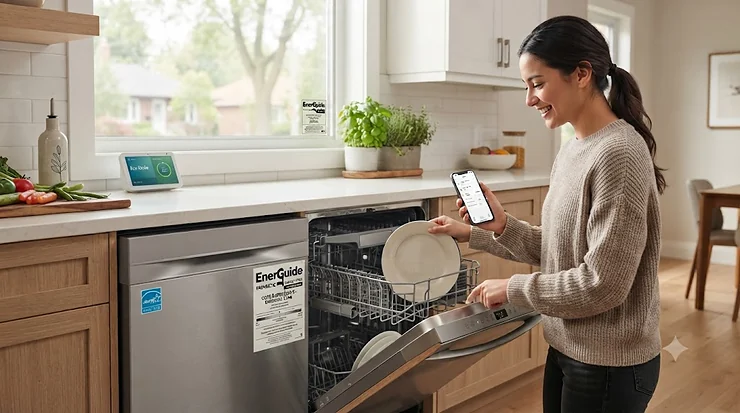
Somewhere between “I’ll just handwash these two pans” and a sink full of crusted lasagna dishes, most of us start Googling dishwashers at 11 p.m. Fair enough — it’s a boring appliance until the day it isn’t. An Energy Star smart dishwasher is a dishwasher certified by Natural Resources Canada and the U.S. EPA as meeting strict energy and water efficiency benchmarks, while also offering WiFi connectivity so you can start, monitor, or troubleshoot cycles from a phone app instead of the control panel on the door.
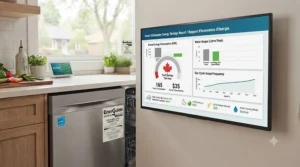
That’s the textbook definition. Here’s the real one: it’s the appliance that quietly stops arguments about who left the dishwasher running during a heat wave, because now you can just check the app and see it’s not even on. This guide walks through seven real, currently available models sold in Canada — from a countertop unit that fits a condo galley kitchen to a Miele that costs more than some used cars — and breaks down which one actually earns its keep. We’ll also dig into Natural Resources Canada’s dishwasher efficiency regulations, which now require dishwashers sold in Canada to meet ENERGY STAR-aligned efficiency criteria, so you know exactly what “certified” is supposed to mean before you hand over your credit card.
If you’re shopping specifically for the most efficient WiFi dishwasher, an eco-friendly smart dishwasher for a small household, or a model with a genuinely useful energy monitoring app, you’re in the right spot. We’ll cover usage tracking, efficiency optimization tricks, and the buying mistakes that quietly cost people the most money.
Quick Comparison Table: Energy Star Smart Dishwasher at a Glance
| Model | Noise Level | App/Smart Platform | Price Range (CAD) | Best For |
|---|---|---|---|---|
| Bosch 500 Series SHP65CM5N | 44 dBA | Home Connect | C$1,300–C$1,800 | Overall balance of quiet + smart |
| Samsung Bespoke DW80CG5451SRAA | 46 dBA | SmartThings Energy | C$1,100–C$1,600 | Energy monitoring app |
| LG QuadWash Pro (ThinQ) | 44–48 dBA | LG ThinQ | C$900–C$1,400 | Best cleaning power |
| GE Profile UltraFresh PDT795SYVFS | 39 dBA | SmartHQ | C$1,300–C$1,700 | Quietest built-in |
| Miele G 7000 Series | 42–46 dBA | Miele@home | C$2,000–C$3,200 | Most water-efficient / premium |
| Whirlpool WDT995SAFM | ~47 dBA | 6th Sense Live | C$800–C$1,100 | Best value smart pick |
| GE Profile Countertop PZF560HGWBB | 52 dBA | SmartHQ | C$550–C$800 | Apartments and small kitchens |
Look at that spread for a second. There’s a nearly C$2,500 gap between the cheapest and most expensive machine here, and yet all seven wear the same little blue Energy Star label. That tells you the certification is a floor, not a ceiling — it confirms a model beats the federal minimum, but it says nothing about noise, app quality, or how it handles a burnt casserole dish. The GE Profile UltraFresh PDT795SYVFS and Miele G 7000 Series lead on refinement (whisper-quiet operation, near-silent cycles), while the Whirlpool WDT995SAFM and GE Profile Countertop PZF560HGWBB prove you don’t need a four-figure budget to get real WiFi smarts and genuine efficiency.
💬 Just one click — help others make better buying decisions too!😊
Top 7 Energy Star Smart Dishwashers: Expert Analysis
1. Bosch 500 Series SHP65CM5N — best all-rounder for quiet, connected cleaning
The Bosch 500 Series SHP65CM5N is the dishwasher equivalent of that one coworker who’s good at everything and never makes a fuss about it. Wi-Fi enabled Home Connect lets you personalize cycles remotely, pair with Amazon Alexa or Google Home for voice control, and this Bosch is ENERGY STAR certified, meeting or exceeding federal guidelines for year-round energy savings. In practice, that 44 dBA rating means you can run a load during a dinner party without shouting over it — most standard dishwashers sit closer to 50-55 dBA, and every few decibels feels roughly twice as loud to the human ear, so this is a genuinely noticeable difference, not marketing fluff.
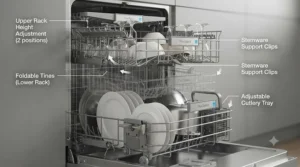
Based on the spec sheet, the annual energy use lands around 240 kWh, putting it well inside Energy Star territory, and the RackMatic adjustable middle rack shifts to nine different positions, which matters more than it sounds — it’s the difference between wine glasses shattering against a stock pot and everything fitting on the first try. Reviewers consistently report strong performance on Auto, Heavy, and Speed60 cycles, though some note the standard Normal cycle can occasionally struggle with baked-on messes, so scraping first still helps.
Pros:
- ✅ Home Connect app adds remote start and Alexa/Google integration
- ✅ 44 dBA operation among the quietest in its class
- ✅ Adjustable RackMatic rack fits awkward dishware easily
Cons:
- ❌ Normal cycle sometimes underperforms on heavily soiled loads
- ❌ Third rack space is tighter than some rival brands
At around C$1,300–C$1,800 depending on retailer and finish, the Bosch 500 Series SHP65CM5N earns its price through genuine day-to-day usability rather than gimmicks.
2. Samsung Bespoke DW80CG5451SRAA — best energy monitoring app for SmartThings households
If your house already runs on Samsung SmartThings — a smart plug here, a smart bulb there — the Samsung Bespoke DW80CG5451SRAA slots in like it was always meant to be part of the system. SmartThings at Home lets you monitor and control energy usage directly, and the unit is ENERGY STAR certified under the ENERGY STAR 7.0 energy labelling, which is the more recent efficiency benchmark, not a leftover certification from a decade-old testing cycle.
What most buyers overlook here is the energy monitoring specifically: this isn’t just a status light telling you the cycle finished. The SmartThings Energy dashboard tracks consumption trends over weeks, so you can actually see whether your Eco cycle habit is saving what you think it’s saving. ENERGY STAR-certified products like this one are designed to help you save energy on paper, but the app is what turns that promise into something you can verify with your own utility bill. The StormWash system handles heavy soil without pre-rinsing, and the AutoRelease door pops open at cycle end to assist drying without extra heating energy.
Pros:
- ✅ SmartThings Energy tracks real consumption trends over time
- ✅ StormWash tackles pots and pans without pre-rinsing
- ✅ AutoRelease door improves drying without added energy use
Cons:
- ❌ Full smart features require an existing Samsung SmartThings hub or app setup
- ❌ Slightly louder than the Bosch and GE Profile picks at 46 dBA
Expect a price in the C$1,100–C$1,600 range, making it a strong mid-tier pick if energy monitoring is your priority over raw quietness.
3. LG QuadWash Pro (ThinQ) — best cleaning power in its class
The LG QuadWash Pro (ThinQ) is the one to pick if you’re tired of dishwashers that leave a filmy ghost of last night’s dinner on the good plates. QuadWash Pro delivers high-pressure jets with 38% more cleaning power that spray dishes from multiple angles while soaking them with over one million microbubbles to help break down stubborn food residue. That’s not just a spec — reviewers note the difference shows up specifically on stuck-on starches like rice and oatmeal, which are notoriously hard for standard spray arms to dislodge.
Here’s what the spec sheet won’t spell out clearly: cleaning power and drying power are handled by two separate systems on this machine, and both matter for your electricity bill. Dynamic Heat Dry technology circulates hot air throughout the dishwasher for faster, more complete drying, while LG ThinQ technology sends smartphone notifications when a cycle is complete and lets you start the dishwasher remotely from the app. That remote-start feature is more of an efficiency tool than people realize — you can queue a load to run during off-peak utility hours in provinces with time-of-use billing, shaving real dollars off the electricity portion of your bill without changing a single habit.
Pros:
- ✅ QuadWash Pro jets significantly outperform standard two-arm systems
- ✅ ThinQ app allows off-peak scheduling for lower electricity costs
- ✅ Dynamic Heat Dry improves results without a heated-dry energy penalty
Cons:
- ❌ Noise level runs slightly higher (44–48 dBA) than the Bosch or GE Profile
- ❌ Some LG models require the ThinQ app for full cycle customization
Priced around C$900–C$1,400, this is the pick for anyone who ranks “actually clean dishes” above every other feature on the list.
4. GE Profile UltraFresh PDT795SYVFS — quietest smart dishwasher on this list
At 39 dBA, the GE Profile UltraFresh PDT795SYVFS is quiet enough that you’ll genuinely forget it’s running — which, in an open-concept kitchen where the dishwasher lives ten feet from your couch, is worth more than most spec sheets ever admit. Built-in WiFi and the SmartHQ app make it easy to connect, control, and monitor your smart dishwasher from anywhere, with access to customized cycles and remote status notifications.
The standout feature, though, is the odor-control system. Smart dishwasher algorithms introduce clean air and reduce moisture, refreshing the wash system to help prevent the growth of odor-causing bacteria, and Microban Antimicrobial Technology is built into high-usage points to keep surfaces 99% cleaner than unprotected surfaces. Based on the spec comparison, this matters more than it initially sounds: dishwasher odor is almost always a filter or gasket problem, and most people don’t discover it until it’s already embarrassing when guests are over. Reviewers report the Smart Assist feature is genuinely useful for maintenance — it flags filter cleaning before performance drops, rather than after.
Pros:
- ✅ 39 dBA is the quietest rating of any model on this list
- ✅ UltraFresh system actively fights odor-causing bacteria
- ✅ SmartHQ app sends proactive maintenance alerts
Cons:
- ❌ Premium pricing compared to similarly specced competitors
- ❌ Some owners note the third rack limits tall-item flexibility
At C$1,300–C$1,700, it’s a strong choice for anyone prioritizing near-silent operation and long-term freshness over raw cycle speed.
5. Miele G 7000 Series — most water-efficient, premium pick
If the Bosch is the reliable coworker, the Miele G 7000 Series is the one who went to culinary school in Europe and won’t let you forget it — deservedly, in this case. Miele G 7000 dishwashers are Energy Star certified and use as little as 6 litres of water in the Normal program, much less than the contents of a typical kitchen sink. Six litres. That’s less water than most people use hand-rinsing plates before loading them.
The AutoDos intelligent, automatic detergent dispensing system offers precise dosing and ensures exceptional results, which quietly solves the most common cause of dishwasher inefficiency: people eyeballing detergent amounts and either underdosing (leaving film) or overdosing (wasting product and sometimes leaving residue that requires a rewash). Miele@home connectivity brings remote monitoring into the mix, and independent lab testing from Consumer Reports notes this line performs excellently on combined water-and-energy testing while remaining among the quieter machines tested. What buyers should weigh honestly: this is a luxury purchase, and the payoff is measured in decades of reliable service and marginal water savings, not dramatic day-one wow factor.
Pros:
- ✅ Industry-leading water efficiency at roughly 6 litres per Normal cycle
- ✅ AutoDos eliminates detergent guesswork and residue issues
- ✅ Reputation for exceptional long-term build quality
Cons:
- ❌ Highest price point on this list by a significant margin
- ❌ Cycle times run longer than budget-friendly competitors
Expect to pay C$2,000–C$3,200, which puts this firmly in “I’m renovating the whole kitchen anyway” territory rather than an impulse upgrade.
6. Whirlpool WDT995SAFM — best value smart pick
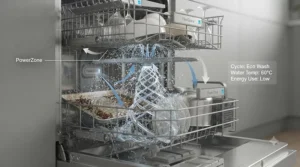
Not every household needs a European import to get a legitimately smart, legitimately efficient dishwasher. The Whirlpool WDT995SAFM is Energy Star certified and app-connected without the premium price tag of the Bosch or Miele options above. It integrates with Whirlpool’s smart appliance ecosystem for remote start, cycle monitoring, and maintenance alerts, giving apartment-to-house upgraders a genuine smart-home entry point.
Here’s what most comparison charts skip: Whirlpool has a long track record with Natural Resources Canada specifically, having been recognized multiple times as an Energy Star Manufacturer of the Year in the Canadian market for pushing efficient design into mainstream price tiers rather than reserving it for flagship models. That history shows up here — this isn’t a stripped-down “smart” badge slapped on a basic machine, it’s a genuinely efficient wash system with real app functionality layered on top. Reviewers note it handles daily family loads well, though it lacks some of the ultra-quiet engineering of the pricier options on this list.
Pros:
- ✅ Genuine app connectivity at a noticeably lower price point
- ✅ Solid daily cleaning performance for family-sized loads
- ✅ Backed by Whirlpool’s long efficiency track record in Canada
Cons:
- ❌ Noticeably louder than the Bosch, GE Profile, or Miele picks
- ❌ Fewer premium wash-cycle customization options
At around C$800–C$1,100, this is the pick for buyers who want smart features without financing a small appliance loan.
7. GE Profile Countertop PZF560HGWBB — best for apartments and small kitchens
Renters and condo-dwellers get left out of most “smart dishwasher” conversations, which is a shame, because the GE Profile Countertop PZF560HGWBB exists precisely for that gap. This ENERGY STAR Smart Compact Dishwasher works for countertop or built-in installation, and it fits 6 place settings, 10.5-inch plates, or 24 bar glasses — enough for a couple hosting a small dinner, or a studio apartment tired of hand-washing everything in a bathroom-adjacent kitchenette.
Built-in WiFi powered by SmartHQ makes it easy to connect, control, and monitor the dishwasher from anywhere, and it can reduce water usage by over 75% compared to handwashing — a genuinely useful stat if you’re trying to justify the purchase to a partner who insists hand-washing “isn’t that bad.” On paper, this means a renter with zero interest in a full kitchen renovation still gets remote monitoring, a Baby Care sanitizing cycle, and Energy Star certification in a unit small enough to store under a counter or wheel into a closet.
Pros:
- ✅ No permanent installation required — ideal for renters
- ✅ SmartHQ app connectivity matches full-size GE Profile models
- ✅ Cuts water use dramatically versus handwashing
Cons:
- ❌ Louder at 52 dBA than any built-in model on this list
- ❌ Limited capacity unsuitable for larger households
Priced around C$550–C$800, it’s the most accessible entry point into smart, efficient dishwashing on this entire list.
Practical Usage Guide: Getting the Most From Your First 30 Days
Buying the machine is the easy part. Most of the efficiency gains people expect from an Energy Star smart dishwasher never materialize because the setup and early habits get rushed. Start with the app pairing before the first wash, not after — nearly every smart model on this list (Bosch Home Connect, Samsung SmartThings, LG ThinQ, GE SmartHQ) needs a firmware check and WiFi handshake completed before remote features unlock properly, and skipping this step is the single most common first-week complaint in owner reviews across brands.
Run one “clean” cycle empty with just rinse aid before loading real dishes — manufacturers often recommend this to flush manufacturing residue from the plumbing lines, and it also lets you confirm the unit drains properly before it’s full of your good dishware. For the first 30 days, resist the urge to run every cycle on “Heavy” out of caution. Reviewers consistently note that Auto or Sensor cycles read soil levels via turbidity sensors and adjust water and energy use accordingly — running Heavy by default defeats the entire point of the efficiency engineering you paid for.
Check the app’s notification settings immediately. Most people leave every alert enabled and get notification fatigue within a week, then miss the one alert that actually matters — a filter needing a rinse or a leak sensor tripping. Trim it down to cycle-complete and maintenance alerts only. Finally, load intelligently from day one: soiled side facing the spray arms, nothing blocking the detergent dispenser, and large items on the perimeter of the lower rack rather than the centre, where they can block water flow to everything else and force a rewash — the single biggest hidden energy waste in dishwasher ownership.
Real-World Scenarios: Which Model Fits Your Life
The condo renter in downtown Toronto. No built-in dishwasher hookup, minimal counter space, and a landlord unlikely to approve permanent installation. The GE Profile Countertop PZF560HGWBB solves this directly — no plumbing modifications, portable enough to store when hosting, and still Energy Star certified with real app monitoring.
The busy family of five in the suburbs. Three loads a day, mismatched dish sizes, and zero patience for finicky settings. The Bosch 500 Series SHP65CM5N or LG QuadWash Pro (ThinQ) both handle high-volume daily use well — the Bosch for its flexible racking and quiet operation during homework hours, the LG for raw cleaning power against school-lunch containers and slow-cooker residue.
The eco-conscious retiree downsizing to a smaller home. Lower daily dish volume, but a strong interest in tracking exactly how much water and electricity the household consumes. The Samsung Bespoke DW80CG5451SRAA, with its SmartThings Energy monitoring dashboard, or the Miele G 7000 Series, with its industry-leading 6-litre water use per cycle, both suit someone who wants efficiency optimization to be measurable, not just assumed.
Problem → Solution: Fixing Common Smart Dishwasher Headaches
Problem: the app won’t connect to WiFi. Most connection failures trace back to 5GHz-only networks — many built-in dishwasher WiFi modules only support 2.4GHz. Check your router settings before assuming the appliance is faulty.
Problem: energy bills didn’t drop as much as expected. Usage tracking through the app (SmartThings Energy, SmartHQ, ThinQ) usually reveals the real culprit: heated dry settings left on by default. Switching to air-dry or fan-assist options, where available, is the single biggest lever most owners haven’t pulled.
Problem: dishes still not fully dry. This is almost always a rinse-aid issue, not a machine issue — low rinse aid causes water to sheet and pool rather than run off, and it disproportionately affects plastics.
Problem: notifications are ignored until something breaks. Set maintenance alerts to a weekly digest instead of instant pings, so filter and gasket reminders don’t get buried under cycle-complete pings.
Problem: the “Eco” cycle takes forever. That’s expected — most Eco or Normal cycles use lower water temperatures and rely on extended time rather than heat to break down soil, which is exactly what keeps energy use down. Reserve the express cycle for lightly soiled loads only.
How to Choose an Energy Star Smart Dishwasher
Here’s the quick answer for anyone scanning: check the noise rating first, confirm real app functionality (not just a WiFi badge), match capacity to household size, verify Energy Star certification directly, and price out installation if you don’t already have a dishwasher hookup.
- Confirm genuine Energy Star certification — look for compliance with NRCan’s minimum energy performance standards for household dishwashers rather than trusting marketing language alone.
- Match noise rating to your kitchen layout — open-concept homes benefit from sub-45 dBA units; a fully enclosed kitchen has more noise tolerance.
- Check what “smart” actually includes — remote start and cycle notifications are baseline; energy monitoring dashboards and usage tracking are the genuinely useful upgrades.
- Size for real household volume, not aspirational entertaining — a 6-setting countertop model suits one to two people; a 15-16 setting built-in suits a family.
- Factor in installation costs if you’re moving from no dishwasher to a built-in model — plumbing and electrical work can add hundreds of dollars beyond the unit price.
- Read aggregated review sentiment, not just star averages — a 4.5-star rating with recurring complaints about one specific cycle tells you more than the number alone.
- Confirm rebate eligibility through your provincial or utility program before purchasing, since paperwork often has to be submitted within 60-90 days of the sale.
Most Efficient WiFi Dishwasher: What Sets It Apart
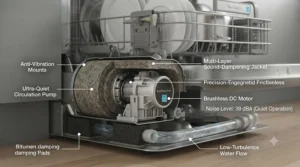
Not every WiFi-connected dishwasher is equally efficient — the WiFi and the efficiency are actually two separate engineering questions that happen to live in the same box. The most efficient WiFi dishwasher on this list, by raw water use, is the Miele G 7000 Series, using roughly 6 litres per Normal cycle. By annual energy consumption, several models land close together around 240 kWh per year, including the Bosch 500 Series SHP65CM5N.
What actually separates a genuinely efficient WiFi model from one that just has an app is whether the connectivity feeds back into real optimization. A dishwasher that lets you start a cycle remotely but gives you no consumption data isn’t meaningfully more efficient than a non-smart model — it’s just more convenient. The Samsung Bespoke DW80CG5451SRAA‘s SmartThings Energy dashboard and the GE Profile UltraFresh PDT795SYVFS‘s SmartHQ maintenance alerts both close that loop, turning connectivity into actual efficiency optimization rather than a novelty.
Eco-Friendly Smart Dishwasher Features That Actually Matter (And Those That Don’t)
Marketing copy loves to bundle a dozen features under “eco-friendly,” but only a handful genuinely move the needle. Soil sensors that adjust water and energy per load matter enormously — an energy-saving dishwasher with soil sensors and efficient jet and rack designs typically costs around $50 a year to run and can save up to 5,800 gallons of water over its lifespan compared to older, non-certified models. That’s a real, cumulative saving, not a rounding error.
Energy monitoring apps matter too, but only if you actually open them. A dashboard that tracks kWh and litres per cycle is only useful if it changes behaviour — switching a heated-dry habit to air-dry, or shifting laundry-adjacent power use to off-peak hours. Usage tracking data is the raw material; efficiency optimization is what you do with it. What doesn’t matter nearly as much: extra wash cycles nobody uses (most households run two or three of the eight-plus cycles offered), coloured interior lighting, and “smart” voice assistant integration for a machine you start once a day anyway. Look for the ENERGY STAR label, or verify certification status through CBC’s recent reporting on how Energy Star certification underpins Canadian rebate programs, before trusting any eco-branding on the box itself.
Common Mistakes When Buying an Energy Star Smart Dishwasher
The most expensive mistake is buying based on price alone and skipping noise ratings entirely — a cheap, loud dishwasher in an open kitchen gets used less often, which erases any efficiency benefit because dishes pile up and get handwashed instead. The second is assuming “WiFi enabled” automatically means “energy efficient”; as covered above, those are separate specs that simply happen to co-exist on newer models.
A third common error: ignoring installation compatibility. Buyers moving into a home with reversed plumbing hookups or requiring a new water line and electrical outlet sometimes end up spending more on installation than the appliance itself. Fourth, people frequently skip checking provincial rebate program eligibility before purchase, when most programs require proof of purchase and submission within a specific time window, usually 60 to 90 days — missing that window means leaving real rebate money on the table. Finally, many buyers overload the app with every notification enabled, get fatigued within a week, and then miss the maintenance alert that would have prevented a costly repair.
✨ Don’t Miss These Exclusive Deals!
🔍 Take your kitchen efficiency to the next level with these carefully selected Energy Star smart dishwashers. Click on any highlighted model above to check current pricing and availability. These machines will help you save water, save electricity, and free up your evenings for literally anything else!
Energy Star Smart Dishwasher vs Traditional Dishwasher
| Factor | Energy Star Smart Dishwasher | Traditional (Non-Certified) Dishwasher |
|---|---|---|
| Annual energy use | ~240 kWh (certified models) | Often 270 kWh+ |
| Water use per cycle | 6–13 litres depending on model | 15–20+ litres |
| Remote monitoring | Yes, via dedicated app | No |
| Maintenance alerts | Yes, proactive | No, reactive only |
| Rebate eligibility | Often eligible | Rarely eligible |
The gap here isn’t dramatic on any single line item, but it compounds. Shaving even 30 kWh and a few litres per cycle, multiplied across roughly 200-300 cycles a year, adds up to real, measurable savings over a machine’s typical 10-15 year lifespan. The bigger practical difference, though, is the app layer — a traditional dishwasher gives you no early warning before a filter clog turns into a repair bill, while a connected model flags it while it’s still a five-minute fix.
What to Expect: Real-World Performance
Specs on a page and dishes in your actual sink are two different experiences. In practice, Energy Star smart dishwashers on the Auto or Sensor cycle typically run 2-3 hours for a full load — longer than older machines, because efficiency is achieved through time and lower temperatures rather than brute-force heat and water volume. Reviewers across brands consistently note this is the single biggest adjustment period for new owners: the machine isn’t broken, it’s just optimizing.
Expect genuinely useful app notifications within the first week — cycle-complete pings are near-universal and reliable across the Bosch, Samsung, LG, and GE Profile platforms. Expect some learning curve on load sensing; turbidity sensors read water clarity to judge soil level, and a very lightly soiled load can occasionally trigger a longer cycle than expected if a stray food particle throws off the initial reading. Over a few weeks, most households settle into using two or three cycles regularly and ignore the rest — that’s normal and doesn’t mean the other cycles were wasted engineering.
Energy Star Smart Dishwasher for Renters and Small-Space Living
Renters face a specific set of constraints that most dishwasher marketing completely ignores: no permission for permanent plumbing changes, limited counter or under-counter space, and the very real possibility of moving within a year or two. For this audience, portability matters as much as efficiency. The GE Profile Countertop PZF560HGWBB solves the installation problem directly, connecting to a standard kitchen faucet with no permanent modifications, while still delivering genuine Energy Star certification and SmartHQ app monitoring.
The efficiency case is arguably stronger for renters than homeowners, too — this compact model reduces water usage by over 75% compared to handwashing, which matters enormously in a small unit where a full sink of hand-washed dishes might otherwise sit for a day before anyone deals with it. Small households often assume smart features are a full-size-kitchen luxury; the reality is a countertop unit with a proper app and Energy Star badge closes almost the entire feature gap with its built-in siblings.
Long-Term Cost, Maintenance, and Efficiency Optimization
The sticker price is the smallest number in this whole decision. Over a 10-15 year appliance lifespan, energy and water costs, rebate eligibility, and repair frequency matter more than the up-front difference between, say, the Whirlpool WDT995SAFM and the Bosch 500 Series SHP65CM5N. Energy Star dishwashers typically deliver 10-15 years of reliable service with proper maintenance, and that maintenance is exactly where the app-based efficiency optimization tools genuinely pay for themselves — a filter cleaned on schedule prevents the motor strain that shortens a machine’s working life.
| Cost Factor | Budget Smart Model | Premium Smart Model |
|---|---|---|
| Upfront price | C$550–C$1,100 | C$1,700–C$3,200 |
| Estimated annual running cost | ~C$60–C$75 | ~C$45–C$60 |
| Typical lifespan | 8–12 years | 12–15+ years |
| Rebate eligibility | Often eligible | Often eligible |
Rebates and incentives on ENERGY STAR certified products are searchable directly through Natural Resources Canada’s product directory, and it’s worth checking before assuming a premium model isn’t worth the difference — some provincial programs specifically reward the highest-efficiency tier with larger rebates, narrowing the real-world price gap. Looking at the table above, the premium models cost more upfront but claw back roughly C$15-25 a year in reduced running costs while lasting several years longer on average — run the simple math against your own expected ownership length before assuming cheaper is automatically the smarter buy.
Safety, Regulations, and Compliance for Canadian Buyers
Every dishwasher legally sold in Canada has to meet minimum energy performance standards under federal regulation, not just a voluntary sticker program. Dishwashers are currently regulated products in Canada, and efficiency standards for them save energy, reduce water consumption, and reduce overall costs for Canadians while also reducing energy-related greenhouse gas emissions. That’s worth knowing because it means the “Energy Star certified” language on a Canadian retailer’s listing isn’t just a nice-to-have marketing badge — it reflects a specific, federally recognized performance bar.
Electrical safety matters too: confirm any unit you buy carries CSA certification (or an equivalent recognized mark) for the Canadian market, particularly for countertop units that connect via standard household outlets and faucet adapters rather than professional installation. Energy efficiency certification is also used by green rebate programs across Canada to determine which products qualify, so a model without proper certification documentation may not just be less efficient — it may be ineligible for the rebate you were counting on. If you’re weighing a bigger renovation alongside the appliance purchase, provincial programs like Ontario’s Home Renovation Savings Program bundle appliance rebates with broader efficiency upgrades, which is worth checking before you finalize a purchase date.
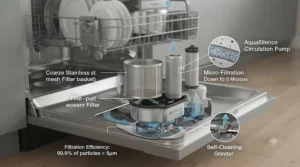
Frequently Asked Questions
❓ Is an Energy Star smart dishwasher worth the extra cost over a basic model?
❓ Do smart dishwashers need a strong home WiFi connection to work at all?
❓ What is the average lifespan of a smart Energy Star dishwasher?
❓ Can I get a government rebate on an eco-friendly smart dishwasher in Canada?
❓ Do energy monitoring apps actually reduce my utility bill, or just track usage?
Conclusion
Seven dishwashers, one shared certification, and wildly different personalities. The Bosch 500 Series SHP65CM5N remains the safest all-around pick for most kitchens. The Miele G 7000 Series is for buyers who treat water efficiency as a genuine hobby. The GE Profile Countertop PZF560HGWBB proves smart, efficient dishwashing doesn’t require owning your own plumbing. Somewhere in between, the Samsung Bespoke DW80CG5451SRAA, LG QuadWash Pro (ThinQ), GE Profile UltraFresh PDT795SYVFS, and Whirlpool WDT995SAFM each solve a slightly different version of the same problem: too many dirty dishes, not enough patience for waste.
The honest takeaway is this — Energy Star certification tells you a machine clears a real, regulated bar, but the app, the noise rating, and how you actually use the thing determine whether that certification turns into money saved or just sits there as a sticker on the door. Check your provincial rebate program, match capacity to your real household size, and resist the urge to run everything on Heavy out of habit. The rest takes care of itself.
Recommended for You
- Quietest Smart Dishwasher: 7 Silent Picks for 2026 (Under 40 dB)
- dishwasher works with Alexa Google Home: 7 Smart Picks (2026)
- Best WiFi Dishwasher 2026: 7 Top Picks Canadians Actually Love
Disclaimer: This article contains affiliate links. As an Amazon Associate, I earn from qualifying purchases. If you purchase products through these links, we may earn a small commission at no additional cost to you.
✨ Found this helpful? Share it with your friends! 💬🤗
