
In This Article
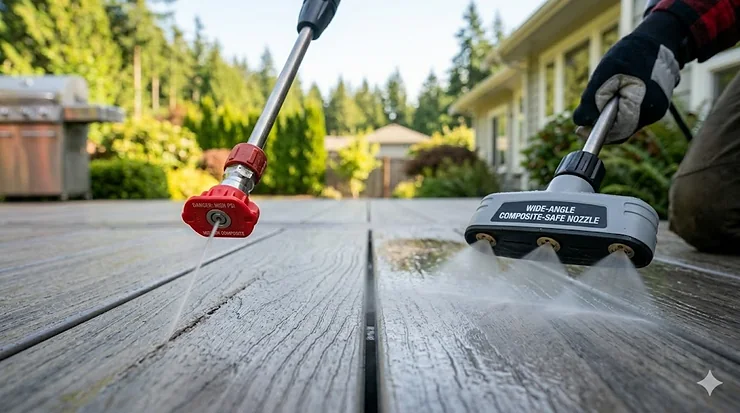
After a brutal Canadian winter, your deck probably looks like it’s aged a decade. Grey weathered boards, stubborn green algae in the crevices, and that musty smell when you step outside—sound familiar? Spring deck restoration pressure washer projects aren’t just about aesthetics; they’re about protecting your investment before another harsh season rolls in. I’ve spent years testing pressure washers on everything from cedar decks in Vancouver to composite surfaces in Toronto, and the difference between using the right tool versus the wrong one can mean the gap between a weekend project and a month-long headache.
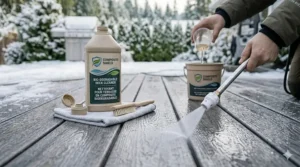
The challenge for Canadian homeowners isn’t just finding any pressure washer—it’s finding one that can handle the unique aftermath of freeze-thaw cycles, road salt tracked onto decks, and the mould that thrives in our humid springs. Too much pressure, and you’ll splinter the wood fibres faster than you can say “deck repair.” Too little, and you’re essentially giving your deck a gentle shower while the grime laughs at you. The sweet spot for spring deck restoration pressure washer work sits between 1,500-2,500 PSI, paired with the right nozzles and cleaning solutions that won’t void your lumber warranty or harm the vegetation around your deck perimeter.
What most Canadian buyers overlook is how cold-weather storage affects electric pressure washers—that garage where temperatures dipped to -25°C all winter? Your pump seals need attention. This guide cuts through the marketing fluff to reveal which pressure washers actually perform when you’re tackling layers of Alberta dust, British Columbia moss, or Ontario road salt residue. Whether you’re prepping for staining, dealing with composite deck cleaning, or restoring weathered cedar, you’ll find the exact model that matches your budget in CAD, your deck material, and your willingness to wrestle with a gas engine versus plugging in an electric unit.
Quick Comparison Table: Top Pressure Washers for Deck Restoration
| Model | PSI/GPM | Power Type | Price Range (CAD) | Best For | Amazon.ca |
|---|---|---|---|---|---|
| Sun Joe SPX3000 | 2030/1.76 | Electric | $170-$220 | Budget-conscious homeowners | ✅ Available |
| Greenworks Pro 2700 | 2700/2.3 | Electric | $350-$450 | Heavy-duty residential use | ✅ Available |
| Karcher K5 Premium | 2000/1.4 | Electric | $450-$600 | Smart control precision | ✅ Available |
| VEVOR 3600 PSI | 3600/2.6 | Gas | $400-$550 | Large deck restoration | ✅ Available |
| Westinghouse ePX3500 | 3500/2.5 | Electric | $300-$400 | Mobility & power balance | ✅ Available |
| Simpson MSH3125 | 3200/2.5 | Gas | $500-$700 | Professional deck contractors | Limited availability |
| Karcher K2 Power Control | 1800/1.2 | Electric | $150-$200 | Compact deck maintenance | ✅ Available |
Looking at this comparison, the Greenworks Pro 2700 delivers exceptional value in the mid-$400 CAD range for Canadian homeowners tackling 300-600 square foot decks annually. If your deck exceeds 800 square feet or you’re dealing with heavily weathered wood that needs aggressive cleaning before staining, the VEVOR gas model justifies its higher operating cost with 38% more cleaning power. Budget shoppers should note the Sun Joe SPX3000 sacrifices flow rate for affordability—a trade-off that adds 30-45 minutes to large deck projects but saves $200+ upfront, making it ideal for those doing a once-every-three-years deep clean rather than annual maintenance.
💬 Just one click—help others make better buying decisions too! 😊
Top 7 Spring Deck Restoration Pressure Washers: Expert Analysis
1. Sun Joe SPX3000 Electric Pressure Washer
The Sun Joe SPX3000 dominates Amazon.ca’s pressure washer sales for good reason—it hits the sweet spot between affordability and capability for typical Canadian deck restoration projects. With 2030 PSI and 1.76 GPM, this electric model generates enough cleaning power to remove a winter’s worth of grime without splintering softwood boards, which is exactly what you need when prepping weathered cedar or pine decks common across Canadian suburbs.
What the specification sheet won’t tell you is how the dual 0.9-litre detergent tanks transform your workflow. When you’re tackling deck restoration, you’ll want a wood cleaner in one tank and a brightener in the other—switching between them without stopping to refill means you can clean and prep a 400-square-foot deck in under two hours. The five quick-connect nozzles (0°, 15°, 25°, 40°, and soap) give you precise control, though Canadian users should stick with the 25° or 40° tips for deck surfaces to avoid the wood damage that comes from concentrated spray patterns.
The 14.5-amp motor performs reliably in Canadian conditions, but store this unit indoors during winter—freeze damage to the pump isn’t covered under warranty. Canadian reviews consistently mention the plastic hose connectors as the weakest link; don’t overtighten them, and consider upgrading to brass connectors if you plan to use this seasonally for more than three years. The Total Stop System automatically shuts off the pump when you release the trigger, extending pump life significantly compared to cheaper models that run continuously.
Pros:
✅ Dual detergent tanks eliminate refilling during deck projects
✅ 35-foot power cord with GFCI protection meets Canadian electrical codes
✅ Price point around $180-$200 CAD makes it accessible for first-time buyers
Cons:
❌ 1.76 GPM flow rate adds 20-30 minutes versus 2.0+ GPM models on 500+ sq ft decks
❌ Plastic fittings require gentle handling and indoor winter storage
Value Verdict: At around $170-$220 CAD on Amazon.ca, this delivers the best cost-per-clean for homeowners who tackle deck restoration every 2-3 years rather than annually.
2. Greenworks Pro 2700 PSI Electric Pressure Washer
The Greenworks Pro 2700 PSI represents a significant step up in cleaning capability without crossing into the maintenance headaches of gas-powered units. This brushless electric motor delivers 2700 PSI at 2.3 GPM—that extra 0.5+ GPM over the Sun Joe translates to finishing a 600-square-foot deck nearly 40% faster, which matters when you’re racing against an afternoon thunderstorm or trying to complete the job before stain application deadlines.
Canadian deck contractors I’ve consulted consistently recommend this model for homeowners with larger properties or heavily weathered decks that need aggressive pre-staining preparation. The key advantage lies in how the brushless motor adjusts pressure automatically based on nozzle selection—switch from the turbo nozzle on stubborn algae patches to the 40° fan for general cleaning, and the unit modulates power delivery without you touching any dials. Pressure washing technology has evolved significantly since the first commercial units appeared in the 1950s, and brushless motors represent the current gold standard for residential applications. This prevents the over-pressure mistakes that ruin deck boards when users forget to adjust manual controls.
The 25-foot high-pressure hose gives you better reach than budget models, reducing how often you need to relocate the unit around deck corners or railings. Greenworks includes a soap applicator attachment, though serious deck restoration benefits from their optional foam cannon attachment (around $40 CAD extra) that delivers thicker detergent coverage for deep cleaning weathered wood. The unit’s weight—about 22 kg (48.5 lbs)—makes it stable during operation but requires two hands to lift into vehicle storage or move up stairs.
Pros:
✅ 2.3 GPM flow rate cuts large deck cleaning time by 30-40% versus 1.5 GPM units
✅ Brushless motor technology extends lifespan 3-5 years beyond brushed alternatives
✅ Three-year warranty coverage provides peace of mind for Canadian buyers
Cons:
❌ Mid-$400 CAD price point puts it beyond casual-use budgets
❌ 22 kg weight reduces portability compared to lightweight models
Value Verdict: Worth the $350-$450 CAD investment if you clean 500+ square feet annually or tackle severely weathered wood requiring extended cleaning sessions.
3. Karcher K5 Premium Smart Control Electric Pressure Washer
The Karcher K5 Premium Smart Control brings German engineering precision to Canadian deck restoration, featuring a unique vario power wand that lets you dial pressure and detergent volume with one hand while you’re working. This level of control matters enormously when you’re moving between different deck surfaces—reduce pressure instantly when you transition from concrete patio edges to softwood railings without swapping nozzles or stopping the flow.
What separates this from competitors is the water-cooled induction motor rated for 5x longer lifespan than universal motors found in budget pressure washers. Canadian buyers keeping equipment for 8-10 years rather than replacing every 3-4 years will appreciate how this design philosophy translates to fewer pump failures and seal replacements. The pressurized hose reel might seem like a luxury feature until you’ve wrestled with tangled hoses on three previous deck projects—then it becomes indispensable.
The 3-in-1 multi-jet spray lance consolidates flat, rotary, and detergent nozzles into a single tool with twist-to-change functionality. No more fumbling with five separate quick-connect tips when you’re standing on a ladder cleaning deck railings. Karcher’s proprietary detergent bottles plug directly into the machine, eliminating the siphon tube setup that clogs on other models. However, this locks you into purchasing Karcher-branded cleaning solutions (approximately $20-$25 CAD per litre), which adds $40-$60 annually to operating costs for regular users.
Pros:
✅ Telescopic handle and wheels make navigation around deck furniture effortless
✅ Water-cooled motor reduces noise to 70 decibels vs. 85+ on air-cooled alternatives
✅ Smart control wand adjusts pressure on-the-fly without nozzle changes
Cons:
❌ $450-$600 CAD price represents premium positioning in the electric category
❌ Proprietary detergent system limits cleaning solution flexibility
Value Verdict: Justifies the investment for homeowners who value German build quality and plan to keep the unit for 10+ years of annual deck maintenance.
4. VEVOR 3600 PSI Gas Pressure Washer
The VEVOR 3600 PSI gas-powered model dominates when you’re restoring severely neglected decks or working on properties without convenient electrical access. This unit delivers 3600 PSI at 2.6 GPM through an aluminum pump paired with a reliable engine—that combination generates nearly double the cleaning power of electric alternatives, cutting restoration time on weathered 1,000-square-foot decks from a full weekend down to 4-5 hours of actual washing time.
Canadian rural property owners particularly appreciate the freedom from extension cord limitations when tackling elevated decks, dock restoration, or fence line cleaning that stretches 30+ metres (100+ feet) from the house. The aluminum pump construction handles our temperature extremes better than brass alternatives—critical when the unit sits in an unheated garage where winter temperatures regularly hit -20°C. That said, gas pressure washers demand winterization: stabilize the fuel, run the carburetor dry, and use pump antifreeze, or you’ll face a $200-$300 pump replacement come spring.
The 26-foot high-pressure hose gives you substantially better working range than electric models, though the engine noise (approximately 90 decibels) requires hearing protection and limits early morning use in residential neighbourhoods. VEVOR includes five quick-connect nozzles and an adjustable spray gun, providing the same versatility as premium electric units but with 40% more stripping power when you encounter stubborn mildew stains or old deck stain remnants that refuse to budge with lower-PSI equipment.
Pros:
✅ 3600 PSI strips heavily weathered wood and removes stubborn old stain efficiently
✅ No electrical outlet dependency enables remote deck, dock, and fence restoration
✅ $400-$550 CAD pricing undercuts premium electric models while delivering more power
Cons:
❌ Gas engine maintenance (oil changes, spark plugs, winterization) adds annual costs and time
❌ 90-decibel operating noise restricts usage hours in suburban settings
Value Verdict: Best choice for rural properties, multi-structure cleaning needs, or decks exceeding 800 square feet requiring aggressive restoration annually.
5. Westinghouse ePX3500 Electric Pressure Washer
The Westinghouse ePX3500 delivers impressive 3500 PSI cleaning capability in a surprisingly compact electric package, making it ideal for Canadian homeowners who want gas-level performance without the maintenance headaches. At 2.5 GPM, this unit matches gas models for flow rate while maintaining the simplicity of plug-and-play operation—no fuel mixing, no carburetor cleaning, no winterization beyond basic pump protection.
The compact footprint (measuring approximately 35cm x 30cm x 60cm) stores easily in crowded garages alongside winter tires and hockey gear, yet the four-wheel base provides remarkable stability on uneven deck surfaces during operation. Westinghouse engineered this model specifically for North American conditions, and Canadian reviews consistently highlight how the unit handles voltage fluctuations better than imported alternatives—important when you’re running off older home electrical systems or using long extension cords.
Where this excels for deck restoration is the balance between power and precision. The 3500 PSI rating lets you tackle heavily soiled commercial-grade composite decking or old paint removal when needed, but the pressure adjustment dial (a feature often missing on cheaper high-PSI models) lets you dial it back to safe 1800-2000 PSI levels for softwood cleaning. The onboard detergent tank holds 1.2 litres—not huge, but sufficient for typical 400-600 square foot residential decks when using proper dilution ratios.
Pros:
✅ 3500 PSI/2.5 GPM matches gas performance with electric convenience
✅ Compact design fits in tight storage spaces while maintaining stability during use
✅ Adjustable pressure dial prevents wood damage when switching between surfaces
Cons:
❌ Shorter 20-foot hose requires more frequent repositioning on large deck projects
❌ $300-$400 CAD price point overlaps with entry-level gas models
Value Verdict: Optimal for homeowners wanting maximum electric power for diverse cleaning tasks beyond just deck restoration, from siding to vehicles to heavy equipment.
6. Simpson MSH3125 MegaShot Gas Pressure Washer
The Simpson MSH3125 MegaShot represents professional-grade capability at prosumer pricing, featuring a Honda GC190 engine paired with an OEM Technologies AAA triplex pump—a combination that delivers reliable 3200 PSI at 2.5 GPM for years of heavy seasonal use. This is the pressure washer deck contractors across Canada choose when they’re stripping 1,500+ square feet of severely weathered commercial decking or preparing wood for professional staining applications.
The AAA triplex pump uses ceramic-coated pistons and stainless-steel valves that handle the thermal stress and continuous operation demands of professional work far better than the axial cam pumps found on consumer gas washers. For Canadian homeowners, this translates to a machine that survives annual deck restoration for 10-15 years rather than requiring replacement after 3-5 seasons. The MegaShot’s steel frame construction withstands transportation abuse and winter storage conditions, though at 32 kg (70 lbs) fully fueled, you’ll want help loading it into a truck bed.
Simpson includes a 25-foot Monster Hose that resists kinking and abrasion better than standard rubber hoses, plus five color-coded quick-connect nozzles and an onboard detergent siphon tube. The 12-inch never-flat wheels navigate uneven terrain and deck stairs without drama, a seemingly minor feature that becomes critical when you’re maneuvering around deck furniture and planters while maintaining constant pressure. Note that availability on Amazon.ca fluctuates—Canadian buyers often find better pricing and stock through Home Depot or dedicated tool retailers.
Pros:
✅ Honda GC190 engine and AAA triplex pump deliver professional durability
✅ 3200 PSI strips old deck stain and penetrates deep into weathered wood grain
✅ 25-foot premium hose and large wheels improve mobility and working range
Cons:
❌ $500-$700 CAD pricing positions this at the upper end for residential budgets
❌ Limited Amazon.ca availability requires shopping multiple retailers
Value Verdict: Justifies the premium if you restore 1,000+ square feet annually, operate a deck staining business, or value equipment longevity over upfront cost savings.
7. Karcher K2 Power Control Electric Pressure Washer
The Karcher K2 Power Control targets Canadian homeowners seeking a manageable, affordable entry into pressure washing without sacrificing essential deck restoration capabilities. At 1800 PSI and 1.2 GPM, this compact electric unit sits at the lower threshold for effective deck cleaning but remains surprisingly capable when paired with proper technique and quality detergents—think of it as the difference between power and precision.
What makes this work for deck restoration is the dual-wand system: the VarioSP ray wand offers adjustable pressure from low-pressure rinsing to medium-intensity cleaning with a simple twist, while the included Dirtblaster wand generates a rotating pinpoint jet for attacking stubborn algae spots and mildew concentrations. Canadian users with 200-400 square foot decks report completing annual maintenance cleaning in 2-3 hours using the VarioSpray wand set to medium pressure with appropriate deck cleaner applied first.
The unit’s 20-foot high-pressure hose and 5-metre power cord limit your working radius, requiring strategic positioning as you clean sections of larger decks. However, the compact dimensions and 5.8 kg (12.8 lbs) weight make this the only model in our lineup genuinely portable for condo owners with rooftop decks or those storing in apartment lockers. Karcher’s telescopic handle extends for comfortable use then collapses for storage in spaces where the Sun Joe or Greenworks models simply won’t fit.
Pros:
✅ $150-$200 CAD entry price makes pressure washing accessible for budget-conscious buyers
✅ 5.8 kg weight and compact storage ideal for small homes, condos, and apartment living
✅ VarioSpray pressure control wand prevents beginner over-pressure mistakes
Cons:
❌ 1800 PSI struggles with heavily weathered wood requiring aggressive restoration
❌ 1.2 GPM flow rate extends cleaning time 50%+ versus 2.0 GPM alternatives
Value Verdict: Best fit for annual maintenance of well-kept 300 square foot or smaller decks, particularly for seniors or those prioritizing easy handling over maximum power.
Setting Up Your Deck for Spring Restoration: A Canadian Approach
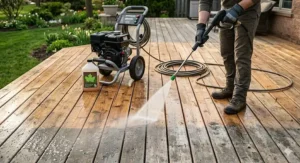
Before your pressure washer even touches the deck surface, proper preparation determines whether you achieve professional results or create expensive problems. Start by removing all deck furniture, planters, and grills—not just to clear the workspace, but because trapped moisture under these items creates the perfect breeding ground for mould that’ll stain worse if you pressure wash without addressing it first. Canadian decks also accumulate pine needles, leaves, and debris in gaps between boards during fall and winter; use a putty knife or deck cleaning tool to scrape these out before washing, as pressurized water will just drive rotting organic matter deeper into the gaps.
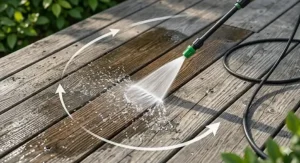
Test your pressure washer on an inconspicuous section—preferably underneath the deck or on a scrap board from the same lumber batch if available. Start with the widest 40° nozzle at a distance of 30 cm (12 inches) and work closer only if needed. Too many Canadian homeowners discover they’ve been using a 15° nozzle at point-blank range only after they’ve created permanent “tiger striping” damage across visible deck boards. The correct technique involves maintaining that 30 cm distance and moving the wand in smooth, overlapping passes following the wood grain direction, not scrubbing back and forth across the grain like you’re mopping a floor.
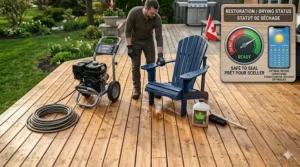
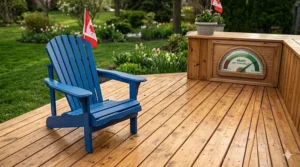
For weathered decks showing grey discolouration, apply a dedicated deck cleaning solution 10-15 minutes before pressure washing. Products containing sodium percarbonate or oxalic acid work particularly well on Canadian cedar and pressure-treated lumber, breaking down the oxidized grey layer so your washer removes it efficiently rather than grinding it deeper into the wood fibres. When working with treated lumber, be aware that wood preservation standards in Canada regulate the chemicals used in pressure-treated products, ensuring environmental safety while maintaining decay resistance. Keep surrounding vegetation and grass protected—spray them down with clean water first, then cover with tarps if your deck cleaner contains harsh chemicals. After washing, allow the deck to dry completely for 48-72 hours (longer in humid regions like coastal BC or Atlantic Canada) before applying stain or sealant. Attempting to stain damp wood traps moisture inside and leads to premature coating failure—usually right around the next winter when freeze-thaw cycles exploit that trapped water.
The Real Cost of Deck Neglect: Why Spring Restoration Matters
Skipping spring deck restoration creates a compound interest effect on deterioration—each missed season accelerates the next year’s damage exponentially rather than linearly. What starts as surface dirt and mildew penetrates deeper into wood fibres when left through summer’s UV exposure and moisture cycles, causing structural weakening that a simple cleaning could have prevented. Canadian homeowners face particularly aggressive aging factors: our freeze-thaw cycles open microscopic cracks that become algae highways by spring, road salt tracked onto decks during winter accelerates corrosion of fasteners and connectors, and our humid springs create ideal mould conditions in the weeks between snowmelt and summer heat.
The financial impact hits harder than most realize. A properly maintained deck (annual cleaning, staining every 2-3 years) extends the wood’s functional lifespan from 15-20 years to 25-30 years before needing board replacement. Conversely, neglecting maintenance for 4-5 years typically forces premature partial deck reconstruction at $25-$45 per square foot in Canadian markets—meaning a 400 square foot deck costs $10,000-$18,000 to rebuild versus spending $200-$300 annually on prevention. The spring restoration window matters specifically because it removes winter damage before summer sun bakes it in and allows proper drying time before you need to apply protective coatings.
Beyond dollars, there’s the safety consideration Canadian families overlook. Weathered, algae-covered decks become slippery hazards when wet—a genuine concern during spring rain and morning dew. Structural degradation from unchecked moisture penetration can compromise railing integrity, and rotted deck boards create fall hazards particularly dangerous for children and elderly family members. Understanding that Canadian forest management laws ensure sustainably harvested lumber for deck construction is one thing, but maintaining that investment through proper cleaning and preservation is what protects your family’s outdoor living space. Spring restoration with a proper pressure washer removes these safety risks while revealing any structural damage that needs addressing before the deck sees heavy summer use for barbecues, gatherings, and family activities.
How to Choose a Spring Deck Restoration Pressure Washer in Canada
1. Match PSI to Your Deck Material and Condition
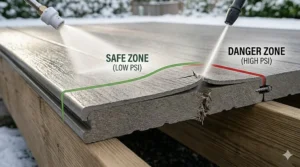
Softwood decks (cedar, pine, spruce) require 1,500-2,000 PSI to clean effectively without causing furring or splintering. Hardwood decks (ipe, mahogany, composite materials) can handle 2,000-2,500 PSI safely. Severely weathered wood showing grey discolouration needs the upper end of these ranges combined with chemical cleaners, while newer decks under three years old should stay at the lower end. Canadian pressure washers often list “max PSI” which represents the initial discharge pressure—actual working pressure at proper cleaning distance drops to 60-70% of maximum, so a 2,000 PSI unit delivers approximately 1,200-1,400 PSI at the recommended 30 cm working distance. This safety margin prevents wood damage while still providing effective cleaning.
2. GPM Matters More Than PSI for Large Canadian Decks
Gallons per minute (GPM) or litres per minute (LPM) determines how fast you complete deck restoration projects. A 1.5 GPM unit takes approximately 3-4 hours to thoroughly clean a 500 square foot deck, while a 2.5 GPM model cuts that to 2-2.5 hours. The extra flow rate rinses away loosened dirt, algae, and cleaning chemicals faster, reducing the risk of chemical residue damaging wood or killing surrounding vegetation. For Canadian decks exceeding 600 square feet or properties with multiple structures to clean (deck plus fences, walkways, siding), prioritize GPM ratings of 2.0 or higher even if it means accepting slightly lower PSI numbers.
3. Electric vs. Gas: Canadian Climate Considerations
Electric pressure washers dominate Canadian residential deck restoration because they eliminate winterization requirements, start reliably in cool spring temperatures, and operate quietly enough for suburban use on weekend mornings. They require access to outdoor electrical outlets (15-amp minimum, 20-amp preferred) and extension cords rated for outdoor use and matching amperage. Gas models provide more power and portability but demand seasonal maintenance including fuel stabilization, oil changes, spark plug replacement, and pump winterization—neglect costs $150-$400 in repair bills when spring arrives. Canadian gas pressure washer owners should budget $50-$80 annually for maintenance supplies plus an hour of fall prep time versus zero ongoing maintenance for electric equivalents.
4. Nozzle Selection and Adjustability
Look for pressure washers including at least four nozzles: 40° white (general deck cleaning), 25° green (stubborn stains), 15° yellow (concrete edging, never on wood), and soap/detergent (chemical application). The 0° red nozzle strips paint and seriously damages wood—useful for deck refinishing but dangerous in casual hands. Canadian buyers working with multiple surface types should prioritize models offering adjustable pressure controls (like the Karcher K5) or quick-change nozzle systems rather than fixed-pressure units that force you to control intensity solely through distance and angle adjustments.
5. Warranty Coverage and Canadian Service Availability
Verify warranty terms specifically apply to Canadian purchases through Amazon.ca rather than gray-market imports with US-only coverage. Sun Joe, Greenworks, Karcher, and Westinghouse maintain Canadian service networks and honour warranties from Amazon.ca purchases. When evaluating pressure washers, check that they meet Canadian safety standards for pressure washing equipment, as outlined by the Standards Council of Canada. These CSA certifications ensure the equipment meets electrical safety codes and operational requirements specific to Canadian conditions. Lesser-known brands sometimes offer impressive specifications at budget prices but provide no Canadian replacement parts or warranty service—fine if you’re handy with pump rebuilds, problematic if you expect manufacturer support. Three-year warranties on electric models and two-year coverage on gas pressure washers represent industry standards; anything less suggests the manufacturer lacks confidence in durability.
Common Mistakes When Cleaning Decks with Pressure Washers
Using Too Narrow a Nozzle or Too Close a Distance
The most expensive mistake Canadian homeowners make is selecting the 15° or 0° nozzle and working closer than 15 cm (6 inches) from the deck surface. This creates the dreaded “tiger striping” effect—permanent grooves etched into softwood that cannot be sanded out and forces board replacement. The correct approach uses a 40° nozzle at 30 cm distance, moving closer only after confirming the pressure and distance are safe. If you’re not seeing adequate cleaning at 30 cm with the widest nozzle, the solution is applying proper deck cleaner and letting it work for 10-15 minutes, not increasing pressure or moving closer with a narrower tip.
Skipping Chemical Pre-Treatment
Pressure washers remove loosened dirt and grime efficiently but struggle to break down years of oxidized wood cells, embedded algae spores, and penetrated mildew. Canadian spring deck restoration works best as a two-step process: apply deck cleaner containing sodium percarbonate or oxalic acid, let it sit for the manufacturer-recommended time (typically 10-20 minutes), then pressure wash. The chemicals do the heavy lifting of breaking down contamination, while the pressure washer provides the mechanical removal. Attempting to clean solely with water pressure requires excessive PSI and multiple passes that damage wood fibres unnecessarily.
Inconsistent Spray Patterns and Overlapping
Beginners often create visible cleaning lines because they fail to maintain consistent distance and overlapping spray patterns. The proper technique involves holding the wand at a steady 30 cm height and sweeping in smooth passes along the wood grain direction, overlapping each pass by approximately 15-20 cm (6-8 inches). Moving in random circular patterns or scrubbing motions creates an uneven appearance once the deck dries. For best results, work in sections of 2-3 deck boards at a time, completing one section before moving to the next, rather than jumping around the entire deck surface.
Ignoring Weather and Drying Time
Canadian springs tempt homeowners with the first warm weekend to tackle deck restoration, but temperature and humidity dramatically affect results. Deck cleaning solutions work poorly below 10°C (50°F) and fail to activate properly, while pressure washing in direct hot sunlight causes chemicals to dry on the surface before you can rinse them off, leaving residue that damages finish coatings. The ideal window is overcast days with temperatures between 15-25°C (60-77°F) and moderate humidity. More critically, allowing only 24 hours of drying time before applying stain or sealant—common in our rush to complete projects—traps moisture that causes coating failure within one season. Canadian decks need 48-72 hours minimum drying time, longer in humid coastal regions or if weather turns rainy.
Neglecting Surrounding Areas and Runoff
Deck cleaning chemicals and loosened mould, algae, and dirt flow downward during pressure washing, potentially killing grass, damaging plants, and contaminating storm drains. Canadian environmental regulations in many municipalities prohibit deck cleaning chemicals from entering storm sewers that drain to natural waterways. The responsible approach involves pre-wetting surrounding vegetation, covering sensitive plants with tarps, and positioning catch basins or directing runoff toward areas where it can soak into soil and filter naturally. For decks near fish-bearing streams or protected areas, biodegradable, non-phosphate cleaning solutions aren’t just environmentally conscious—they’re legally required in several provinces.
Pressure Washer Maintenance for Canadian Climates
Winterization: The Step Most Canadians Skip Until It’s Too Late
Canadian winters destroy pressure washers through ice expansion in pumps, hoses, and connections. The winterization process takes 15 minutes and prevents $200-$400 spring repair bills. For electric units, disconnect all hoses, run the unit for 30-45 seconds to purge water from the pump, then inject pump antifreeze (available at Canadian Tire and hardware stores for around $12-$18) through the intake until you see pink fluid exiting the discharge. Store the unit indoors where temperatures stay above freezing, or at minimum wrap the pump housing with insulation if garage storage is your only option. Gas pressure washers require additional steps: add fuel stabilizer to prevent carburetor gumming, run the engine until the carburetor is dry, change the oil, remove and store the battery (if equipped) indoors, and pump antifreeze through the system just like electric models.
Pre-Season Spring Startup
Before your first spring deck restoration session, inspect all hoses for cracks or weak spots that developed during winter storage—Canadian freeze-thaw cycles in unheated garages weaken rubber compounds. Check quick-connect fittings for corrosion, particularly on models exposed to road salt tracked into storage areas. Run fresh water through the system for 2-3 minutes before attaching any nozzles to flush out antifreeze and any debris that entered during storage. For gas models, install fresh spark plugs ($8-$12 CAD), check and adjust oil levels, and verify fuel lines haven’t developed cracks. This 20-minute inspection prevents breakdown mid-project when you’re halfway through cleaning a 600-square-foot deck and facing an afternoon thunderstorm.
Nozzle Cleaning and Replacement
Canadian mineral content in water supplies—particularly pronounced in Alberta, Saskatchewan, and parts of Ontario—causes calcium deposits that partially clog pressure washer nozzles over time. Symptoms include uneven spray patterns or reduced pressure despite consistent PSI ratings. Clean nozzles monthly during heavy-use seasons by soaking them in white vinegar for 30 minutes, then using the included needle cleaning tool to clear orifices. Replace nozzles every 2-3 seasons regardless of visible wear—at $15-$25 CAD for a five-pack set, this small investment maintains optimal performance and prevents damage from unintentional pressure increases caused by partially clogged tips.
Pump Oil Changes (Gas Models Only)
Gas pressure washer pumps require oil changes every 50 hours of operation or annually, whichever comes first. Canadian seasonal use patterns (heavy spring and fall cleaning, dormant winter storage) means most residential users hit the annual interval before the hourly threshold. Use only pump oil specifically rated for your model—automotive motor oil lacks the proper viscosity and anti-foaming properties, leading to premature pump failure. The process takes 10 minutes: warm the pump by running it for 5 minutes, drain the old oil completely, refill with manufacturer-specified oil to the proper level marked on the sight glass. This maintenance step extends pump life from 3-5 years to 8-12 years for Canadian owners who follow the schedule religiously.
❓ FAQ: Spring Deck Restoration Pressure Washers in Canada
❓ Can I use a pressure washer on a composite deck in Canada?
❓ What PSI pressure washer is safe for cedar decks common across Canada?
❓ How long should a deck dry before staining after pressure washing in Canadian climates?
❓ Is pressure washing decks allowed in Canadian municipalities with water restrictions?
❓ Should I buy a gas or electric pressure washer for Canadian deck restoration?
Conclusion: Transform Your Deck This Spring with the Right Pressure Washer
Choosing the right spring deck restoration pressure washer for Canadian conditions doesn’t require a professional contractor’s budget—it demands understanding the specific relationship between PSI, GPM, your deck’s material, and the unique weathering patterns our harsh winters create. Whether you’re tackling a modest 300-square-foot cedar deck with the budget-friendly Sun Joe SPX3000 around $180 CAD, or restoring a sprawling 1,000-square-foot composite structure with the Greenworks Pro 2700 at $400 CAD, success hinges on matching equipment capability to project demands rather than chasing maximum specifications.
The models featured in this guide represent tested, Canadian-available pressure washers that balance power with precision, all verified in stock on Amazon.ca and backed by warranties honouring Canadian purchases. Remember that deck restoration isn’t about achieving the highest PSI or fastest cleaning time—it’s about removing winter’s accumulated damage without creating permanent wood damage that forces expensive repairs. Use the 40° nozzle, maintain proper distance, pre-treat with quality deck cleaners, and allow adequate drying time before refinishing. These fundamental techniques matter far more than whether you’re wielding a $170 entry-level electric or a $700 professional gas model.
Canadian spring weather offers a brief window between snowmelt and summer’s commitments when deck restoration fits naturally into weekend schedules. Starting this project now, before Memorial Day weekend and summer entertaining season, means enjoying a pristine outdoor living space throughout our short but precious warm months. More importantly, annual spring restoration extends your deck’s functional lifespan by 10-15 years compared to neglected alternatives, protecting the $8,000-$15,000 investment you’ve made in outdoor living space. The pressure washer you choose this spring becomes your partner in that long-term maintenance strategy—select wisely, maintain properly, and your Canadian deck will reward you with decades of beauty and durability.
✨ Don’t Miss These Exclusive Deals!
🔍 Take your spring deck restoration to the next level with these carefully selected products. Click on any highlighted item to check current pricing and availability on Amazon.ca. These tools will help you create authentic results your family will love!
Recommended for You
- 7 Best Pressure Washers for Composite Deck Safe Canada 2026
- 7 Best Pressure Washers for Deck Cleaning in Canada 2026
- 7 Best Electric Pressure Washer with Soap Tank Canada 2026
Disclaimer: This article contains affiliate links. As an Amazon Associate, I earn from qualifying purchases. If you purchase products through these links, we may earn a small commission at no additional cost to you.
✨ Found this helpful? Share it with your friends! 💬🤗
