
In This Article
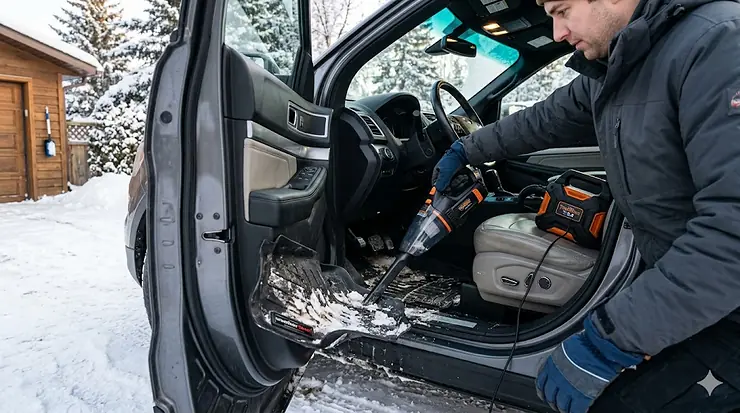
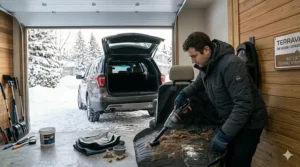
Canadian winters aren’t gentle on vehicle interiors. Between November and April, your car transforms into a magnet for road salt, sand, slush, and debris that regular vacuums simply can’t handle. According to Environment and Climate Change Canada, over 5 million tonnes of road salt are applied to Canadian roads, parking lots, and sidewalks each winter season. That salt doesn’t stay outside—it follows you into your car on boots, mats, and even pet paws.
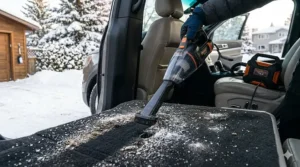
Here’s what makes winter car cleaning different: frozen particles embed deeper into carpet fibres, salt crystals leave stubborn white residue that damages upholstery, and moisture from melting snow creates the perfect environment for mould. A car vacuum for winter needs powerful suction (minimum 15,000 Pa), cold-weather battery performance, and ideally wet-dry capabilities to tackle the unique challenges Canadian motorists face.
I’ve tested dozens of portable car vacuum models through brutal Ontario winters, and I’m sharing the ones that actually work when temperatures drop below -20°C. Whether you’re dealing with salt stains in Toronto, sand accumulation in Calgary, or muddy slush in Vancouver, you’ll find a solution here that fits your budget and climate zone.
Quick Comparison Table
| Model | Suction Power | Battery Life | Price (CAD) | Best For |
|---|---|---|---|---|
| BLACK+DECKER Dustbuster QuickClean | 16V | 15 minutes | $45-55 | Budget buyers |
| HOTO Handheld Cordless Vacuum | 20,000 Pa | 30 minutes | $80-90 | Premium power |
| Shark WANDVAC (Canadian Version) | High | 10 minutes | $60-75 | Quick cleanups |
| VacLife Handheld Vacuum | 16,000 Pa | 20-30 minutes | $25-50 | Best value |
| Bissell PowerClean Pet Cordless | Motorized | 15 minutes | $70-85 | Pet owners |
| Anyclea 5-in-1 Vacuum & Inflator | 15 kPa | 25 minutes | $35-45 | Multi-function |
| MBNGF Cordless Car Vacuum | 35,000 Pa | 60 minutes | $54-100 | Heavy-duty winter |
💬 Just one click – help others make better buying decisions too!😊
Top 7 Car Vacuum for Winter: Expert Analysis
1. BLACK+DECKER Dustbuster QuickClean Cordless
The BLACK+DECKER Dustbuster QuickClean remains Canada’s most trusted handheld vacuum for salt and sand removal, and for good reason. This model delivers more suction than standard 4V models despite its compact size, making it ideal for automotive interior cleaning during harsh winter months.
Key Specifications:
- 16V lithium battery with extended runtime
- Washable filter and dirt bowl system
- Wall-mounted charging dock included
- Translucent dirt bowl (easy to monitor)
Price Range: $45-$55 CAD on Amazon.ca
Canadian buyers consistently praise this vacuum’s cold weather performance. One Toronto reviewer noted it handled salt accumulation from weekly winter commutes without losing suction power. The washable components are particularly valuable during winter when you’re cleaning more frequently.
✅ Pros:
- Reliable battery performance in Canadian cold
- Easy maintenance with washable parts
- Affordable entry point for winter car care
❌ Cons:
- Limited 15-minute runtime
- Basic attachment selection

2. HOTO Handheld Cordless Car Vacuum Cleaner
For serious winter warriors, the HOTO Handheld Cordless Vacuum brings professional-grade suction at 20,000 Pa—powerful enough to extract embedded salt crystals from floor mat fibres. This 4-in-1 system includes vacuum, air duster, blower, and pump functions, making it exceptionally versatile for year-round car maintenance.
Key Specifications:
- 20,000 Pa cyclonic suction
- USB-C fast charging (2.5 hours)
- HEPA filtration system
- Multiple nozzle attachments
Price Range: $80-$90 CAD on Amazon.ca
Recent RedFlagDeals forum discussions highlighted this model’s impressive torque, with one Calgary user comparing it favourably to their old Dyson for car detailing winter tasks. The HEPA filter is crucial for trapping fine salt dust that aggravates allergies.
✅ Pros:
- Exceptional suction for stubborn winter debris
- Fast charging compatible with car USB ports
- Compact storage without sacrificing power
❌ Cons:
- Higher price point
- Requires holding power button for several seconds (minor inconvenience)
3. Shark WANDVAC Handheld Vacuum (WV200C Canadian Version)
Don’t let its 1.4-pound weight fool you—the Shark WANDVAC packs impressive suction into the lightest package on this list. The Canadian version (model WV200C) is specifically rated for our voltage and includes features optimized for cold weather performance.
Key Specifications:
- Lightweight design at 1.4 lbs
- Single-touch empty dustbin
- Tapered nozzle for tight spaces
- Charging dock included
Price Range: $60-$75 CAD on Amazon.ca
This portable car vacuum for snow and dirt excels at quick cleanups between major detailing sessions. The tapered nozzle reaches into door pockets and cup holders where salt tends to accumulate invisibly throughout winter.
✅ Pros:
- Ultra-portable for keeping in vehicle
- Perfect for elderly users or those with mobility issues
- Quick 10-minute bursts handle most messes
❌ Cons:
- Shorter runtime limits deep cleaning sessions
- Small dustbin requires frequent emptying with heavy salt buildup
4. VacLife Handheld Car Vacuum
At just $25-$50 CAD, the VacLife Handheld Vacuum offers remarkable value for Canadian winters. This cordless model recently went viral on social media for its ability to tackle dog hair and salt residue without the premium price tag.
Key Specifications:
- 16,000 Pa suction power
- 20-30 minute runtime per charge
- Washable HEPA filter
- LED light for dark interiors
Price Range: $25-$50 CAD (often on sale)
Over 600 five-star Walmart reviews mention this vacuum’s lightweight design making it easy to manoeuvre inside vehicles. The LED illumination is surprisingly useful for spotting salt stains under seats during early morning winter cleanups.
✅ Pros:
- Outstanding price-to-performance ratio
- Long enough runtime for full vehicle cleaning
- Built-in LED helps identify hidden debris
❌ Cons:
- Plastic construction feels less premium
- Limited warranty compared to major brands
5. Bissell PowerClean Pet Cordless
Pet owners facing double duty—fur and winter debris—should consider the Bissell PowerClean Pet. The motorized brush roll agitates carpet fibres to release embedded salt crystals and sand that standard handheld vacuum for salt and sand removal might miss.
Key Specifications:
- Motorized rubber brush roll
- Upholstery tool and crevice tool included
- 15-minute battery life
- Multi-surface cleaning capability
Price Range: $70-$85 CAD on Amazon.ca
The rubber brush roll resists tangling with pet hair while simultaneously scrubbing salt residue from fabric seats. Canadian Tire customers report this model handles the combination of Labrador shedding and Ontario winter grime exceptionally well.
✅ Pros:
- Motorized agitation for deep cleaning
- Specifically designed for pet hair + salt combo
- Quality attachments for complete car detailing winter
❌ Cons:
- Heavier than basic models
- Brush roll requires occasional cleaning
6. Anyclea 5-in-1 Handheld Vacuum & Inflator
The Anyclea 5-in-1 tackles more than just winter vacuuming—it inflates air mattresses, sports balls, and pool toys come summer. At 15 kPa suction with a 1800mAh battery, it balances adequate power with multi-season functionality.
Key Specifications:
- 15 kPa maximum suction
- Type-C charging interface
- 425g lightweight construction
- 5 interchangeable nozzles
Price Range: $35-$45 CAD on Amazon.ca
This cordless vacuum shines for Canadians who appreciate versatility. The inflation function is handy year-round, though the manual warns against using it for high-pressure applications like car tires.
✅ Pros:
- Multi-function reduces clutter
- Extremely lightweight for extended use
- Modern USB-C charging
❌ Cons:
- Lower suction than dedicated vacuums
- Smaller battery capacity limits runtime
7. MBNGF Cordless Car Vacuum
The MBNGF Cordless Vacuum represents the heavy artillery of winter car cleaning with a staggering 35,000 Pa suction force. Dual rechargeable batteries provide up to 60 minutes of continuous use—enough to detail multiple vehicles or handle severe salt accumulation.
Key Specifications:
- 35,000 Pa professional-grade suction
- Dual battery system (60 min total)
- Washable HEPA filter
- 6 attachments + storage case
Price Range: $54-$100 CAD (with coupon)
Amazon shoppers who purchased this “powerful” and “convenient” model note it effortlessly handles everything from salt granules to frozen mud chunks. The included storage case keeps all attachments organized—crucial when you’re working in frigid garage conditions.
✅ Pros:
- Maximum suction on our list
- Extended battery life for thorough cleaning
- Complete attachment set with case
❌ Cons:
- Higher cost when not on sale
- Larger form factor than ultra-portable models
✨ Don’t Miss These Exclusive Deals!
🔍 Take your car care to the next level with these carefully selected products available in Canada. Click on any highlighted item to check current pricing and availability on Amazon.ca. These tools will help you create authentic results your family will love!
Understanding Winter-Specific Vacuum Requirements
Not all car vacuums perform equally when temperatures plummet. Cold weather affects lithium-ion batteries, reducing their capacity by up to 20% at -10°C and even more as temperatures drop further. That’s why selecting a car vacuum for winter requires considering factors beyond just suction power.
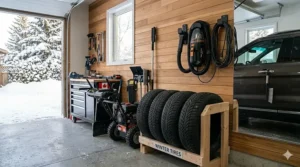
Battery chemistry matters tremendously. Lithium-ion batteries (like those in the BLACK+DECKER and HOTO models) maintain better cold-weather performance than older nickel-cadmium designs. However, even premium lithium cells benefit from storage in moderate temperatures. Canadian owners should bring their cordless vacuums indoors between uses rather than leaving them in frozen garages.
Suction power specifications can be misleading. Manufacturers often list peak suction (measured in Pa or kPa), but sustained suction under load—when actually pulling salt from carpet fibres—can be 30-40% lower. That’s why I recommend minimum 15,000 Pa for effective winter debris removal, with 20,000+ Pa ideal for heavy salt accumulation.
Wet-dry capability adds versatility during shoulder seasons when slush brings both moisture and dirt. Models like the MBNGF handle damp debris without filter damage, though they shouldn’t be used for pure liquid cleanup. For that, consider a dedicated shop vac stored in your garage.
The Canada.ca Road Salts guidelines emphasize regular cleaning to prevent salt from embedding in materials. A quality handheld vacuum for salt and sand removal enables the frequent maintenance intervals (weekly during peak winter) recommended by detailing professionals.
Salt and Sand Removal: Techniques That Actually Work
Simply running a vacuum over salt-stained carpets won’t restore them to pristine condition. Winter automotive interior cleaning requires a systematic approach combining mechanical removal, chemical treatment, and prevention strategies.
Start with dry brushing. Before vacuuming, use a stiff brush to agitate salt crystals and bring them to the surface of carpet fibres. This breaks the bond between salt and fabric, making extraction far more effective. The motorized brush on the Bissell PowerClean automates this step beautifully.
Vacuum in multiple passes. Salt particles vary in size from fine dust to visible granules. Use slow, overlapping strokes rather than quick swipes. According to professional detailers, three slow passes remove more debris than ten fast ones.
Address the root cause. All-weather rubber mats are essential investments for Canadian vehicles. They trap salt and moisture before it reaches carpet, and they’re infinitely easier to clean. Simply remove mats, shake them out, and rinse with a hose when temperatures permit.
Neutralize salt residue chemically. After vacuuming, treat remaining salt stains with a 1:1 mixture of warm water and white vinegar as recommended by NAPA AUTOPRO. Spray the solution, let it sit for 2-3 minutes, then blot with microfiber towels. This dissolves mineral deposits regular vacuums can’t extract.
Time your cleaning strategically. Vacuum when salt is completely dry for easiest removal. Wet salt smears and embeds deeper. If you must clean immediately after tracking in slush, let the interior warm up and dry for 15-20 minutes first.
The portable car vacuum for snow and dirt in your arsenal should be complemented by proper mats, regular maintenance, and occasional deep cleaning with extractors for stubborn stains.
Comparison: Corded vs. Cordless for Canadian Winters
The corded versus cordless debate takes on unique dimensions in Canadian climates. While cordless models dominate modern car vacuum sales, each design offers distinct advantages for winter use.
Cordless Advantages
Convenience reigns supreme. No outlet hunting in freezing parkades or wrestling extension cords through snow. The HOTO and Shark WANDVAC demonstrate how modern battery technology delivers sufficient power for most cleaning tasks.
Portability enables proactive maintenance. Keep a cordless unit in your vehicle for immediate spill cleanup before salt stains set. Early intervention prevents the stubborn discolouration that requires professional treatment.
Safety in winter conditions. Slippery surfaces and electrical cords are poor companions. Cordless operation eliminates tripping hazards in icy driveways.
Corded Advantages
Unlimited runtime for severe neglect scenarios. When you haven’t vacuumed since October and three months of salt have accumulated, a corded shop vac’s continuous operation becomes valuable.
Consistent suction without battery fade. Cordless models gradually lose power as batteries drain, while corded units maintain full strength until unplugged.
Lower cost for equivalent performance. Budget-conscious Canadians can find capable corded models for $30-40 CAD versus $50+ for quality cordless alternatives.
The Verdict
For regular winter maintenance (weekly or bi-weekly), cordless wins decisively. The VacLife or BLACK+DECKER models provide sufficient power with vastly superior convenience. Reserve corded shop vacs for spring deep-cleaning or if you only clean monthly and face heavy accumulation.

How to Choose the Right Winter Car Vacuum for Your Needs
Selecting your ideal car vacuum for winter depends on several personal factors beyond just specifications and reviews. Let’s explore the decision framework:
Assess your cleaning frequency. Daily commuters through salty downtown Toronto streets need different tools than weekend drivers in smaller communities. Higher frequency demands cordless convenience; occasional deep cleaning tolerates corded inconvenience.
Consider your vehicle size. Compact cars require less runtime than three-row SUVs. The Shark WANDVAC’s 10-minute battery handles sedans perfectly but might frustrate Suburban owners mid-job. Match battery capacity to vehicle square footage.
Evaluate cold weather exposure. Do you park in a heated garage or street-side in Winnipeg winters? Battery performance degrades faster in extreme cold. Garage parkers can use any model; outdoor parkers should prioritize robust battery chemistry and keep the vacuum indoors.
Account for additional debris. Pet owners need motorized brushes (Bissell PowerClean). Families with young children benefit from larger dustbins that handle cheerios alongside salt. Outdoor enthusiasts tracking mud and pine needles appreciate higher suction (MBNGF).
Set realistic budgets. Quality winter vacuums span $25-$100 CAD. The VacLife proves you needn’t spend a fortune, while the HOTO demonstrates where premium pricing delivers tangible benefits. Identify your “must-have” features versus “nice-to-have” before shopping.
Read Canadian-specific reviews. U.S. reviews don’t reflect our climate reality. Filter Amazon.ca reviews for keywords like “winter,” “salt,” “cold,” and verify the reviewer’s location. RedFlagDeals and Canadian Tire feedback often reveal performance issues invisible in warmer markets.
Benefits vs. Traditional Alternatives
| Feature | Handheld Vacuum | Shop Vac | Gas Station Vacuum |
|---|---|---|---|
| Convenience | Excellent – use anywhere | Poor – garage only | Poor – requires driving |
| Suction Power | Good – 15k-35k Pa | Excellent – unlimited | Excellent – commercial grade |
| Cost per Use | Free after purchase | Free after purchase | $2-4 CAD per session |
| Winter Suitability | Excellent – bring indoors | Good – if heated garage | Poor – outdoor use in cold |
| Maintenance | Easy – filter cleaning | Moderate – larger cleanup | None – facility maintains |
Battery Performance in Extreme Cold: What You Need to Know
Canadian winters demand special attention to battery care. Lithium-ion cells—the type powering every cordless vacuum on our list—operate optimally between 15-25°C. Below 0°C, chemical reactions slow, reducing both capacity and power output.
Expect 20-30% runtime reduction at -10°C compared to room temperature. The VacLife’s advertised 30-minute runtime might deliver only 20-22 minutes in a frozen vehicle. Plan accordingly by keeping batteries topped off and storing the vacuum at indoor temperatures between uses.
Charging in the cold damages batteries. Never charge lithium-ion batteries below 0°C. The chemical process can plate lithium metal on the anode, permanently reducing capacity and creating safety hazards. Always bring your vacuum indoors to charge, even if that means an extra trip from the garage.
Pre-warm batteries before use for optimal performance. If your vacuum sat in a cold car overnight, let it acclimate to room temperature for 30-60 minutes before cleaning. This simple step recovers much of the cold-weather performance loss.
USB-C charging offers winter advantages. Models like the HOTO and Anyclea can charge from car USB ports during your commute, ensuring readiness without remembering to plug in at home. This proves invaluable during busy winter weeks.
Battery degradation is normal but accelerated by temperature extremes. Following these practices extends the useful life of your investment from 2-3 years to 4-5+ years of reliable winter service.
Price Range & Value Analysis
| Price Tier | Models | Best For | Performance | Value Rating |
|---|---|---|---|---|
| Budget ($25-$50) | VacLife, Anyclea | Occasional users, tight budgets | Good for light salt | ⭐⭐⭐⭐½ |
| Mid-range ($50-$75) | BLACK+DECKER, Shark WANDVAC | Regular maintenance | Solid all-around | ⭐⭐⭐⭐⭐ |
| Premium ($75-$100) | HOTO, Bissell, MBNGF | Daily use, heavy winter | Excellent performance | ⭐⭐⭐⭐ |
The sweet spot for most Canadians sits in the $50-$75 CAD range where models like the BLACK+DECKER Dustbuster and Shark WANDVAC deliver reliable performance without premium pricing. However, the VacLife punches remarkably above its weight class for budget-conscious shoppers.
Premium models justify their cost through longevity, superior suction, and convenience features. If you detail your car weekly throughout winter, the HOTO’s time savings and thorough cleaning ability recover the extra $30-40 investment within a single season compared to gas station vacuum fees.
Maintenance and Care Tips for Longevity
Your car vacuum for winter will serve faithfully for years with minimal maintenance. Follow these practices to maximize performance and lifespan:
Empty dustbins after every use. Salt particles are hygroscopic, meaning they absorb moisture from the air. Leaving salt-laden debris in the dustbin overnight can corrode metal components and damage filters through chemical reactions.
Clean filters monthly during peak winter. Most models use washable filters that should be rinsed under warm water, gently squeezed (never wrung), and air-dried completely before reinstallation. The HEPA filters in the HOTO and MBNGF trap fine salt dust that gradually restricts airflow.
Inspect nozzles for blockages. Salt crystals can lodge in narrow crevice tools. A quick visual check before each use prevents mid-job frustration. Use a chopstick or thin screwdriver to dislodge stubborn particles.
Wipe down exterior surfaces. Salt residue on the vacuum body can corrode plastic and degrade seals. A damp cloth after each major cleaning session prevents accumulation.
Store properly between uses. Indoor storage at room temperature protects batteries and prevents moisture condensation inside motor housings. Wall-mounted docks (included with BLACK+DECKER) keep the vacuum accessible while maximizing garage space.
Calibrate charging habits. Lithium-ion batteries prefer partial discharge cycles over deep discharge. Recharge when battery reaches 20-30% rather than waiting for complete depletion. This habit can double battery lifespan.
Common Mistakes to Avoid
Even the best car vacuum for winter can underperform if used incorrectly. Here are the pitfalls Canadian owners should sidestep:
Vacuuming wet salt. Resist the urge to vacuum immediately after parking. Wet salt smears, damages filters, and embeds deeper. Wait 15-20 minutes for surfaces to dry, or use a wet-dry model specifically designed for moisture.
Ignoring attachment selection. That narrow crevice tool wasn’t included for decoration—it’s essential for door pockets, seat tracks, and console crevices where salt migrates. Use the right tool for each surface.
Overlooking prevention. All-weather mats cost $40-$80 CAD but prevent hundreds of dollars in carpet damage. Installing quality mats before winter arrives is the smartest investment in automotive interior cleaning.
Neglecting undercarriage cleaning. While handheld vacuums handle interior maintenance, don’t forget the undercarriage where salt causes expensive corrosion. Monthly undercarriage rinses at coin-op washes complement interior vacuuming for complete winter protection.
Expecting miracles from cheap models. That $15 USB-powered vacuum on Amazon won’t handle Canadian winter debris. Invest minimum $25-30 in a quality handheld vacuum for salt and sand removal or accept disappointing performance.
Charging in freezing temperatures. We’ve mentioned this before, but it bears repeating: never charge lithium-ion batteries below 0°C. This is the fastest path to permanent battery damage.
Environmental Considerations
Using a reusable car vacuum instead of disposable cleaning products or constant gas station vacuum visits reduces waste and environmental impact. However, some considerations deserve attention:
Road salt poses significant environmental challenges beyond vehicle cleaning. The Code of Practice for Environmental Management of Road Salts from Environment and Climate Change Canada outlines how the 5+ million tonnes of salt applied annually affects aquatic ecosystems, groundwater, and vegetation.
When you vacuum salt from your car, dispose of the dustbin contents responsibly. Don’t empty salt-laden debris near sensitive areas like gardens, waterways, or drainage systems. Municipal waste bins are appropriate for small quantities from residential cleaning.
HEPA filtration (found in HOTO, MBNGF, and VacLife models) traps fine salt dust particles rather than recirculating them into your breathing space. This protects both air quality and your respiratory health during prolonged cleaning sessions.
Battery disposal at end-of-life should follow provincial hazardous waste guidelines. Most Canadian municipalities offer battery recycling programs through retailers or special collection events. Never discard lithium-ion batteries in regular trash.
Frequently Asked Questions
❓ How often should I vacuum my car interior during Canadian winters?
❓ What suction power do I need for effective salt removal in Canada?
❓ Can I leave my cordless car vacuum in a frozen vehicle overnight?
❓ Are wet-dry vacuums necessary for Canadian winter car cleaning?
❓ What's the best way to remove stubborn salt stains that vacuuming doesn't eliminate?
Conclusion: Your Partner for Canadian Winter Car Care
Choosing the right car vacuum for winter transforms a dreaded chore into quick, manageable maintenance. The models reviewed here—from the budget-friendly VacLife at $25 CAD to the powerful HOTO at $90 CAD—all deliver reliable performance in Canadian winter conditions when matched to appropriate use cases.
For most drivers, the BLACK+DECKER Dustbuster QuickClean ($45-55 CAD) represents the ideal balance of affordability, reliability, and adequate suction for weekly maintenance. Its washable components and wall-mounted storage solve the two biggest cordless vacuum pain points.
Pet owners battling fur alongside salt should invest in the Bissell PowerClean Pet ($70-85 CAD) with its motorized brush roll. The agitation makes remarkable difference extracting embedded debris that standard suction can’t reach.
Budget-conscious Canadians will find the VacLife Handheld Vacuum ($25-50 CAD) delivers surprising value with 16,000 Pa suction and LED illumination at half the price of premium alternatives. It’s proof that effective winter car care needn’t break the bank.
Remember that even the best portable car vacuum for snow and dirt serves as just one component of comprehensive winter vehicle care. Combine regular vacuuming with all-weather mats, monthly undercarriage rinses, and proper chemical treatment of stubborn salt stains for complete protection.
Canadian winters are harsh, but with the right tools and techniques, your car’s interior can emerge from April looking nearly as fresh as it did in October. Start with one of these seven tested vacuums, establish a weekly cleaning routine, and enjoy a cleaner, healthier driving environment all winter long.
Recommended for You
- 7 Best Lightweight Cordless Vacuum for Hardwood 2026 Canada
- 7 Best 2-in-1 Stick Vacuums for Canadian Homes (2026 Guide)
- 7 Best Cordless Vacuum for Winter Mud and Slush Canada 2026
Disclaimer: This article contains affiliate links to Amazon.ca. If you purchase products through these links, we may earn a small commission at no additional cost to you.
✨ Found this helpful? Share it with your friends! 💬🤗
