
In This Article
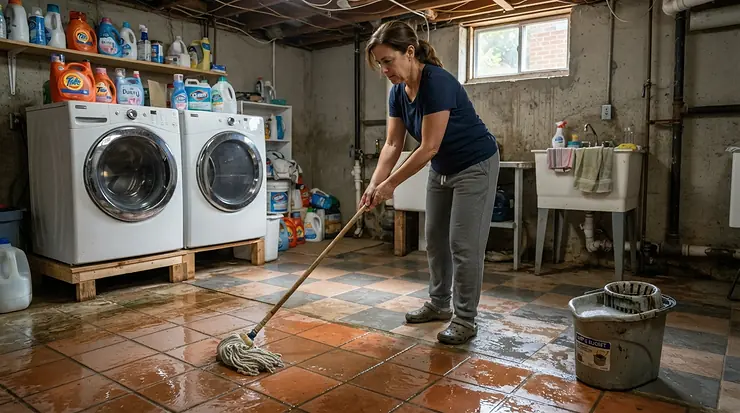
Sponge mop vs string mop for tile floors comes down to one question: how do you want to move water around your kitchen? A sponge mop uses a compressible foam block that a lever or roller squeezes nearly dry. A string mop drapes cotton or microfiber strands over the floor and relies on a wringer to control moisture. Both clean tile, but they go about it very differently, and the sponge mop vs string mop for tile floors debate has no single winner.
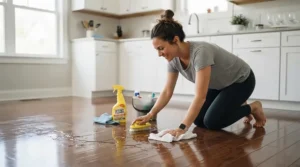
If you live in Canada, the stakes are higher than the packaging suggests. From November to April, winter drags grit, road salt and meltwater across your tile every day, and your mop decides whether that gunk gets lifted or smeared into the grout. The mop has been evolving since the word first appeared in English in 1496, yet most of us still grab whatever is on sale and hope for the best.
Let’s do better. This guide breaks down seven real mops, three sponge and four string-style, and explains what each spec means once it meets a ceramic floor. Along the way you’ll find honest notes on mop absorbency, grout cleaning, tile floor maintenance schedules built around Canadian seasons, and a cost comparison that doesn’t pretend all C$20 mops are equal.
A note on sourcing: I’m working from published specs, retailer listings and reputable review roundups, not from personal ownership of these mops. Where review evidence is thin, I’ll say so. Prices appear as rough CAD ranges because they change constantly, so check current price on amazon.ca before you buy.
Quick Comparison Table: Sponge Mop vs String Mop for Tile Floors
Here is the short version before we get into the details.
| Factor | Sponge Mop | String Mop | Best For |
|---|---|---|---|
| Water control | Squeezes nearly dry; short wet window | Depends on the wringer; spin systems control it best | Sponge: smooth tile. String: O-Cedar EasyWring Microfiber Spin Mop |
| Grout lines | Scrub strip helps, but the flat face can’t dip into the joint | Strands flex into recessed grout | String for textured or wide grout |
| Textured or matte tile | Foam can snag and tear | Strands conform to the surface | Libman Tornado Twist Mop |
| Cleaning the mop itself | Rinse and squeeze; grit can hide in the pores | Many heads are machine-washable | Libman Tornado Spin Mop System |
| Replacement rhythm | Refill heads wear out sooner | Heads typically last longer with proper washing | Sponge: Quickie HomePro Automatic Sponge Mop for easy refills |
Look at the pattern: sponge mops win on tidiness and speed, while string mops win on reach and reusability. The row that matters most for most Canadian homes is water control, because tile is non-porous but grout is not, and standing water is what turns pale grout grey. If your tile is smooth and glazed with narrow joints, a sponge mop is a perfectly sensible choice, but textured tile or wide grout pushes you toward string.
💬 Just one click — help others make better buying decisions too!😊
Top 7 Picks for Sponge Mop vs String Mop for Tile Floors: Expert Analysis
Three sponge mops and four string-style mops follow, spanning budget, mid-range and premium. Each one gets analysis, not a rewritten listing.
1. Libman Nitty Gritty Sponge Mop — built-in scrub brush for stuck-on grime
The standout here is the integrated scrub brush, which saves a trip back to the cupboard when a dried splash of pasta sauce refuses to budge. Libman markets the Nitty Gritty refills as synthetic and tear-resistant, and on tile that matters: cheap cellulose sponges tend to shred along edges and baseboards, while a tougher synthetic sponge shrugs off those scrapes. As with most sponge mops, you wring by squeezing the sponge, so your hands stay out of the dirty water.
My read of the design is that this is a small-room specialist. In a compact kitchen or ensuite with glazed ceramic and narrow grout, the scrub brush earns its keep. In a large open-concept space you’ll make more passes, and the flat sponge face can’t dip into deep, recessed joints.
I couldn’t verify a detailed review breakdown for this exact listing in Canada. What I can say is that the Nitty Gritty line is flagged as a best seller by at least one major North American retailer, which signals broad appeal rather than flawless performance.
Pros:
- ✅ Scrub brush built right into the head
- ✅ Tear-resistant synthetic sponge material
- ✅ Hands stay dry during wringing
Cons:
- ❌ Small footprint means more passes in big rooms
- ❌ Flat face can’t reach deep grout lines
Expect to pay around C$15-C$30, which is solid value for apartments and small kitchens.
2. Quickie HomePro Automatic Sponge Mop — Microban-treated sponge with a scuff scrubber
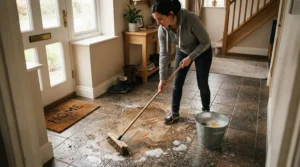
Quickie’s HomePro (model 047MB-4) pairs a hydrophilic sponge with a patented scrubber meant for scuff marks. “Hydrophilic” simply means water-loving: the sponge drinks up liquid quickly and holds more per squeeze than a basic foam block. The lever-style wringing is a descendant of the design Peter Vosbikian introduced in 1950 to spare people from bending over a bucket, and it is still a genuine back-saver.
The Microban treatment is worth a plain-English caveat. It protects the sponge itself against odour-causing bacterial growth, but it does not sanitize your floor, so don’t treat it as a disinfecting feature. Where it does help is the classic sponge-mop problem of a sour smell after a few weeks.
This is the pick for glazed porcelain or ceramic in a condo or townhouse where you want fast, tidy mopping. Refill heads for this style of mop are widely stocked, so you aren’t locked into one retailer. I couldn’t find a meaningful review pool for this exact model number, so my judgment here leans on the design rather than crowd sentiment.
Pros:
- ✅ Lever wringing keeps hands dry
- ✅ Scuff scrubber handles heel marks
- ✅ Antimicrobial treatment slows sponge odour
Cons:
- ❌ Sponge heads need replacing regularly
- ❌ Struggles on textured tile and deep grout
Budget around C$20-C$35; good value if smooth tile is your reality.
3. Yocada Sponge Mop with Adjustable Handle — honeycomb sponge and a telescopic handle
The honeycomb-textured sponge head is the hook. That pattern increases surface area and lets the sponge release grime and water more readily than a smooth block, and the breathable structure tends to dry faster between uses. The telescopic handle and a weight under 2.3 kg (about 5 lb) make it kinder to shoulders and backs, particularly in households with people of very different heights.
It’s designed for sealed hard floors, including tile, stone, marble and laminate. That “sealed” qualifier matters: unsealed or porous surfaces should not get a soaking sponge. In practice this suits a family kitchen with smooth ceramic where one person does most of the mopping and wants a lighter tool than a bucket-and-wringer system.
Review evidence is limited. The mop appears in several tile-focused roundups, but I couldn’t verify a robust, aggregated customer review summary, so I’d treat it as a promising mid-range option rather than a proven favourite.
Pros:
- ✅ Honeycomb head lifts and releases grime well
- ✅ Adjustable handle suits different heights
- ✅ Lightweight, easy on shoulders
Cons:
- ❌ Limited verifiable review history
- ❌ Flat head still can’t dip into grout
Plan on roughly C$25-C$40; fair value for the ergonomics.
4. Libman Tornado Twist Mop — classic cotton-blend string head on a steel handle
This is the traditional string mop in its purest form: a cotton-blend head and a steel handle, no gadgets. Cotton strands hold plenty of liquid and drape into grout lines, which is why home-care writers keep recommending string mops for tile with noticeable joints. The steel handle resists the flexing and cracking that plague cheap plastic ones.
The honest trade-off is water management. Some tile-focused reviewers warn that string mops leave too much standing water unless you wring them close to dry, and that water can seep into grout pores. Pair this mop with a bucket that has a good wringer, and the problem largely disappears. Skip the wringer, and you’ll see it in the grout colour within a season.
Libman’s cotton-blend wet mop family carries best-seller flags on a major North American retailer’s site, which tells you it’s a long-running staple rather than a fad. I couldn’t isolate customer complaints by theme, so check the label before machine-washing the head.
Pros:
- ✅ Strands reach into recessed grout
- ✅ Highly absorbent for spills and entryways
- ✅ Sturdy steel handle
Cons:
- ❌ Needs a good wringer bucket
- ❌ Gets grimy fast if not washed after use
Expect around C$12-C$25. The cheapest way to try string mopping.
5. Libman Wonder Mop — microfiber strands for a streak-free finish on glazed tile
Where cotton is bulky, microfiber is fine and dense. Microfiber is largely polyester and polyamide, and those ultra-fine fibres trap dust and thin films that cotton tends to push around. On glossy glazed tile, which shows every streak, that difference is visible. The steel handle keeps the whole thing sturdy.
I’d position the Libman Wonder Mop as a bridge for sponge-mop users who feel the sponge isn’t reaching their grout. You get string-style flexibility with a softer, finer touch than cotton. As with any string mop, the quality of your wringing decides whether it leaves a damp film or a dry shine.
Review evidence is thin on my end. Retail listings show microfiber replacement heads for this line selling in multi-packs, which hints that people buy refills repeatedly, but I can’t claim aggregated satisfaction numbers.
Pros:
- ✅ Fine fibres reduce streaks on glossy tile
- ✅ Flexible strands conform to grout joints
- ✅ Replacement heads easy to find
Cons:
- ❌ Needs separate wringing
- ❌ Microfiber snags on rough, unglazed surfaces
Budget about C$20-C$35 as a mid-range pick for glossy tile.
6. O-Cedar EasyWring Microfiber Spin Mop — foot-pedal spin wringer that leaves strands damp, not soaked
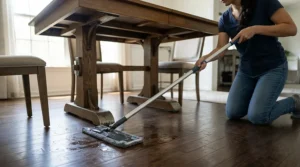
The triangular head reaches corners and edges, and the head rotates 360 degrees so it slides under furniture without a wrestling match. The real hero is the bucket: a foot-pedal spin wringer with a splash guard. Because centrifugal spinning removes excess water, the head ends up damp rather than soaked, and that is the critical detail for tile, where standing water collects in grout pores.
Real Simple reported that this mop was Amazon’s best-selling mop with more than 7,000 five-star ratings in the US, and shoppers praised the ease of wringing and the corner-reaching head. A tile-focused roundup also noted the absence of a scrubbing feature for stuck-on grout dirt, which is the sensible caveat. The head is machine-washable and the handle telescopes, which helps with upkeep and storage.
For families with kids, pets or a winter-salt mudroom, it’s the most forgiving system here: low effort, controlled moisture, and washable heads.
Pros:
- ✅ Spin wringer controls moisture well
- ✅ Machine-washable microfiber head
- ✅ Triangular head reaches corners
Cons:
- ❌ No built-in scrubber for stuck-on residue
- ❌ Bucket takes storage space
Expect around C$45-C$75. Strong value for larger or busier homes.
7. Libman Tornado Spin Mop System — editors’ best overall in a major 2025 mop roundup
Bob Vila’s 2025 mop roundup named this its best overall pick, and it lands in the string/spin category with a microfiber head usable wet or dry. That editorial verdict isn’t aggregated customer sentiment, but it does mean a professional reviewer compared it against a field of competitors and ranked it first.
Conceptually it’s the O-Cedar EasyWring Microfiber Spin Mop‘s closest rival: a spin bucket, a microfiber strand head, a telescopic handle. The practical difference for most buyers is brand ecosystem and refill availability. Libman refills are common in Canadian hardware and grocery aisles, which keeps long-term running costs predictable.
If your home mixes tile with vinyl or laminate, a spin system like this is the safest all-rounder, because you’re always in control of how much water touches the floor.
Pros:
- ✅ Editor-ranked best overall in a major roundup
- ✅ Wet or dry microfiber use
- ✅ Spin wringer limits standing water
Cons:
- ❌ Bulky bucket for small spaces
- ❌ No dedicated grout scrubber
Plan on around C$40-C$70. Excellent value across mixed flooring.
Top 7 Comparison: Specs, Price Ranges and Review Evidence
| Mop | Type | Standout feature | Price range (CAD) | Review evidence | Best For |
|---|---|---|---|---|---|
| Libman Nitty Gritty Sponge Mop | Sponge | Built-in scrub brush | C$15-C$30 | Best-seller flag on a retailer site | Small kitchens |
| Quickie HomePro Automatic Sponge Mop | Sponge | Microban-treated sponge | C$20-C$35 | Few public reviews found | Smooth glazed tile |
| Yocada Sponge Mop with Adjustable Handle | Sponge | Honeycomb head, telescopic handle | C$25-C$40 | Limited verifiable | Mixed-height households |
| Libman Tornado Twist Mop | String | Cotton-blend head | C$12-C$25 | Best-seller family | Budget grout reach |
| Libman Wonder Mop | String | Microfiber strands | C$20-C$35 | Limited verifiable | Glossy tile |
| O-Cedar EasyWring Microfiber Spin Mop | String/spin | Foot-pedal spin bucket | C$45-C$75 | 7,000+ five-star ratings (US, per Real Simple) | Busy families |
| Libman Tornado Spin Mop System | String/spin | Wet/dry microfiber head | C$40-C$70 | Editor’s best overall | Mixed flooring |
The table tells a simple story: you pay for water control. The two spin systems cost two to three times what the sponge mops do, and the extra money buys a wringer that keeps moisture out of your grout. If your budget is tight and your tile is smooth, the Quickie HomePro Automatic Sponge Mop and Libman Nitty Gritty Sponge Mop deliver the most per dollar, while textured tile and wide joints justify the Libman Tornado Twist Mop or a spin system.
✨ Don’t Miss These Exclusive Deals!
🔍 Take your tile cleaning to the next level with these carefully selected mops. Click on any highlighted item to check current pricing and availability. These tools will help you create spotless floors your whole family will love!
How to Choose a Mop for Ceramic Tile Canada: 6 Steps
A mop for ceramic tile Canada households can rely on should match your floor, your grout and your patience. Work through these steps in order.
- Identify your tile surface. Smooth glazed ceramic tolerates a sponge head well, while matte, textured or unglazed tile snags foam and favours flexible strands. Check the tile box or manufacturer care sheet.
- Check the grout. Narrow, sealed joints are easy for any mop. Wide or recessed cement grout is porous and collects dirt, so strands or a scrub brush matter more than a flat face.
- Decide how much water control you need. Sponge mops squeeze mechanically, spin systems wring by centrifuge, and traditional string mops depend on your arm. More control equals less seepage.
- Match size and handle to the room and your body. A telescopic handle saves backs, and a compact head suits ensuites while a wider head suits open kitchens.
- Weigh upkeep. Washable heads cost less over time, while sponge refills mean recurring purchases and a quick bin trip.
- Budget for the lifecycle, not the sticker. A C$20 mop that needs replacing three times a year is not cheaper than a C$60 system that lasts.
Sponge Mop vs String Mop for Tile Floors: Head-to-Head Verdict
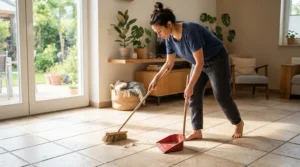
Experts disagree here, and that’s worth acknowledging. One stone-restoration specialist argues string beats sponge because a sponge’s small surface area spreads dirt and can drag sand across the floor. A home-care writer likewise says string mops suit tile because of grout. Meanwhile a tile-focused roundup warns that string mops leave too much standing water and that cotton string should be wrung nearly dry.
Where sponge wins
Sponge mops are quick, tidy and kind to joints that are sealed and narrow. The lever or squeeze mechanism produces a consistently damp head, which suits glazed tile that you want streak-free and dry within minutes.
Where string wins
String heads flex into recessed grout, cover more floor per pass and can be machine-washed. The O-Cedar EasyWring Microfiber Spin Mop and Libman Tornado Spin Mop System show that string-style heads can be wrung nearly dry when paired with the right bucket.
The tiebreaker is wringing
Whichever head you choose, the winner is the one you wring properly. A well-wrung string mop beats a sloppy sponge, and a fresh sponge beats a neglected string head. If you won’t wring thoroughly, buy a spin system or a lever-wring sponge mop.
Mop Absorbency: What It Really Means on Tile
Most buyers assume more mop absorbency is better. On tile it’s not that simple. Tile is non-porous, so water sits on the surface, and what you want is quick pickup of dirty liquid followed by controlled release, not a heavy sponge that holds a litre.
Sponge mops absorb through their cell structure and give water back under compression. That’s why the Yocada Sponge Mop with Adjustable Handle uses a honeycomb pattern: open cells release liquid easily. String mops absorb along their strands, and cotton holds a lot, which suits spills and muddy entrances but demands strong wringing.
Microfiber sits between the two. Its fine fibres grab and hold particles as well as liquid, which is why the Libman Wonder Mop and spin-system heads are popular for streak-free glazed tile.
A practical rule: choose high mop absorbency for entryways and kitchens where spills are common, and choose controlled mop absorbency for bathrooms and ensuites where seepage near tub edges and baseboards is the bigger worry.
Grout Cleaning: Which Mop Gets Into the Lines?
Grout cleaning is where the sponge versus string argument becomes physical. Cement grout is considerably more porous than the tile around it, which makes it far more prone to collecting dirt and stains. Epoxy grout is less susceptible. That one fact explains why mops that skim the surface often leave a floor looking clean but the joints looking dingy.
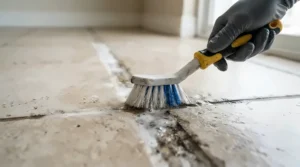
String-style heads reach into recessed joints, while sponge mops rely on a scrub strip or built-in brush, such as the one on the Libman Nitty Gritty Sponge Mop. For old or stained grout, neither replaces a stiff nylon brush and a pH-neutral cleaner.
On chemicals, tile-industry guidance generally steers away from acids, ammonia and bleach-based cleaners for routine use, because they can damage grout over time. There’s a safety angle too. Health Canada is clear that you should never mix bleach with other household cleaning products, including vinegar and ammonia-based glass cleaners, because the result can be toxic gas.
Sealing cement grout also pays off. A sealed joint resists staining and mildew, and the sealer’s instructions will tell you how often to reapply.
Traditional Mop Comparison Canada: Sponge and String vs Flat, Spin and Steam
A proper traditional mop comparison Canada shoppers can use needs to include the alternatives, because spin and steam systems are increasingly common.
| Type | Strength on tile | Weakness | Best For |
|---|---|---|---|
| Sponge | Tidy, fast, lever wringing | Doesn’t dip into grout; needs refills | Small, smooth-tile rooms |
| String | Reaches grout; reusable heads | Can leave standing water | Textured tile, wide joints |
| Flat microfiber | Glides, covers more floor | Often no scrubber | Large glazed areas |
| Spin (O-Cedar EasyWring Microfiber Spin Mop, Libman Tornado Spin Mop System) | Controlled moisture, washable heads | Bulky bucket, higher cost | Busy family homes |
| Steam | Chemical-free sanitizing on sealed tile | Check manufacturer guidance for grout | Sealed ceramic, deep cleans |
Notice that the traditional options (sponge and string) win on price and simplicity, while the modern ones win on moisture control. For most Canadian homes, a spin system is the best compromise, but a well-matched sponge or string mop remains perfectly capable if you wring carefully and clean the head. Steam mops can work on sealed ceramic, though you should confirm that your grout and sealer are compatible before relying on one.
Long-Term Cost: What a Mop for Ceramic Tile Canada Homes Use Really Costs
Sticker price misleads. Consider this illustration, which rests on assumptions rather than measured data: if you replace a sponge head three times a year at about C$10 each, that’s roughly C$90 over three years on top of the original mop. A washable microfiber head that you replace once a year at C$12-C$15 would come to well under C$50.
| Mop | Upfront (CAD) | Recurring cost | Value verdict |
|---|---|---|---|
| Quickie HomePro Automatic Sponge Mop | C$20-C$35 | Sponge refills | Great short-term, pricier long-term |
| Libman Nitty Gritty Sponge Mop | C$15-C$30 | Sponge refills | Best for tiny budgets |
| Libman Tornado Twist Mop | C$12-C$25 | Occasional new head | Cheapest long-term if washed |
| O-Cedar EasyWring Microfiber Spin Mop | C$45-C$75 | Washable head, occasional refill | Best value for busy homes |
Washable string heads usually win on cost per year, while sponges win on convenience. If you tile a whole main floor, the spin system’s higher upfront price tends to pay back within a year or two. Check current price listings, since promotions can shift the maths.
Tile Floor Maintenance: A Canadian Weekly and Seasonal Routine
Good tile floor maintenance starts before the mop touches water. Dry-clean first, because sweeping or vacuuming removes the sand and salt that scratch tile and turn into slurry when wet.
Weekly routine
- Sweep or vacuum, with extra attention to entryways.
- Mop with warm water and a pH-neutral tile cleaner, working in sections.
- Rinse the mop head, wring thoroughly and do a final pass with clean water.
- Let the floor dry fully, and don’t leave water or solution on tile longer than necessary.
Monthly and seasonal tasks
- Scrub grout lines with a soft or medium brush and a pH-neutral cleaner.
- Wash string and microfiber heads in the machine if the label allows, and air-dry them.
- In winter, put boot trays and mats at every entry, and rinse salt residue early, before it dulls glazed tile.
- Replace sponge heads when they crumble, smell sour or no longer rebound.
Safety belongs in the routine too. The Canadian Centre for Occupational Health and Safety notes that about two-thirds of falls happen on the same level, caused by slips and trips. At home, mop in sections, post a wet-floor warning if others are around, and finish with a dry pass in high-traffic areas.
Real-World Scenarios: Which Mop Fits Your Home?
Scenario 1: The condo renter. You have 55 m² (about 600 sq ft) of glazed porcelain, a C$30 budget and one mop session a week. The Quickie HomePro Automatic Sponge Mop is the logical match: fast, tidy, no bucket gymnastics. Replace the sponge when it tires.
Scenario 2: The family with a mudroom. Five people, textured ceramic, boots and snow from November to April, and mopping two or three times weekly. The O-Cedar EasyWring Microfiber Spin Mop controls moisture, handles spills and washes clean. It costs more upfront but earns it back in refills you won’t buy.
Scenario 3: The older home with wide grout. Cement grout, narrow budget of about C$20 and a willingness to put in a little effort. The Libman Tornado Twist Mop with a wringer bucket reaches the joints, and a weekly brush session handles the rest.
Scenario 4: Mixed flooring. Tile in the kitchen, laminate in the hall. The Libman Tornado Spin Mop System keeps water use consistent across both, and the wet-or-dry head means you can dust-mop the laminate first.
Pick the scenario nearest yours and let your floor, not the marketing, make the call.
Safety and Chemical Guidance for Canadian Households
Cleaning accidents are more common than people expect. Reporting by CBC found that poison-centre exposures linked to cleaning products and disinfectants rose 58 per cent between February and March 2020 compared with the previous year, with mixing bleach and vinegar or ammonia cited as a common mistake.
Keep it simple. Use one product at a time, follow label directions, ventilate the room and store chemicals out of reach of children. Look for hazard symbols on labels and treat them seriously. A pH-neutral tile cleaner and warm water handle most routine jobs without any need to experiment.
Footwear and floor wetness matter as well. Wear shoes with grip while mopping, keep walkways clear and let the floor dry before reopening a hallway to foot traffic. None of this requires special equipment, only habit.
FAQ
❓ Is a sponge mop or string mop better for grout lines?
❓ How often should I replace a sponge mop head on ceramic tile?
❓ Can I machine-wash a string mop head?
❓ Is a spin mop worth the extra money over a basic string mop?
❓ Are sponge mops safe on glazed porcelain and ceramic tile?
Conclusion
So, who wins the sponge mop vs string mop for tile floors contest? It depends on your tile, your grout and how seriously you take wringing. Smooth glazed ceramic with narrow joints suits a sponge mop like the Quickie HomePro Automatic Sponge Mop. Textured tile, wide grout and muddy Canadian entryways favour string-style heads, and the O-Cedar EasyWring Microfiber Spin Mop or Libman Tornado Spin Mop System give you that reach with proper moisture control. On a tight budget, the Libman Tornado Twist Mop is the cheapest way to get string performance.
Remember the bigger picture: mop absorbency is a balancing act, grout cleaning needs a brush as much as a mop, and tile floor maintenance works best as a weekly routine rather than an occasional blitz. If you’re still comparing, revisit the traditional mop comparison Canada table above and choose the mop for ceramic tile Canada conditions demand, not the one with the loudest packaging.
Recommended for You
- Flat Mop Vs Spin Mop For Small Apartments: 7 Best Picks 2026
- Traditional Mop For Pet Hair: 7 Best Picks For 2026
- Sponge Mop For Vinyl Flooring: 7 Best Safe Picks, Canada 2026
Disclaimer: This article contains affiliate links. As an Amazon Associate, I earn from qualifying purchases. If you purchase products through these links, we may earn a small commission at no additional cost to you.
✨ Found this helpful? Share it with your friends! 💬🤗
