
In This Article
Picture the kitchen floor at 9 p.m. on a Sunday. Pasta water has escaped the pot. There’s a fine film of cooking oil around the stove that no one noticed until a sock found it. And somewhere near the fridge, a toddler’s juice cup has staged a small, sticky protest.
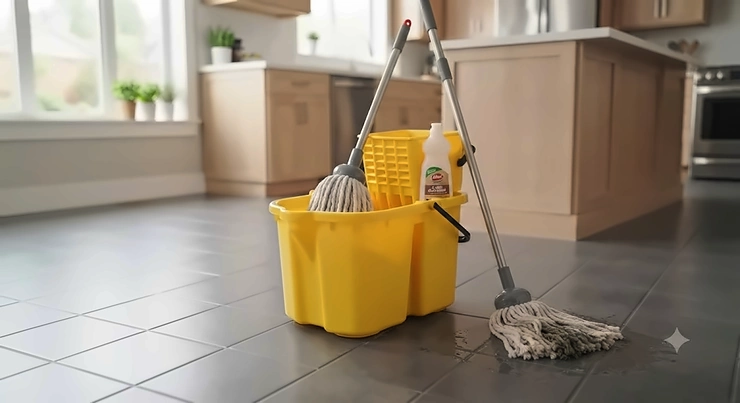
That’s the job. It isn’t dusting, and it isn’t a light refresh. Kitchen floors get liquid, grease and crumbs all at once, which is why string mops for kitchen floors have outlived every gadget that promised to replace them. A pile of absorbent strands on a stick sounds primitive, yet it drinks up a spill faster than most flat pads and rinses clean in a bucket. Mops have been around for centuries. The mop’s long history runs from bundled rags to today’s engineered fibres, and the basic idea has barely changed.
Here’s the catch, though. A string mop is only as good as the fibre, the head weight and the bucket it lives with. Pick a heavy head for a tiny bucket and you’ll fight the wringer every time. Pick the wrong fibre and you’ll push grease around instead of lifting it.
This guide ranks seven real options, from a classic cotton head to a launderable microfibre one, plus a compact bucket with a wringer. It explains what each spec means on an actual kitchen floor, and it covers grease, cleaners and spill response along the way. Prices below are ranges in Canadian dollars, and they change, so check current pricing before you buy.
Quick Comparison Table: String Mops for Kitchen Floors at a Glance
| Product | Head / Type | Best For | Approx. Price Range (CAD) |
|---|---|---|---|
| Rubbermaid Commercial Products Cotton Cut-End Wet Mop | Cotton, cut-end, 54 in handle | Budget buyers, big spills | around C$15–C$30 |
| Rubbermaid Commercial Products Super Stitch Blend Mop | Cotton and synthetic blend | Everyday cooking households | around C$20–C$35 |
| Rubbermaid Commercial Products Microfiber String Mop | Launderable microfibre | Grease-prone kitchens, long-term value | pack pricing, roughly C$60–C$120 |
| Libman Commercial Looped-End Wet Mop | Looped-end cotton or blend | Busy family kitchens | around C$20–C$40 |
| O-Cedar Commercial Cotton String Mop | Cotton string | Straightforward mid-range pick | around C$20–C$40 |
| Boardwalk Looped-End Cotton Mop Head | Replacement head | Spare-head rotation | around C$12–C$25 |
| Rubbermaid Commercial Products 22-Qt Bucket with Upward Press Wringer | Compact bucket and wringer | Small kitchens | around C$60–C$110 |
Notice how the table splits into two decisions. The first is the head fibre, and it drives absorbency and grease release. The second is the bucket, and it drives how dry the mop gets. Buyers who treat these as separate choices usually end up happier. The Rubbermaid Commercial Products Microfiber String Mop sits at the top of the price ladder because you buy it in a multi-pack, but its per-wash cost drops as it lasts. The Boardwalk Looped-End Cotton Mop Head is the cheapest way to keep a clean spare on hand.
💬 Just one click — help others make better buying decisions too!😊
What Are String Mops for Kitchen Floors?
String mops for kitchen floors are wet mops built from cotton, synthetic or microfibre strands attached to a headband and handle. You dip them in cleaning solution, wring them out and pull them across sealed floors like tile, vinyl or laminate. Their loose strands absorb liquid and trap grime, which suits kitchens.
Why does the design endure? Mostly because of absorbency. Retail guidance from major hardware chains makes the same point: a classic cotton string mop soaks up a lot of liquid, which makes it a good match for big messes, and it really wants a bucket with a wringer. That pairing is the whole system. A string mop without a wringer is a dripping rope, and a wringer without a decent mop is just a fancy bucket.
There are two main head shapes. Cut-end heads have loose strand tips. Looped-end heads use one continuous loop per strand, which reduces fraying and generally lasts longer, though the cut-end version usually costs less. Both are usually sized by weight class, such as #16 for a 16 oz (about 450 g) head, and that number matters when you shop for a bucket. We’ll come back to it.
Top 7 String Mops for Kitchen Floors: Expert Analysis
A quick word on method. This ranking is built from the specs and category traits you can verify, plus manufacturer claims where I cite them. I haven’t tested any of these mops in a kitchen, and I won’t pretend I have. Where amazon.ca review data couldn’t be verified at the time of research, I say so, and I suggest reading the three-star reviews on each listing, which are usually the most honest.
1. Rubbermaid Commercial Products Cotton Cut-End Wet Mop — best budget sponge for big spills
The cut-end cotton head is the archetype, the mop you picture when someone says “mop.” Its loose strands fan out and soak up an astonishing amount of liquid, which is exactly what you want when a pot boils over. The listing I found at a major retailer describes a 54 in (about 137 cm) handle and a #16 head.
The handle length matters more than you’d think. At 137 cm, most adults can mop upright without stooping, and that spares your lower back over a long kitchen session. The #16 head, roughly 450 g of cotton, holds plenty of water, but it needs a bucket that can accommodate it. A very small bucket will struggle.
Based on the spec comparison, this is the “buy it for the price and the thirst” option. Cotton also has a weakness in kitchens: plain cotton tends to smear an oily film rather than release it, especially in lukewarm water. It suits kitchens where the mess is mostly water, juice and spills, less so where a fryer lives.
I couldn’t verify the current amazon.ca rating breakdown, so check recent reviews for fraying and lint complaints, which are common talking points for cut-end cotton generally.
Pros:
- ✅ Very absorbent for large spills
- ✅ Long handle reduces bending
- ✅ Low entry price
Cons:
- ❌ Cut ends fray and shed lint over time
- ❌ Cotton can smear grease films
Price: around C$15–C$30. Value verdict: strong for a low-stakes kitchen, mediocre for greasy ones.
2. Rubbermaid Commercial Products Super Stitch Blend Mop — best everyday blend for cooking households
A blend mop combines cotton with synthetic fibres, and the stitched band gives the strands some structure. The Medium size is the common household pick. The point of a blend is balance: you keep much of cotton’s absorbency but gain durability and resistance to going sour.
What does that look like in a kitchen? Synthetic fibres generally release soil more easily when you rinse them, so the head comes back cleaner between dips. On paper, this suggests fewer grey, sad-looking strands after a month of use. It’s a reasoned expectation, not a lab result, so treat it as a lean rather than a promise.
The blend makes sense for anyone who cooks daily. Every household has a Tuesday when the soup wins, and this head handles Tuesday without demanding the ritual care that pure cotton does. It’s also a fair candidate if you’re hunting a grease-resistant mop Canada shoppers can trust for everyday oil splatter, provided you pair it with hot water and a proper degreasing cleaner.
Confirm the headband style and size on the listing before you order, since these get sold in slightly different formats. I couldn’t verify amazon.ca review counts, so check them yourself.
Pros:
- ✅ Blend resists souring better than cotton
- ✅ Rinses cleaner between dips
- ✅ Suits daily cooking messes
Cons:
- ❌ Absorbs slightly less than pure cotton
- ❌ Sold in varying head sizes, so check fit
Price: around C$20–C$35. Value verdict: the sensible default for most families.
3. Rubbermaid Commercial Products Microfiber String Mop — best long-term value in a grease-heavy kitchen
Microfibre is the outlier on this list, and it earns its spot. The manufacturer says these heads can be laundered at least 100 times and that they clean 48% faster than a standard cotton mop. That’s a manufacturer claim, so weigh it accordingly, but the launderability is the real headline. Heads are sold in six-packs in medium and large sizes and are compatible with standard wet mop handles and frames.
Here’s what that means on a kitchen floor. Microfibre’s fine fibres tend to grip oily film better than thick cotton when used with hot water and a degreaser. You wash the head in the machine, and it comes back ready. That’s a very different rhythm from a cotton head that goes grey and eventually gets thrown out.
The value logic is straightforward. A six-pack costs more upfront, but if each head survives many washes, the cost per use falls sharply. Think of it as buying a small fleet instead of a single boat. One tip that applies to microfibre in general: skip fabric softener, which coats the fibres and reduces performance.
If you want a grease-resistant mop Canada kitchens can lean on, this is the most convincing candidate here. I couldn’t verify amazon.ca availability of the six-pack, so confirm the pack before you order.
Pros:
- ✅ Machine-launderable, rated for 100+ washes by maker
- ✅ Fits standard wet mop handles and frames
- ✅ Grips oily film well with hot water
Cons:
- ❌ Higher upfront cost as a multi-pack
- ❌ Loses performance if washed with softener
Price: roughly C$60–C$120 for a pack. Value verdict: best over time, even if the sticker looks steep.
4. Libman Commercial Looped-End Wet Mop — best sturdy loop design for busy family kitchens
Looped-end construction is the durable cousin of the cut-end head. Because each strand forms one continuous loop, there are no loose tips to fray. Category guidance notes that looped-end heads generally outlast cut-end ones and cost less over the long run, even though they cost a bit more upfront.
In practice, that means fewer stray threads on your floor and a head that holds its shape after repeated wringing. For a kitchen mopped several times a week, the shape retention is the point. A head that stays fluffy keeps making even contact with the floor, and that’s the difference between a clean sweep and a streaky one.
The Libman Commercial line is aimed at heavier use, so it suits households with kids, pets or a lot of cooking. Head weight and fibre content vary by listing, so confirm both on the page. If the listing shows a big head, plan for a bucket with a properly sized wringer, or you’ll be squeezing by hand.
Expect the usual string-mop routine: rinse thoroughly after each use and hang it to dry so the strands don’t sour. I couldn’t verify amazon.ca ratings, so check them, and read what reviewers say about shedding and wringing.
Pros:
- ✅ Loop design resists fraying
- ✅ Holds shape through repeated wringing
- ✅ Good fit for frequent mopping
Cons:
- ❌ Costs more than cut-end equivalents
- ❌ Specs vary by listing, so verify size
Price: around C$20–C$40. Value verdict: fair upfront, better over a year.
5. O-Cedar Commercial Cotton String Mop — best familiar-brand pick for straightforward cotton
O-Cedar is a name people recognize from the mop aisle, and its commercial cotton string mop is the no-drama entry here. Cotton string, standard construction, no gimmicks. Sometimes that’s exactly the appeal.
What should you weigh? Cotton excels at soaking up water and cleaning sticky spills, but it needs more babysitting than synthetics. Rinse it, wring it, hang it up. Don’t leave it sitting damp in the bucket, because damp cotton develops a smell fast, and nobody wants a kitchen that smells faintly of wet dog.
The “spec sheet won’t tell you this” note is about size. Listings for commercial cotton mops come in several weight classes, and buyers sometimes grab a heavy head, then discover their bucket’s wringer can’t cope. Match the head weight to the bucket before checking out. That single step prevents most of the frustration people report with mop and bucket combos.
This is a fair mid-range option if you like the idea of one recognizable brand and want the classic feel. I couldn’t verify amazon.ca review data, so read a few recent reviews for lint and durability comments.
Pros:
- ✅ Classic, easy-to-understand cotton design
- ✅ Very absorbent on sticky spills
- ✅ Widely recognized brand
Cons:
- ❌ Needs careful drying to avoid odours
- ❌ Heavy head sizes can overwhelm small wringers
Price: around C$20–C$40. Value verdict: solid if you keep up with drying.

6. Boardwalk Looped-End Cotton Mop Head — best spare-head value for rotation
This one isn’t a full mop. It’s a replacement head, and that’s exactly why it’s on the list. A spare head changes how you mop.
Here’s the trick that Amazon listings rarely mention: rotate two heads. Use one, wash and dry it fully, then swap. A mop that always dries between uses stays fresher, sheds less and lasts longer. For the price of one bucket refill of chemicals, you double the life of your setup.
Looped-end construction is the durable style, and a universal headband fits many standard handles, though you’ll want to confirm the band size against your handle or clamp. If your existing mop is the cheaper cut-end type, this upgrade is one of the smoothest ways to move to a sturdier head without replacing the handle.
It’s also handy as a “grease head.” Keep one head for greasy stove-side zones and another for general use, so you’re not dragging oily strands across the whole floor. I couldn’t verify amazon.ca review counts for this listing, so skim them for band fit comments.
Pros:
- ✅ Cheap way to add a spare
- ✅ Looped ends resist fraying
- ✅ Lets you dedicate a grease-only head
Cons:
- ❌ Headband fit must be verified
- ❌ Not a complete mop with handle
Price: around C$12–C$25. Value verdict: small spend, big payoff.
7. Rubbermaid Commercial Products 22-Qt Bucket with Upward Press Wringer — best compact mop bucket wringer for small kitchens
Now for the other half of the system. Retail listings describe this bucket as 22 qt (about 21 L), sized for small mop heads of 10 oz (about 280 g) or less, with an upward press wringer and caster wheels. The handle and mop are not included, so treat it as a bucket-only purchase.
The 10 oz limit is the crucial detail. A #16 head is roughly 16 oz, so pairing the Cut-End Wet Mop with this bucket would be a mismatch. This bucket suits lighter heads, such as the #8 to #10 range. That’s a good reason to check head weight on every mop you consider.
The upward press wringer squeezes the head against the bucket’s shape as you lift, which keeps your hands out of the dirty water and lets you control moisture. For kitchens, wetter isn’t better. Floors with grout lines and wood-look laminate dislike puddles, and a good mop bucket wringer gets you closer to damp-not-drenched.
Compact size means more frequent refills, since a small bucket gets grimy fast. That’s the trade-off. I couldn’t verify amazon.ca reviews for this specific listing, so scan them for caster and wringer feedback.
Pros:
- ✅ Compact footprint for small kitchens
- ✅ Caster wheels ease movement
- ✅ Wringer keeps hands out of dirty water
Cons:
- ❌ Limited to light mop heads (10 oz or less)
- ❌ Small capacity means frequent refills
Price: around C$60–C$110. Value verdict: great for tight spaces, wrong for heavy heads.
Specs Compared: What the Numbers Mean for a Kitchen
| Product | Fibre | Grease Handling | Maintenance | Best For |
|---|---|---|---|---|
| Cut-End Wet Mop | Cotton | Fair; can smear film | Hang to dry | Water-based spills |
| Super Stitch Blend Mop | Cotton and synthetic | Good with hot water | Easy rinse | Everyday cooking |
| Microfiber String Mop | Microfibre | Very good with degreaser | Machine wash | Greasy kitchens |
| Libman Commercial Looped-End Wet Mop | Loop cotton or blend | Fair to good | Rinse and dry | Busy families |
| O-Cedar Commercial Cotton String Mop | Cotton | Fair | Careful drying | Classic feel |
| Boardwalk Looped-End Cotton Mop Head | Loop cotton | Fair | Rotate heads | Spare rotation |
| 22-Qt Bucket with Upward Press Wringer | n/a (bucket) | n/a | Rinse after use | Small kitchens |
The grease-handling column comes from reasoning about fibre types, not lab testing, so read it as a guide. The pattern is clear, though. Synthetic and microfibre heads give you the most forgiving path for oily floors, while cotton wins on raw absorbency. If your kitchen sees more fryer-splash than juice, lean toward the Microfiber String Mop. If it sees more spills than splatter, the Super Stitch Blend Mop or the Cut-End Wet Mop will do the job for less.
✨ Don’t Miss These Exclusive Deals!
🔍 Take your kitchen cleaning to the next level with these carefully selected products. Click on any highlighted item to check current pricing and availability on amazon.ca. The right head and the right bucket will help you keep floors fresh, safe and streak-free!
How to Choose String Mops for Kitchen Floors
Choosing well comes down to a handful of decisions. Work through them in order.
- Decide what you’re mopping up. Water and juice call for cotton. Oil and cooking film call for blends or microfibre. Match the fibre to the mess.
- Check the head weight. A #16 head is about 450 g. Heavier heads hold more but need a bigger bucket and a stronger wringer.
- Choose loop or cut. Looped ends last longer and fray less. Cut ends cost less and absorb readily.
- Confirm the headband. Slide-on and clamp styles differ, so make sure the head fits your handle.
- Pair it with the right bucket. The wringer and capacity must handle the head you picked. The 22 qt bucket above tops out at 10 oz heads.
- Plan for drying and rotation. Two heads beat one. Rotation extends life.
- Set a budget by cost-per-use. A pricier launderable head can beat a cheap head you replace often.
Follow those seven steps and most of the regret goes away. The most common misstep is buying the head and bucket separately without checking that they fit together, so read the specs on both before you click.
Mop Bucket Wringer: Why It Matters More Than You Think
Ask a cleaner what ruins a mopping job and they’ll often say “too much water.” A string mop can hold a startling amount of liquid, which means the mop bucket wringer decides whether you lay down a thin film or a small lake.
Wringers come in a few styles. Upward press models, like the compact bucket above, squeeze the head as you lift. Side and downward press designs use lever action. Each one is built for particular head sizes, and that’s the detail buyers overlook. A big head in a small wringer gets squeezed unevenly, leaving dripping strands and streaked floors.
Kitchens raise the stakes because of what’s underfoot. Grout lines, click-lock laminate and older vinyl seams all dislike standing water. A wrung-out mop is safer for the floor, dries quicker and leaves fewer slippery patches. That last point matters for safety, and we’ll return to it.
Casters help, too. A bucket that rolls is a bucket you’ll actually move, and you’re more likely to change the water when it’s easy. Change water often, because mopping with grey water just redistributes dirt. If you’re assembling a kitchen floor mop and bucket set from scratch, start with the bucket’s capacity and wringer limit, then choose a head that fits under it.

Grease-Resistant Mop Canada: Handling Kitchen Grease the Smart Way
Let’s be clear about a marketing term. No mop is truly grease-proof. What shoppers usually want when they search for a grease-resistant mop Canada kitchens can rely on is a head that releases oily film when rinsed rather than holding it. Fibre and water temperature do most of that work.
Here’s the reasoning. Grease is hydrophobic, so plain cold water barely touches it. You need warm to hot water, a degreasing cleaner and a fibre that doesn’t hoard the oil. Microfibre and synthetic blends generally rinse cleaner than thick cotton, which is why the Microfiber String Mop and the Super Stitch Blend Mop lead in this category.
A few practical moves help:
- Mop the stove and prep zones first, then the cleaner areas, so you don’t drag grease across the room.
- Keep a dedicated head, such as the Boardwalk Looped-End Cotton Mop Head, for greasy zones.
- Rinse in fresh hot water and change the bucket when it looks cloudy.
- Sweep or vacuum first, because grit turns greasy water into sandpaper.
If your grease problem is heavy, say a busy home kitchen with frequent frying, a degreaser is the missing ingredient rather than a fancier mop. The right cleaner turns an average mop into a competent one.
Kitchen Floor Cleaner: What to Pair With Your String Mop
A great mop with the wrong kitchen floor cleaner is like a great pan with the wrong oil. Start with the floor type. Sealed tile and vinyl tolerate most neutral cleaners, while wood-look laminate and engineered wood hate excess moisture and harsh chemistry. Read the flooring manufacturer’s care guidance first.
Then think about strength. Health Canada explains that cleaning products remove germs, dirt and impurities using soap or detergent and water, and that cleaning lowers germ numbers even though it doesn’t necessarily kill them. For most kitchen floors, a good detergent-based cleaner does the job. Disinfecting is a separate, occasional step. See Health Canada’s guidance on using household chemicals safely for the official rules.
The rule to memorize: never mix bleach with other cleaners, especially ones with ammonia or acids like vinegar. The combination can release toxic gases. That includes the “helpful” habit of topping up a bucket that still has cleaner in it. Rinse the bucket, the mop head and the wringer with plain water between products, and ventilate the room.
One more practical point. Use only the amount of cleaner the label calls for. Extra soap doesn’t clean better, and it leaves a residue that attracts dirt and feels tacky underfoot. A light, correct dilution keeps the floor cleaner for longer.
Practical Usage Guide: Setup, Mopping Method and Care
Good technique costs nothing and beats an expensive mop. Here’s a workflow that suits string mops for kitchen floors.
Set up. Fit the head securely to the handle. Fill the bucket with warm water and the correct amount of cleaner, following the label. Never pour concentrate first and guess the water. CCOHS advises measuring carefully; for a disinfecting bleach solution, its guidance is 75 ml of bleach in 4.5 litres of water, and you can review the details on the CCOHS bleach safety page. Only disinfect when you need to.
Prep. Sweep or vacuum. Move chairs and mats. Set out a wet-floor sign if others will be walking through.
Mop. Dip, wring until damp, and mop in a figure-eight or side-to-side pattern, moving backward toward the exit so you don’t step on wet floor. Rinse the head often.
Finish. Rinse the head under clean water, wring it, and hang it to dry with the strands loose. Empty the bucket, rinse it and leave it upside down to dry.
First 30 days mistakes. Three come up again and again: using too much water, leaving the head sitting wet in the bucket and never rotating heads. Fix those and your mop lasts noticeably longer.
Schedule a deeper clean weekly: launder microfibre heads, soak cotton heads in hot water with a little detergent, and inspect stitching for wear. A five-minute routine after each use is cheaper than replacing heads early.
Problem and Solution Guide: Common Kitchen Floor Headaches
Problem: streaks after mopping. Usually too much cleaner or a dirty bucket. Use less cleaner, swap the water sooner and wring more firmly. A better wringer, like the 22-Qt Bucket with Upward Press Wringer for light heads, helps.
Problem: sticky floor a day later. Residue. Cut the cleaner dose and rinse with plain water for a final pass.
Problem: the mop smells. Damp cotton souring. Rinse, wring and hang to dry, or rotate two heads. A Boardwalk Looped-End Cotton Mop Head as a spare fixes this cheaply.
Problem: greasy patches that won’t shift. Use warmer water and a degreaser, and switch to a microfibre or blend head. Cotton may just push the film around.
Problem: wringer can’t cope. Your head is too heavy for the bucket. Drop to a lighter head, or upgrade the bucket. Check head weight against the wringer’s stated limit.
Problem: fraying strands on the floor. Cut-end heads do this. Switch to looped ends like the Libman Commercial Looped-End Wet Mop.
Every one of these is fixable without buying a whole new system, which is the good news. The bad news is that most problems come from mismatched parts, so keep the head, bucket and cleaner working as a set.

Spill Cleanup Tools: Building a Fast-Response Kit
Not every mess deserves a full mopping session. The best kitchens keep a small set of spill cleanup tools within reach so that a spill gets handled in 30 seconds, not 30 minutes.
A sensible kit has four parts: absorbent towels or cloths for quick blotting, a small dustpan and brush for crumbs and broken bits, a wet-floor sign, and your string mop parked where you can reach it. Paper towels handle the first pass. The mop finishes the job and picks up the sticky remainder.
Speed matters because spills are a slip hazard. The Canadian Centre for Occupational Health and Safety describes good housekeeping as the first and most important level of preventing slips and trips, including cleaning spills immediately and marking wet areas. Their guidance on the prevention of slips, trips and falls is written for workplaces, but the logic applies at home too.
A string mop suits the second stage. Its high absorbency, especially with cotton such as the O-Cedar Commercial Cotton String Mop, pulls up a lot of liquid quickly. Then you wring it, mop again and leave the floor damp rather than flooded.
Keep the kit in one place. If people have to hunt for the sign, the sign won’t get used.
String Mops vs Alternatives: Which Wins in a Kitchen?
String mops face competition from flat mops, spin mops, sponge mops and steam mops. Each has fans, and each has trade-offs.
Flat microfibre mops are light and quick for smooth floors, but they hold less liquid. Spin mops are convenient and control moisture well, though their buckets and parts can be fussy. Sponge mops are handy for small jobs but tend to wear out and can trap grime. Steam mops sanitize with heat but aren’t right for every floor type and need care on sealed wood and laminate.
| Mop Type | Absorbency | Grease Handling | Effort | Best For |
|---|---|---|---|---|
| String mop | Very high | Good with right fibre | Moderate | Big spills, textured floors |
| Flat mop | Moderate | Good | Low | Light daily cleaning |
| Spin mop | Good | Fair | Low | Convenience seekers |
| Sponge mop | Moderate | Fair | Low | Small jobs |
The table shows why string mops keep their place: they’re the strongest choice for heavy spills and grouted, textured floors, where flat pads can skim over dirt in the grout lines. If your kitchen is small and your messes are light, a flat mop might be easier. If you regularly deal with big liquid spills, the string mop’s absorbency is hard to beat. Category guidance backs this up, noting that classic cotton string mops are ideal when you spend a lot of time cleaning up spills or accidents.
Long-Term Cost and Maintenance: What You’ll Really Spend
Sticker price is only the start. Total cost of ownership includes replacement heads, cleaner and the water you’ll use.
| Setup | Upfront (CAD) | Replacement Rhythm | Long-Term Value |
|---|---|---|---|
| Cut-End Wet Mop | Low | Frequent | Fair |
| Super Stitch Blend Mop | Low to mid | Moderate | Good |
| Microfiber String Mop (pack) | Higher | Rare, launderable | Very good |
| Boardwalk Looped-End Cotton Mop Head as spare | Low | Rotates with primary | Good |
Consider cost per use. A cheap cotton head that lasts a few months costs less on day one but adds up. A launderable microfibre head rated by its maker for 100-plus washes spreads its cost over many mopping sessions, which is a strong argument if you mop several times a week. These are estimates, and actual lifespans depend on how you treat the head.
Maintenance is the hidden variable. Rinse thoroughly, dry fully and rotate heads, and any of these options lasts longer. Skip those steps and even a premium head gives up early. Add the cost of cleaner, and the ranking narrows: the best value is usually the setup you’ll actually maintain.
For a household mopping weekly, a blend mop and a spare head is a smart, low-fuss combination. For a heavy-use kitchen, the microfibre pack pays off. Check current prices before deciding.
Wet Floor Safety in Canadian Kitchens
A freshly mopped floor is a temporary hazard, and a well-run mop routine accounts for that. CCOHS lists slips as commonly caused by wet or oily surfaces and spills, and it recommends marking wet areas and cleaning spills immediately.
Put that to work. Mop in sections so there’s always a dry path. Use a wet-floor sign in busy households. Wring thoroughly so the floor dries fast. Keep pets and small children out until it’s dry. Wear shoes with decent traction when mopping, and replace worn slippers that have lost their grip.
Home kitchens aren’t regulated workplaces, but the same principles apply, and commercial or home-based food businesses should follow their provincial requirements and applicable occupational health and safety rules. When in doubt, check with your provincial authority.
Finally, store chemicals safely. Keep cleaners in their original labelled containers, out of reach of children, and follow label directions. It’s a small habit that prevents big problems.
FAQ
❓ Are string mops good for tile kitchen floors with grout?
❓ How many mop heads should I own for one kitchen?
❓ Can I machine wash a string mop head?
❓ What size bucket suits a #16 mop head?
❓ How often should I replace a string mop head?
Conclusion
String mops for kitchen floors remain the practical choice for real kitchens, where liquid, grease and crumbs collide. The right pick comes down to matching fibre to mess and head to bucket.
If oil is your nemesis, the Microfiber String Mop offers the best long-term case, while the Super Stitch Blend Mop is the sensible everyday default. Budget shoppers can start with the Cut-End Wet Mop, then upgrade to the Libman Commercial Looped-End Wet Mop when fraying gets annoying. The O-Cedar Commercial Cotton String Mop suits fans of classic cotton, the Boardwalk Looped-End Cotton Mop Head earns its keep as a spare, and the 22-Qt Bucket with Upward Press Wringer solves the small-kitchen bucket problem for light heads.
Whatever you choose, check the head weight against your wringer, use the right cleaner in the right dose, and rotate your heads. Do those three things and even an inexpensive setup will outperform an expensive, mismatched one. Prices and availability change, so check current listings on amazon.ca before you buy.
✨ Ready to upgrade your kitchen cleaning routine?
🧽 Tap any highlighted product above to check current pricing and availability. A well-matched mop and bucket will keep your floors cleaner, drier and safer, and it will make Sunday-night spills a lot less dramatic!
Recommended for You
- Cheap Flat Mop Canada: 7 Best Budget Picks For 2026
- String Mop For Hardwood Floors: 7 Best Picks That Won’t Warp (2026)
- 7 Best Washers For Hard Water In Canada 2026
Disclaimer: This article contains affiliate links. As an Amazon Associate, I earn from qualifying purchases. If you purchase products through these links, we may earn a small commission at no additional cost to you.
✨ Found this helpful? Share it with your friends! 💬🤗
