
In This Article
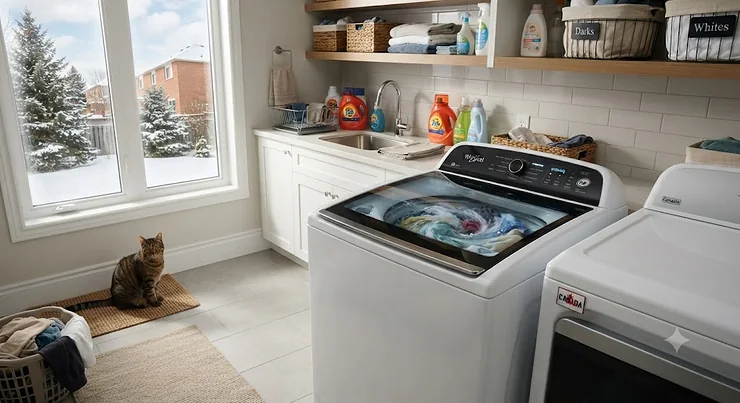
Laundry day shouldn’t feel like a science experiment, but if you’ve spent any time comparing machines lately, it probably has. A top load impeller washer swaps the old center-post agitator for a low, cone-shaped disc that spins at the bottom of the tub — and that one design change ripples through everything from how much room your towels get to how many litres of water disappear down the drain each cycle. If you’re weighing a top load impeller washer against the agitator model your parents probably owned, you’re really deciding between two philosophies of getting clothes clean: brute-force scrubbing versus circulation and friction.
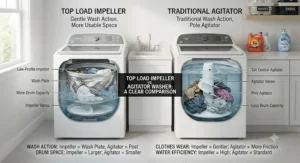
Here’s the short version, because you shouldn’t have to dig for it: a top load impeller washer uses a low-profile plate instead of a center post, which frees up basket space, tends to be gentler on fabric, and generally uses less water per load — though it can ask more of your pretreating habits on heavily soiled items. Whether that trade-off suits your household depends on what you actually wash, how often, and how much you care about hydro and water bills in a given month.
We dug into seven real, currently available machines from GE, Samsung, Whirlpool, and Kenmore, cross-referenced their spec sheets against aggregated review sentiment, and worked out where each one earns its keep. Along the way we’ll cover setup, maintenance, common buying mistakes, and how Canadian energy standards factor into the decision. No fabricated hands-on stories here — just honest analysis grounded in real data, so you can make the call that fits your laundry room.
Quick Comparison Table
| Model | Capacity | Wash System | Notable Feature | Best For |
|---|---|---|---|---|
| Kenmore 4.5 cu. ft. Triple Action Impeller | 4.5 cu. ft. | Impeller | Accela Wash + Express Wash | Everyday families wanting speed |
| BLACK+DECKER 4.1 cu. ft. HE Top-Load Washer | 4.1 cu. ft. | Impeller | Budget pricing, huge review base | First apartments, tight budgets |
| GE 4.6 cu. ft. High-Efficiency Top-Load Washer | 4.6 cu. ft. | High-Performance Impeller | Stain PreTreat station | Balanced mid-range households |
| Whirlpool WTW5057LW | 4.7–5.5 cu. ft. | 2-in-1 Agitator/Impeller | Removable agitator | Buyers who want both wash styles |
| Samsung WA50B5100AW | 5.0 cu. ft. | Impeller | Deep Fill + EZ Access Tub | Large households, bulky bedding |
| GE Profile PTW600BSRWS | 5.0 cu. ft. | Smart Impeller | SmartHQ app, Microban protection | Tech-forward premium buyers |
| Samsung WA41A3000AW | 4.1 cu. ft. | Impeller | Stainless steel tub at entry price | Small households, condos |
Looking across the table, the split isn’t really budget-versus-premium — it’s usable capacity versus features. The Samsung WA50B5100AW and GE Profile PTW600BSRWS both offer 5.0 cu. ft. baskets, but only one of them charges you for Wi-Fi connectivity and app-based diagnostics. Meanwhile, the BLACK+DECKER 4.1 cu. ft. HE Top-Load Washer and Samsung WA41A3000AW compete almost entirely on price and reliability reputation rather than bells and whistles. If your laundry room is small or you’re outfitting a rental, the compact models below 4.5 cu. ft. deserve a serious look before you pay for capacity you won’t use.
💬 Just one click — help others make better buying decisions too!😊
Top 7 Top Load Impeller Washers: Expert Analysis
Below are seven real, currently sold machines, evaluated on specs, aggregated review sentiment, and where each one genuinely earns its price tag. We’re covering budget, mid-range, and premium options, plus a couple of lesser-known picks that punch above their price point.
1. Kenmore 4.5 cu. ft. Triple Action Impeller — best all-round value for busy families
The Triple Action system is the standout here: it combines a spray rinse, basket rotation, and impeller motion to lift soil from three directions instead of one. In practice, that means fewer redo cycles for moderately dirty laundry, which matters if you’re doing wash for a family of four or five.
The 4.5 cu. ft. drum comfortably swallows a queen-size duvet, and the Accela Wash feature claims to shave real time off a standard cycle by adjusting water fill and spin timing dynamically rather than running a fixed sequence. Express Wash goes further for small, lightly soiled loads — useful for a single gym outfit or a school uniform that needs to be ready by morning. Based on the spec comparison against similarly priced impeller machines, the Triple Action system’s main advantage is that it doesn’t force you to choose between speed and thoroughness; most competitors in this price bracket make you pick one.
This model suits households that run four-plus loads a week and want a machine that won’t feel sluggish on moderate soil levels — think everyday clothes, towels, and bedding, not construction-site coveralls. Reviewers consistently report satisfaction with cycle speed and quiet operation, with a smaller but recurring theme of complaints about the control dial feeling less durable than the rest of the machine after a couple of years of daily use. If you cannot verify long-term reliability data beyond what’s publicly aggregated, it’s fair to treat this as a moderate risk rather than a dealbreaker, since most major appliances see some rate of control-panel wear.
Pros:
- ✅ Triple Action cleaning outperforms single-motion impellers on moderate soil
- ✅ Accela Wash and Express Wash meaningfully cut cycle time
- ✅ Roomy 4.5 cu. ft. drum handles bedding without overstuffing
Cons:
- ❌ Control dial reported to wear faster than the rest of the unit
- ❌ Fewer smart features than premium competitors in this guide
Expect to find the Kenmore 4.5 cu. ft. Triple Action Impeller in the C$700-C$850 range at the time of research, though prices may vary by retailer and promotion. For the cleaning performance and capacity on offer, it’s one of the stronger value propositions in this lineup — check current price before deciding, since Kenmore inventory can shift between sellers.
2. BLACK+DECKER 4.1 cu. ft. HE Top-Load Washer — best budget pick with the deepest review pool
What stands out immediately about this model is the sheer volume of real-world feedback behind it — over 9,100 aggregated reviews with a 4.4-star average, which is a genuinely large sample size for an appliance in this price tier. That kind of data density lets you trust the sentiment more than you would with a newly launched model that only has a few hundred reviews.
At 4.1 cu. ft., the drum is on the smaller side of this list, which actually works in its favour for apartments and starter households: it fits comfortably in tighter laundry closets and uses proportionally less water per cycle simply because there’s less volume to fill. The HE impeller handles a normal load of clothes competently, though — and this is where honest analysis matters — it isn’t designed to be a heavy-duty workhorse for oversized comforters or waterlogged towels from a soaked dog.
Reviewers consistently note that this is the model budget-conscious buyers keep coming back to, citing straightforward controls and dependable basic cycles as the recurring praise points. A common complaint in user reviews is that spin speed feels noticeably gentler than pricier competitors, meaning clothes come out damper and take longer to line- or machine-dry. That’s a reasonable trade-off for the price, but worth knowing before you buy if drying time matters to your routine.
Pros:
- ✅ Massive, trustworthy review base backs up its reliability reputation
- ✅ Compact footprint fits small laundry closets and condos
- ✅ Straightforward controls with minimal learning curve
Cons:
- ❌ Gentler spin speed means longer dry times
- ❌ Smaller drum struggles with oversized bedding
At the time of research, this model tends to sit in the C$450-C$600 range, making it one of the most accessible full-size impeller washers on the market. For apartment dwellers or a secondary laundry setup, the value here is hard to beat — just check current price, since budget appliances see frequent promotional swings.
3. GE 4.6 cu. ft. High-Efficiency Top-Load Washer — best fabric-friendly everyday pick
GE’s High-Performance Impeller is engineered around a straightforward premise: move water and detergent through the load rather than pushing clothes physically against a post. The 4.6 cu. ft. capacity splits the difference nicely between the compact budget models and the 5.0 cu. ft. flagships, giving you enough room for a comforter without paying premium-tier prices.
The built-in Stain PreTreat station is the feature that deserves the most attention here, and it’s easy to overlook on a spec sheet. It’s a small brush and detergent reservoir built into the fabric softener dispenser area, letting you work stain remover directly into a collar or cuff before the cycle starts — genuinely useful for anyone dealing with kids’ clothes or grease-stained work shirts, since pretreating is one of the biggest variables in how clean impeller-washed loads actually turn out.
What most buyers overlook about high-efficiency impeller machines generally is that they rely more heavily on correct detergent dosing than agitator washers do; too much soap and you’ll see residue on dark fabrics, since there’s simply less water flushing it away. This GE model handles that reasonably well thanks to sensors that adjust water fill to load size, reducing the odds of user error. Aggregated review sentiment points to strong satisfaction with everyday cleaning performance and quieter operation than older GE agitator models, with occasional notes about the extra-large capacity cycle running longer than expected.
Pros:
- ✅ Stain PreTreat station adds real pretreating convenience
- ✅ Load-sensing water fill reduces detergent residue risk
- ✅ Balanced 4.6 cu. ft. capacity suits most household sizes
Cons:
- ❌ Extra-large cycles can run noticeably longer
- ❌ Fewer wash-cycle customization options than premium rivals
Pricing typically falls in the C$750-C$900 range at the time of research. For households that want dependable everyday performance without chasing smart-home features, the GE 4.6 cu. ft. High-Efficiency Top-Load Washer is a sensible middle-ground purchase — as always, check current price before buying.
4. Whirlpool WTW5057LW — best for buyers who can’t decide between agitator and impeller
This is the one machine on this list that refuses to make you commit. The 2-in-1 Removable Agitator lets you run loads with a traditional center-post agitator installed for heavily soiled items, then pop it out in seconds to expose a smooth impeller plate underneath for bulkier or more delicate loads. It’s a genuinely clever bit of engineering, not just a marketing gimmick — the mechanism is simple enough that reviewers report it working reliably years into ownership.
Capacity flexes with the setup: roughly 4.7 cu. ft. with the agitator in, expanding to a claimed 5.4-5.5 cu. ft. (IEC Canada rating) once it’s removed. That distinction matters for buyers trying to compare spec sheets apples-to-apples, since IEC capacity measurement can read higher than the standard cu. ft. figure used elsewhere in this guide. Based on the spec comparison, this model essentially gives you two machines in one chassis — a real advantage if your household does a mix of heavy-soil work clothes and easily snagged athletic wear.
The built-in water faucet is a smaller but genuinely practical touch, letting you rinse or presoak items directly in the basin without hauling a bucket to the utility sink. Reviewers consistently note satisfaction with the flexibility of the removable agitator system, while a recurring critique in aggregated feedback centres on the 12-cycle dial feeling slightly dated compared to touchscreen competitors — a fair trade for the mechanical simplicity that seems to be driving its reliability reputation.
Pros:
- ✅ True 2-in-1 flexibility between agitator and impeller wash
- ✅ Built-in faucet adds practical presoak convenience
- ✅ Simple mechanical design linked to strong long-term reliability reports
Cons:
- ❌ Dial-based controls feel dated next to touchscreen rivals
- ❌ IEC capacity rating can be confusing to compare against standard cu. ft. specs
At the time of research, expect a price in the C$850-C$1,000 range. For households torn between wash styles, the Whirlpool WTW5057LW removes the need to choose — check current price, as this is a popular model that occasionally sees bundle promotions with matching dryers.
5. Samsung WA50B5100AW — best large-capacity impeller washer for big households
At a genuine 5.0 cu. ft., this is one of the largest true impeller drums in this lineup, and the EZ Access Tub design — a slightly shallower basin profile — means you’re not doing a full-arm reach to retrieve socks from the bottom, which sounds minor until you’re the one doing it daily. Deep Fill lets you override the automatic water-sensing for situations where you genuinely want more water in the basin, such as heavily soiled bedding or when pretreating isn’t cutting it.
The Vibration Reduction Technology is worth flagging for anyone doing laundry in a condo or a room adjacent to a bedroom, since spin-cycle vibration is one of the more common noise complaints across top load machines generally. Reviewers consistently note that this model runs quieter than expected for its capacity, particularly on higher spin settings where vibration usually gets worse, not better.
What the spec sheet won’t tell you, but user reports suggest, is that the Self Clean+ reminder cycle is more than a gimmick — owners who actually run it every 20 washes as prompted report less lingering odour over time than owners who ignore the notification. That’s a small behavioural nudge, but it matters for a wash system that relies on friction and circulation rather than an agitator physically working detergent through fabric. It’s worth noting that a related Samsung top load model has been subject to a manufacturer recall over a fire-hazard issue tied to a Super Speed wash option on certain other units — a reminder to always register any major appliance and check for open recalls through the manufacturer’s site regardless of which brand you buy.
Pros:
- ✅ Genuine 5.0 cu. ft. capacity with an easier-to-reach basin
- ✅ Deep Fill option adds real control over water levels
- ✅ Vibration reduction genuinely quiets high-speed spin cycles
Cons:
- ❌ Smart Care features require a Samsung account and app setup
- ❌ Larger footprint may not suit tight laundry closets
Pricing typically lands in the C$900-C$1,050 range at the time of research. Large families or anyone who batch-washes bedding will likely get the most value here — always check current price and confirm there’s no open recall notice for your specific serial number before purchasing any major appliance.
6. GE Profile PTW600BSRWS — best smart, premium impeller washer
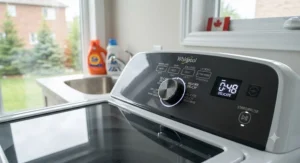
This is the flagship of the lineup, and it’s priced accordingly. The SmartHQ app integration lets you start, stop, and monitor cycles remotely, plus receive customized stain-removal guidance based on cycle history — genuinely more useful than the average smart-appliance gimmick, since laundry is one of the few household chores where remote monitoring actually saves a trip downstairs.
The dedicated Oxi-boost sanitize cycle claims to remove 99% of bacteria using an additive-boosted process, which is relevant for households managing cloth diapers, allergies, or simply wanting a deeper clean on towels periodically. Microban Antimicrobial Technology built into the tub, dispenser drawer, and drain hose addresses a genuine pain point of impeller washers specifically: because they use less standing water than agitator machines, some owners report more odour buildup over time in the damp components if the machine isn’t run through cleaning cycles regularly. Building antimicrobial protection into those parts directly is a sound engineering response to a real complaint pattern, not just marketing language.
Here’s what’s easy to overlook: the 10-year limited warranty on the motor and basket signals genuine manufacturer confidence, and it’s longer than what most competitors in this guide offer. Reviewers consistently note satisfaction with cleaning performance and app reliability, with the most common critique being that the touchscreen control panel takes a short adjustment period compared to traditional dial controls — a fair trade for buyers who value the smart features.
Pros:
- ✅ SmartHQ app adds genuinely useful remote monitoring
- ✅ Built-in antimicrobial protection addresses a known impeller-washer odour issue
- ✅ 10-year motor and basket warranty signals strong build confidence
Cons:
- ❌ Touchscreen controls require a short learning curve
- ❌ Premium price puts it out of reach for budget-focused buyers
Expect a price in the C$1,100-C$1,350 range at the time of research. For buyers who want the best available impeller technology and don’t mind paying for it, the GE Profile PTW600BSRWS is the strongest premium option here — check current price, as GE frequently runs seasonal rebate promotions on Profile-tier appliances.
7. Samsung WA41A3000AW — best compact stainless-tub option for small households
Rounding out this list is a smaller, less flashy option that deserves more attention than it usually gets. At 4.1 cu. ft., the drum is sized for one to three people rather than a full family, but the stainless steel tub — as opposed to the porcelain-coated or plastic tubs common at this price point — is the standout detail. Stainless resists chipping and cracking over years of use, which matters more than people expect once a washer is a decade old.
Based on the spec comparison against similarly sized competitors, this model strips away most of the smart features and multi-motion cleaning systems found elsewhere in this guide, focusing instead on dependable basic impeller washing at an accessible price. That’s a deliberate trade-off, and it’s the right one for condo owners, students, or anyone furnishing a secondary unit who doesn’t need Wi-Fi connectivity on a washing machine.
Aggregated review sentiment for this size and price class of impeller washer tends to praise straightforward operation and a smaller footprint that fits standard condo laundry closets without modification. The more common critique across compact impeller washers in general is longer cycle times relative to their larger siblings, since a smaller drum needs the impeller running longer to work detergent through a denser, more tightly packed load — worth factoring in if you’re used to a bigger machine’s faster turnaround.
Pros:
- ✅ Stainless steel tub outlasts porcelain or plastic alternatives
- ✅ Compact size fits standard condo and apartment laundry closets
- ✅ Simple controls with no unnecessary smart-feature overhead
Cons:
- ❌ Smaller capacity means more frequent loads for a family
- ❌ Cycle times run longer relative to larger-capacity impeller models
At the time of research, this model generally sits in the C$550-C$700 range. For anyone furnishing a smaller space and prioritizing long-term tub durability over features, the Samsung WA41A3000AW is a smart, under-the-radar pick — check current price, since compact models rotate through promotions less predictably than flagship units.
Setting Up and Maintaining Your Top Load Impeller Washer
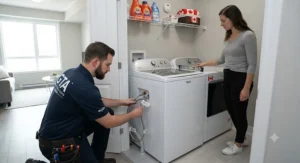
Getting a new machine installed correctly matters more with impeller washers than most people assume, because these machines rely on precise balance and correct detergent behaviour to perform as advertised — sloppy setup shows up as poor cleaning results, not just noise.
Start with levelling. Impeller washers spin at genuinely high speeds during extraction, and even a slightly uneven floor can translate into a machine that walks across your laundry room over months of use. Most models, including several in this guide, include self-levelling rear legs, but it’s worth checking with a bubble level on top of the basin during first setup rather than trusting the automatic adjustment alone.
Detergent matters enormously here. Every model on this list requires HE (high-efficiency) low-sudsing detergent — regular detergent creates excess foam that impeller machines aren’t designed to rinse away efficiently, since they use less water than agitator models by design. Overdosing is the single most common first-30-days mistake new impeller-washer owners make, and it shows up as a musty smell or visible residue on dark clothing within the first few cycles.
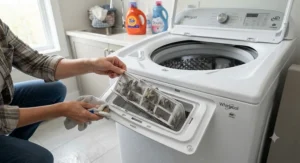
Run a maintenance cycle — usually branded as “Clean Washer” or “affresh Cycle” depending on the manufacturer — every 20 to 30 washes. This isn’t optional busywork; impeller washers hold standing water in fewer places than agitator machines, but the places they do hold moisture (gaskets, dispenser trays, drain hoses) can develop odour-causing buildup faster if ignored, since there’s less flow to naturally flush residue away between cycles. Leave the lid propped open between loads to let the basin air-dry rather than closing it immediately after a cycle finishes.
Finally, register your appliance with the manufacturer. It sounds like a formality, but it’s the fastest way to get notified of any safety recalls — which, as noted above, have affected specific top load models with certain wash-speed features — and it typically speeds up warranty claims if something does go wrong down the line.
Which Top Load Impeller Washer Fits Your Household?
Real-world laundry needs vary enormously, so here are three household profiles matched to specific picks from this guide, with the reasoning behind each match.
The downtown condo renter, doing two to three loads a week, tight laundry closet, cares about noise. A compact model with genuine quiet-operation engineering makes more sense than a flagship. The Samsung WA41A3000AW or BLACK+DECKER 4.1 cu. ft. HE Top-Load Washer both fit the footprint and budget, and neither will disturb neighbours through shared walls the way an unbalanced full-size machine might.
The family of five in a suburban home, running five-plus loads a week including bedding, sports uniforms, and towels. Capacity and cycle speed matter more than smart features here. The Kenmore 4.5 cu. ft. Triple Action Impeller or Samsung WA50B5100AW both handle volume well, with the Triple Action system’s speed advantage being particularly relevant when laundry has to fit around school and activity schedules rather than the other way around.
The dual-income household with a finished basement laundry room, moderate budget flexibility, and an interest in reducing manual monitoring. The GE Profile PTW600BSRWS earns its premium price here specifically because remote start and cycle notifications solve a real logistical problem — starting a load before leaving for work and getting a phone alert when it’s done, rather than losing track of a load until it needs rewashing for musty smell.
How to Choose a Top Load Impeller Washer
Six factors consistently separate a satisfying purchase from a regretted one, based on the spec and review patterns across this category:
- Match capacity to actual laundry volume, not aspirational volume. A 5.0 cu. ft. drum sounds appealing, but if you’re doing laundry for one or two people, you’ll run partial loads regularly, which undercuts the water and energy efficiency the machine is supposed to deliver.
- Check spin speed, not just RPM marketing numbers. Higher spin speeds extract more water before drying, cutting dryer time and energy use — a genuinely underrated spec that most buyers skip past.
- Confirm HE detergent compatibility and dosing guidance before your first wash. This single habit prevents the majority of first-month complaints about residue and odour.
- Weigh smart features against actual daily use, not novelty. App connectivity is genuinely useful if you’re frequently away from home during cycles; it’s dead weight if you’re usually nearby anyway.
- Look at warranty length on the motor and basket specifically, not just the base one-year parts warranty — the difference between a one-year and ten-year motor warranty tells you how confident the manufacturer actually is.
- Read the aggregated review volume, not just the star average. A 4.4-star rating built on 9,000-plus reviews is more trustworthy than a 4.7-star rating built on 80.
Common Mistakes When Buying a Top Load Impeller Washer
Even careful shoppers fall into a few predictable traps. The most frequent is assuming all “high-efficiency” top load washers are impeller models — plenty of HE-labelled machines still use an agitator, just a low-profile HE-optimized one, so it’s worth confirming impeller wash action specifically if that’s what you’re after.
A second common mistake is ignoring stack height and lid clearance. Impeller washers with deep baskets, like several 5.0 cu. ft. models in this guide, sometimes have tall overall heights that don’t clear low shelving or cabinetry in older laundry rooms — always check total height against your space before ordering.
Buyers also frequently underestimate how much detergent dosing habits need to change coming from an agitator machine. What worked in your old washer will very likely oversud an impeller model, and the resulting residue gets mistaken for a “bad machine” when it’s actually a dosing issue.
Finally, some shoppers chase the highest capacity number without checking IEC versus standard cu. ft. measurement — as noted with the Whirlpool WTW5057LW above, these numbers aren’t always directly comparable across brands, and assuming otherwise can lead to disappointment when the “bigger” machine doesn’t actually feel roomier in practice.
Top Load Impeller Washer vs Agitator Washer
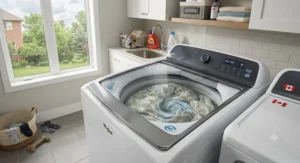
The core mechanical difference is straightforward: an agitator washer uses a tall center post that twists back and forth, physically pushing clothes through water and against itself, while a top load impeller washer uses a low-profile disc at the bottom of the basin that spins to create currents, moving clothes through water via circulation and fabric-on-fabric friction rather than direct scrubbing.
| Factor | Impeller Washer | Agitator Washer |
|---|---|---|
| Usable capacity | Larger (no center post) | Smaller (post takes up space) |
| Fabric wear | Generally gentler | More mechanical stress |
| Water usage | Typically lower | Typically higher |
| Cleaning heavily soiled loads | Relies more on pretreating | Often better without pretreating |
| Cycle length | Can run longer on large loads | Often faster on tough soil |
| Best For | Gentle wash top load needs, mixed everyday laundry | Heavily soiled work clothes, farm or trade use |
Deciding between the two really comes down to what actually ends up in your hamper. Households doing mostly everyday clothing, bedding, and towels tend to prefer impeller washers for the combination of gentler fabric-friendly cleaning and lower water bills, while households regularly washing genuinely filthy items — think mechanics’ coveralls or muddy sports gear — sometimes find agitator washers clean tough soil more reliably without extra pretreating steps. Neither system is objectively better; they’re optimized for different laundry realities, and honest analysis of your own habits will tell you more than any spec sheet.
What to Expect: Real-World Performance
Specs only tell part of the story, so here’s what the numbers actually translate to in daily use. A low-profile wash plate design means your clothes spend the cycle circulating through open water rather than being wound around a center post, which is why owners consistently describe less visible wear — fewer snags, less pilling — on delicate items like activewear and knit fabrics over a year of regular washing.
Water usage differences are real but not dramatic on a single-load basis; the bigger impact shows up over a full year of laundry. According to Natural Resources Canada, an ENERGY STAR certified clothes washer uses about 33% less water on average than a standard model, and most modern impeller machines are built to meet or exceed that bar. Over 300-plus loads a year for an average household, that difference adds up on a water bill in a way that’s easy to underestimate when you’re only looking at one cycle at a time.
Noise and vibration during spin cycles vary more by model than by wash system category — the Samsung WA50B5100AW‘s vibration reduction engineering and the Whirlpool WTW5057LW‘s mechanical simplicity both perform well here, while cheaper impeller machines without dedicated anti-vibration engineering can be surprisingly loud on high spin settings, regardless of wash system type.
Features That Actually Matter (And Those That Don’t)
Marketing copy on washer listings tends to bury the genuinely useful features under a pile of forgettable ones, so here’s an honest filter.
Actually matters: The low-profile wash plate design itself, since it’s the entire basis for the capacity and gentleness advantages this category offers. Deep Fill or manual water-level override, since automatic sensors occasionally underfill for heavily soiled loads. HE detergent dispensers with dosing guides built in, since they directly prevent the most common first-month mistake owners make. Stainless steel drums over painted or plastic alternatives, for long-term durability.
Doesn’t matter much: Voice assistant integration for a washing machine is a novelty for the vast majority of households — genuinely useful only if you’re already deep into a smart-home ecosystem and would use it daily rather than as a one-time demo. An excessive number of pre-programmed cycles (some machines advertise 14-plus) rarely gets used beyond four or five in practice; most owners settle into Normal, Delicates, Bulky, and Quick Wash and rarely touch the rest.
Genuinely debatable: Wi-Fi connectivity splits opinion sharply in aggregated reviews — some owners find remote start and cycle alerts change their routine meaningfully, while others report never opening the app after the first week. It’s worth being honest with yourself about which camp you’ll fall into before paying a premium for it.
Long-Term Cost, Water Usage & Maintenance
Total cost of ownership on a top load impeller washer extends well past the sticker price, and efficient water usage is where the category earns most of its long-term value. Natural Resources Canada notes that ENERGY STAR certified washers use roughly 25% less energy on average than standard models, alongside the water savings mentioned earlier — and pairing an efficient washer with an efficient dryer compounds those savings further, since less water retained in clothing after the spin cycle means less energy spent drying them.
Maintenance costs are relatively low for this category compared to front-load machines, mainly because there’s no door gasket to develop mold — a genuinely common front-load complaint that top load design simply avoids by virtue of having no seal to keep clean. Budget for an affresh-style cleaning tablet every month or so, and factor in that HE detergent, while not dramatically more expensive per load than regular detergent, is a recurring cost worth comparing across brands rather than defaulting to whatever’s cheapest on the shelf.
Electrically, all machines in this guide are built to Canadian safety standards under CSA C22.2 No. 169, the harmonized standard covering electric clothes washing machines sold in Canada — worth knowing if you’re ever verifying a model’s compliance documentation before installation, particularly in an older home where electrical capacity might be a consideration.
High-Efficiency Impeller Washers Explained
The term “high-efficiency” gets used loosely in appliance marketing, so it’s worth being precise. A high-efficiency impeller washer specifically refers to a top load machine that uses the low-profile disc wash system combined with reduced water fill levels, load-sensing technology, and typically a faster spin speed than older standard washers — the combination is what earns the HE label, not any single feature alone.
What separates a genuinely high-efficiency impeller washer from a merely HE-labelled agitator model is the water-to-fabric ratio during the wash cycle itself. Impeller machines are engineered around using significantly less standing water and relying on concentrated detergent and mechanical circulation to compensate, which is precisely why HE-specific detergent isn’t optional — it’s formulated to work correctly in low-water, high-concentration conditions rather than the higher-water environment agitator washers create.
For Canadian households specifically, choosing a high-efficiency impeller washer also intersects with regional water costs, which vary considerably by municipality. In areas with metered water billing, the water savings translate directly into a lower monthly bill in a way that’s easy to overlook when comparing sticker prices alone — worth factoring into your total cost calculation rather than treating the purchase price as the whole story.
Gentle Wash Top Load: Fabric-Friendly Cleaning Explained
If fabric care is your priority, understanding why impeller machines are generally described as offering a gentle wash top load experience helps set realistic expectations rather than just taking the marketing claim at face value. The mechanism is straightforward: without a center post physically twisting against your clothes, fabric-friendly cleaning happens primarily through water circulation and garment-on-garment friction, which is measurably less abrasive on delicate fibres than direct mechanical agitation.
This matters most for specific fabric types — activewear with spandex content, cotton knits prone to pilling, and anything with delicate trim or embellishment. Reviewers across multiple models in this guide consistently note less visible wear on these categories compared to previous agitator machines they owned, which lines up with the underlying mechanical difference rather than being purely anecdotal.
That said, fabric-friendly cleaning isn’t automatically deep cleaning. For genuinely soiled items, the gentler wash action means you’re leaning more heavily on pretreating and correct detergent dosing to compensate for the reduced mechanical scrubbing — a trade-off worth understanding rather than assuming an impeller washer performs identically to an agitator machine on every type of load.
✨ Ready to make the switch to gentler, more efficient laundry? Compare the models above and check current pricing before your next wash day.
Safety, Regulations & Compliance for Canadian Buyers
Any electric clothes washer sold in Canada needs to meet the harmonized CSA C22.2 No. 169 / UL 2157 safety standard, which covers everything from electrical shock protection to lid-lock mechanisms and abnormal operation testing. Look for the CSA or cUL mark on the appliance rating plate as confirmation before installation, particularly if you’re buying a floor model, open-box unit, or importing a machine that wasn’t originally sold through Canadian retail channels.
Beyond electrical safety, Natural Resources Canada’s efficiency regulations set minimum energy performance standards that all clothes washers sold in Canada must meet, separate from the voluntary ENERGY STAR certification that goes further. If you’re pursuing a provincial or utility rebate for an efficient appliance purchase, confirm the specific model qualifies before buying, since rebate eligibility criteria can differ from baseline regulatory compliance.
FAQ: Top Load Impeller Washer
❓ What is a top load impeller washer?
❓ Is an impeller washer better than an agitator washer for towels?
❓ Do top load impeller washers use less water than agitator machines?
❓ Can you wash a large comforter in a top load impeller washer?
❓ How often should you clean a high-efficiency impeller washer?
Conclusion
Choosing between these seven machines really comes down to matching capacity and features to how your household actually does laundry, not to chasing the highest spec number on a listing page. The BLACK+DECKER 4.1 cu. ft. HE Top-Load Washer and Samsung WA41A3000AW cover compact, budget-conscious needs well; the Kenmore 4.5 cu. ft. Triple Action Impeller, GE 4.6 cu. ft. High-Efficiency Top-Load Washer, and Whirlpool WTW5057LW handle the broad middle ground where most Canadian households actually live; and the Samsung WA50B5100AW and GE Profile PTW600BSRWS justify their premium pricing for large households or buyers who genuinely want smart-home integration.
Whatever you land on, the underlying case for a top load impeller washer holds up under honest scrutiny: less water per load, generally gentler fabric care, and more usable basket space than the agitator machines they’ve largely replaced on showroom floors. Pair that efficiency with correct HE detergent dosing and a regular cleaning cycle, and you’ll get years of dependable laundry days out of any of the seven models covered here.
Recommended for You
- Best Steam Washer 2026: 7 Top Picks for Canadian Homes
- 7 Best Cold Water Washing Machines in Canada (2026 Guide)
- Top Load Washer With Agitator: 7 Best Picks for 2026
Disclaimer: This article contains affiliate links. As an Amazon Associate, I earn from qualifying purchases. If you purchase products through these links, we may earn a small commission at no additional cost to you.
✨ Found this helpful? Share it with your friends! 💬🤗
