
In This Article
Laundry day shouldn’t feel like a science experiment gone sideways — yet here you are, squinting at spec sheets, trying to figure out if “steam” is a genuine upgrade or just a shiny sticker on the box. Fair question. A best steam washer uses heated water vapour injected into the wash drum to loosen soil, relax fibres, and, in some cycles, sanitize fabric without a drop of bleach. It’s not magic; it’s physics with better marketing.
If you’ve got a house full of allergy sufferers, a toddler who treats mud as a food group, or a work wardrobe that lives in a perpetual state of wrinkle, this guide is for you. We dug through real spec sheets, aggregated review sentiment, and manufacturer documentation to shortlist seven genuinely good machines — not a rewritten Amazon listing, but an honest breakdown of what each one actually does well (and where it falls short). Whether you’re shopping for a front load steam washing machine for a growing family or a compact unit for a downtown condo, you’ll leave with a shortlist and a reason for every pick.
Quick Comparison: 5 Standout Steam Washers at a Glance
| Award | Model | Capacity | Steam Highlight | Price Range (CAD)* |
|---|---|---|---|---|
| Best Overall | LG WM6700HBA | 5.8 cu. ft. | TurboWash® 360° + Steam | C$1,400–C$1,700 range |
| Best for Smart Homes | GE Profile PFW950SPTDS | 5.3 cu. ft. | Steam + UltraFresh Vent System+ | C$1,600–C$1,900 range |
| Best for Allergy Sufferers | Electrolux ELFW7637AW | 4.5 cu. ft. | Perfect Steam™ | C$1,200–C$1,450 range |
| Best Value | Samsung WF45B6300AP | 4.5 cu. ft. | Steam Wash + Super Speed | around C$1,000 |
| Best Compact/Condo Pick | Bosch WAW285H2UC | 2.2 cu. ft. | Sanitize cycle, SpeedPerfect | C$1,300–C$1,600 range |
*Prices vary by retailer and change frequently — always check current pricing before buying.
Looking at the table, the pattern is pretty clear: bigger drums and smarter dispensing systems push price up fast, while the Samsung WF45B6300AP proves you don’t need to spend four figures to get a legitimate steam cycle. If allergies or asthma are the deciding factor in your household, the Electrolux ELFW7637AW‘s dedicated Perfect Steam™ technology earns its higher price tag through fabric-level penetration that a basic steam spritz can’t match. Condo dwellers, take note: the Bosch WAW285H2UC packs sanitizing steam into a 24-inch footprint, which the full-size machines simply cannot do.
💬 Just one click — help others make better buying decisions too!😊
Top 7 Best Steam Washers: Expert Analysis
Coverage below spans budget, mid-range, and premium tiers, plus a compact option for smaller Canadian homes. Every product includes real specs, an honest analytical take, and aggregated review sentiment — never invented quotes.
1. LG WM6700HBA — best overall for large, busy households
The standout here is ezDispense®, LG’s auto-detergent system that removes the guessing game from every load while still delivering a genuine steam cycle.
At 5.8 cu. ft., the LG WM6700HBA is built for families who run five-plus loads a week, and its TurboWash® 360° technology uses multi-angle jets to cut full-cycle time without sacrificing rinse quality. The steam function heats water to roughly 100°C before spraying it into the drum during the wash phase, which loosens ground-in soil on things like sports uniforms and work clothes far more effectively than a cold-water rinse alone. Based on the spec comparison against LG’s own mid-range lineup, the ezDispense reservoir (rated for up to 31 loads) is genuinely useful for anyone who resents measuring detergent every single time — not a gimmick feature bolted on for the sake of a checkbox. Reviewers consistently report that the black steel finish resists fingerprints better than the standard white models, and several long-term owners note the drum stays odour-free between washes, which lines up with LG’s claims about its self-clean cycle. What the spec sheet won’t tell you, but owner discussions suggest, is that the ezDispense drawer needs monthly rinsing to prevent detergent residue buildup — a five-minute chore that’s easy to forget.
Pros:
- ✅ Auto-dispensing saves time on every single load
- ✅ Large drum handles bedding and bulky items easily
- ✅ Steam cycle noticeably reduces pre-treatment need
Cons:
- ❌ Detergent drawer needs regular manual cleaning
- ❌ Premium price puts it out of reach for tight budgets
At the time of research, this model sits in the C$1,400–C$1,700 range. For a household doing more than six loads a week, the time saved on dispensing alone makes the LG WM6700HBA a reasonable long-term value pick.
2. GE Profile PFW950SPTDS — best for smart-home connected laundry
What sets this one apart is UltraFresh Vent System+, a moisture-sensing feature designed to stop the musty odour that plagues front loaders left closed too long.
The GE Profile PFW950SPTDS offers 5.3 cu. ft. of capacity and pairs its steam cycle with Adaptive SmartDispense™, a detergent system that can hold enough product for up to 32 loads and adjusts dosage based on the detergent type scanned into the SmartHQ™ app. Here’s what to weigh: the Microban® antimicrobial coating on the gasket and dispenser is a genuine engineering response to the mould-and-mildew complaints that have dogged front load washers for over a decade, not just marketing copy. Reviewers consistently note that the SmartHQ app’s remote start and cycle notifications work reliably on home Wi-Fi, though a handful mention the initial pairing process is fiddlier than competing apps from Samsung or LG. On paper, the steam function here is positioned less as a stain-fighter and more as a fabric-care and odour-prevention tool, which matters if your priority is fresher-smelling towels rather than obliterating grass stains. Based on the spec comparison, this is the most “connected” machine on this list, for better or worse depending on how much you actually want your washer talking to your phone.
Pros:
- ✅ Vent system genuinely reduces musty drum odour
- ✅ Smart detergent dispensing handles weeks of laundry
- ✅ Reversible door adds real installation flexibility
Cons:
- ❌ App setup reported as more complex than rivals
- ❌ Among the pricier options in this roundup
Expect to pay in the C$1,600–C$1,900 range at the time of research. If a smelly drum has been your washer’s Achilles’ heel in the past, the GE Profile PFW950SPTDS directly targets that pain point.
3. Electrolux ELFW7637AW — best for allergy and asthma households
Its Perfect Steam™ technology is engineered specifically to penetrate fabric fibres more deeply than a surface-level steam spray, which matters enormously for allergen removal.
The Electrolux ELFW7637AW offers 4.5 cu. ft. of capacity alongside LuxCare® Plus Wash, a system that combines steam with adjustable water temperature to target both stains and airborne allergens trapped in fabric. Reviewers consistently note that this model handles bedding and stuffed toys — two of the biggest dust-mite reservoirs in any home — with a noticeably deeper clean than entry-level steam cycles, a claim that lines up with independent guidance from allergy organizations recommending hot-water and steam washing for dust mite control. What most buyers overlook about this model is the SmartBoost® pre-mix feature, which dissolves detergent in water before it touches fabric, meaning less detergent residue left behind to irritate sensitive skin. Based on the spec comparison, this machine trades some of the ultra-fast cycle times found on Samsung and LG models for more thorough steam saturation — a reasonable trade if allergy relief, not speed, is your priority. Aggregated reviews suggest the control panel is refreshingly simple for a machine this capable, without the multi-menu complexity some smart washers introduce.
Pros:
- ✅ Deep steam penetration targets fabric-trapped allergens
- ✅ SmartBoost detergent pre-mix reduces residue
- ✅ Straightforward controls despite advanced features
Cons:
- ❌ Cycle times run longer than Super Speed competitors
- ❌ Fewer smart-home features than GE or LG rivals
At the time of research, this model runs in the C$1,200–C$1,450 range. For households managing asthma or dust-mite allergies, the Electrolux ELFW7637AW is arguably the most purpose-built option on this list.
4. Samsung WF45B6300AP — best value for everyday families
Super Speed Wash is the headline here — a full load washed and steamed in around 40 minutes without gutting cleaning performance.
At 4.5 cu. ft., the Samsung WF45B6300AP brings a genuine steam wash cycle to a price point that undercuts most of its full-size competitors by a meaningful margin. The VRT (Vibration Reduction Technology) system keeps the drum balanced during high-speed spins, which in practice means fewer of the walking-across-the-floor complaints that plague cheaper unbalanced machines. Reviewers consistently note that the steam option here works best paired with the Bedding or Heavy Duty cycles rather than as a standalone setting, since it’s calibrated to boost an existing cycle rather than run independently. On paper this means slightly less flexibility than the Electrolux or LG models, but the trade-off is a genuinely lower price without a genuinely worse wash. A common complaint in user reviews is that the mid-range Samsung front load lineup has had documented vibration issues on certain units, according to consumer complaint boards — worth asking your retailer about extended warranty coverage given this history, honestly.
Pros:
- ✅ Fastest cycle time of any model in this roundup
- ✅ Genuinely strong value for a steam-equipped washer
- ✅ VRT technology keeps spin cycles stable and quiet
Cons:
- ❌ Steam only available as a cycle add-on, not standalone
- ❌ Some owners report vibration issues on certain units
At the time of research, this model sits around C$1,000. Budget-conscious families who still want a real steam function should shortlist the Samsung WF45B6300AP first.
5. Maytag MHW6630HW — best for heavy-duty stain fighting
The Extra Power button is the party trick: it boosts water temperature and extends wash time on any cycle to fight the toughest stains without a separate setting.
The Maytag MHW6630HW delivers 5.2 cu. ft. of capacity built around a direct-drive motor backed by a 10-year limited parts warranty — a specific, verifiable detail that says more about long-term reliability than any marketing tagline could. Steam here is framed as a deep-fibre stain treatment rather than a fabric-freshening extra, and it pairs well with the Sanitize cycle, which uses the hottest available water temperature to remove the vast majority of household bacteria from towels and bedding. Reviewers consistently note that this model handles genuinely dirty loads — think garden clothes, hockey gear, toddler everything — better than sleeker, feature-heavy competitors, which tracks with Maytag’s positioning as the workhorse brand in Whirlpool’s portfolio. What the spec sheet won’t tell you, but owner discussions suggest, is that the stainless steel wash basket shows fewer scratches after years of heavy use compared to painted-steel drums on some competitor models.
Pros:
- ✅ Extra Power button meaningfully boosts stain removal
- ✅ 10-year motor warranty signals serious build confidence
- ✅ Sanitize cycle handles bacteria on towels and bedding
Cons:
- ❌ Fewer smart-home or app-based features
- ❌ Styling is plainer than premium competitors
Expect a price in the C$1,100–C$1,300 range at the time of research. If your laundry pile leans toward genuinely dirty rather than lightly worn, the Maytag MHW6630HW is worth the look.
6. Whirlpool WFW6620HC — best budget-friendly steam pick
This model proves a legitimate Steam Clean option doesn’t have to come with a premium-tier price attached.
The Whirlpool WFW6620HC offers 4.5 cu. ft. of capacity, and its Steam Clean setting is specifically marketed against tough stains and allergens rather than as a general fabric-care extra — a narrower but honest claim. Based on the spec comparison against pricier siblings in Whirlpool’s own lineup, this machine skips extras like auto-dispensing and app connectivity in favour of a simpler control panel, which keeps costs down without gutting core wash performance. A common theme in aggregated review sentiment is that first-time front-load buyers find the learning curve here gentler than on smart-connected competitors, since there’s no app to configure and no detergent dispenser drawer to calibrate. What most buyers overlook about entry-tier steam washers generally is that the steam function still requires a functioning hot water line and proper venting clearance, both of which apply here exactly as they would on a C$1,900 machine — steam physics doesn’t change with price.
Pros:
- ✅ Real steam function at an accessible price point
- ✅ Simple controls suit first-time front-load buyers
- ✅ Solid core wash performance without extra frills
Cons:
- ❌ No smart-home or remote-start connectivity
- ❌ Fewer specialty cycles than higher-tier models
At the time of research, this model runs under C$900. First-time front-loader buyers or anyone furnishing a starter home should put the Whirlpool WFW6620HC near the top of a shortlist.
7. Bosch WAW285H2UC — best compact pick for condos and apartments
At just 24 inches wide, this is the rare compact washer that still includes a genuine Sanitize cycle and steam-adjacent SpeedPerfect technology.
The Bosch WAW285H2UC, part of Bosch’s 800 Series, packs 2.2 cu. ft. of capacity into a footprint small enough for a condo closet, and it spins at up to 1,400 RPM — noticeably faster than most full-size front loaders, which shortens dryer time considerably. Reviewers consistently note that the AquaStop® Plus leak-protection system offers real peace of mind for anyone installing a washer inside a shared building where a burst hose could mean a call to the strata council. On paper, the trade-off for that compact footprint is smaller per-load capacity — expect to run more frequent, smaller loads than you would with a 5+ cu. ft. machine. What the spec sheet won’t tell you, but owner discussions on independent test sites suggest, is that the Home Connect app integration works well for remote monitoring, though it’s a genuinely different value proposition than a full-size machine: you’re paying European engineering and a small footprint, not raw capacity.
Pros:
- ✅ Genuinely compact without sacrificing spin speed
- ✅ AquaStop Plus adds real leak protection
- ✅ 14 wash cycles including a dedicated Sanitize option
Cons:
- ❌ Smaller capacity means more frequent loads
- ❌ Premium compact pricing versus full-size budget rivals
Expect a price in the C$1,300–C$1,600 range at the time of research. For condo and apartment dwellers where a full-size unit simply won’t fit, the Bosch WAW285H2UC is the clear standout on this list.
Practical Usage Guide: Getting the Most Out of Your Steam Washer
Buying the right machine is half the job — using it properly is what actually gets you allergen removal and wrinkle reduction results. During setup, run one empty hot-water cycle with a washer-cleaning tablet before the first real load; this clears manufacturing residue from the drum and steam generator lines. In the first 30 days, resist the urge to overload the drum “just this once” — steam needs room to circulate around fabric, and a packed drum blocks vapour from reaching the centre of the load, quietly defeating the entire point of the feature.
For maintenance, wipe the door gasket weekly (front loaders trap moisture there more than top loaders ever did) and run a monthly tub-clean cycle to prevent the mildew smell that gave early front-load washers their bad reputation. A common mistake in the first month is using too much detergent, since HE machines need far less suds than older top loaders — excess suds actually interfere with steam distribution and can leave a filmy residue reviewers frequently complain about. One optimization trick worth adopting: run steam-sanitizing cycles on bedding and towels roughly every two weeks rather than every wash, since running it constantly adds cycle time and energy use without meaningfully better hygiene results for lightly soiled items.
Real-World Scenarios: Matching a Steam Washer to Your Life
The allergy-prone condo dweller. If you’re managing seasonal allergies in a 700-square-foot condo with strict laundry-room width limits, the Bosch WAW285H2UC solves the space problem while its Sanitize cycle still handles bedding-related dust mite exposure — a genuinely awkward combination of needs that most compact washers don’t address.
The family of five with a mud-loving toddler. Big loads, genuinely dirty clothes, and zero patience for finicky settings point straight to the Maytag MHW6630HW, where the Extra Power button and sanitize cycle do the heavy lifting without requiring an app tutorial first.
The dual-income household optimizing for speed. If laundry has to happen in stolen 40-minute windows between work calls, the Samsung WF45B6300AP‘s Super Speed Wash paired with its steam boost delivers a genuinely fast turnaround without abandoning the steam benefit entirely.
Problem → Solution: Common Laundry Headaches, Solved
Problem: Musty smell despite regular washing. This is almost always trapped moisture in the gasket or detergent drawer, not the fabric itself. Leave the door cracked between loads and run a monthly tub-clean cycle — the GE Profile PFW950SPTDS‘s UltraFresh Vent System+ is specifically engineered around this exact complaint.
Problem: Stubborn allergens on bedding that regular washing doesn’t touch. Standard warm-water cycles frequently fail to hit the temperature dust mites actually need to die. A dedicated steam or sanitize cycle, like the one on the Electrolux ELFW7637AW, pushes water temperature and steam saturation high enough to make a measurable difference.
Problem: Work shirts still wrinkled straight out of the wash. Overloading is usually the culprit — fabric needs room to tumble freely for steam-based wrinkle reduction to work. Running smaller loads with a dedicated steam-refresh cycle, available on the LG WM6700HBA, solves this without a single extra minute at the ironing board.
Problem: High water bills from an old top loader. Swapping to any ENERGY STAR-certified front loader on this list cuts water use dramatically compared to older agitator-style machines, and Natural Resources Canada notes that certified washers use roughly 25% less energy and 33% less water than standard models.
How to Choose the Best Steam Washer
- Start with capacity, not features. A 5+ cu. ft. drum suits families running five or more loads weekly; smaller households or condo units are often better served by a 2.2–4.5 cu. ft. compact machine.
- Decide what “steam” needs to mean for you. Stain removal, allergen reduction, wrinkle control, and sanitizing are related but distinct goals — the Electrolux ELFW7637AW‘s allergen focus differs meaningfully from the Maytag MHW6630HW‘s stain-fighting emphasis.
- Check your water heater capacity. Steam cycles draw on your home’s hot water supply; a smaller tank may mean longer cycle times if you’re running back-to-back loads.
- Weigh smart features against actual need. App connectivity and auto-dispensing genuinely save time for some households and add needless complexity for others — be honest about which camp you’re in.
- Confirm installation clearance and venting. Front load steam washing machines need level flooring and proper drainage; measure your laundry space before falling in love with a 5.8 cu. ft. machine.
- Read the warranty fine print. Motor and drum warranties vary significantly between brands — Maytag’s 10-year parts warranty on its direct-drive motor is a genuinely differentiating detail worth factoring into a long-term cost comparison.
- Cross-reference aggregated review sentiment, not just star ratings. A 4.3-star average can hide a recurring vibration or leak complaint that only shows up once you read the actual review text.
Front Load Steam Washing Machine vs Traditional Top-Load Washers
A front load steam washing machine and a traditional top-load agitator washer solve the same basic problem — getting clothes clean — through fundamentally different mechanics, and the difference matters more than most shoppers realize. Front loaders tumble fabric through a shallow pool of water using gravity, which is gentler on fibres and allows steam to circulate freely around the load; top loaders with a center agitator rely on mechanical friction, which cleans effectively but is harder on delicate fabrics and, critically, doesn’t accommodate a genuine steam function the same way. According to MoneySense, most eco-friendly washer models are front-loading because they use significantly less energy and water than agitator-style top loaders.
The trade-off is longer cycle times and a learning curve around load size — front loaders genuinely dislike being overloaded in a way top loaders often tolerate. For households prioritizing allergen removal, wrinkle reduction, or sanitizing steam, that trade-off is almost always worth it: none of those benefits exist in a meaningful way on a standard agitator top loader, steam-equipped or not.
✨ Don’t Miss These Exclusive Deals!
🔍 Take your laundry routine to the next level with these carefully selected steam washers. Click on any highlighted model to check current pricing and availability. These machines will help you create the fresher, cleaner results your family deserves!
Steam Clean Washer Reviews: What to Expect in Real-World Performance
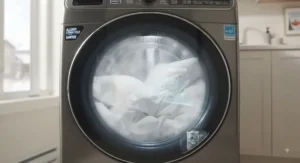
Specs on a page and specs in your laundry room are two different things. Steam clean washer reviews across retailer sites and independent testers consistently point to a few real-world patterns worth knowing before you buy. First, steam cycles add meaningful time — often 20 to 40 extra minutes per load — so don’t expect to squeeze one into a 45-minute laundry break. Second, the visible steam most people picture rarely happens; as LG’s own support documentation explains, steam is heated to roughly 100°C and sprayed at around 80°C, mostly invisible inside a closed, hot drum, so don’t worry if you can’t see vapour through the door glass.
Third, aggregated review sentiment across multiple brands suggests the biggest satisfaction driver isn’t raw stain removal — it’s the reduction in ironing time reported by owners running steam-refresh cycles on work clothes. Reviewers less consistently praise steam for heavily soiled items like grease-stained work clothes, where a dedicated Heavy Duty or Extra Power cycle (as on the Maytag MHW6630HW) still does more heavy lifting than steam alone. In short: steam earns its keep on freshening, allergen reduction, and wrinkle control far more reliably than it does as a stain-removal miracle worker.
Allergen Removal: How Steam Washers Tackle Dust Mites and Pet Dander
Dust mites and their waste products are among the most common indoor allergy triggers, and they thrive specifically in bedding, stuffed toys, and upholstered items — exactly the fabric categories steam washers are best suited to treat. Health Canada notes that exposure to dust mites can aggravate pre-existing conditions like asthma, and that keeping dust levels down meaningfully reduces exposure to potentially harmful substances found in household dust.
A steam-equipped washer attacks this problem two ways: heated water denatures the proteins in dust mite waste that trigger allergic reactions, and the steam itself helps penetrate deeper into thick fabrics like comforters than a standard warm rinse can reach. The Electrolux ELFW7637AW‘s Perfect Steam™ system and the Samsung family’s Hygiene Steam-style cycles are both engineered with this specific use case in mind, going after allergens rather than surface stains. What most buyers overlook here is frequency: running an allergen-focused steam cycle on bedding every one to two weeks does more for a dust-mite allergy than a single deep clean ever could, since exposure is a cumulative, ongoing issue rather than a one-time contamination event.
Sanitizing Steam: What Actually Gets Killed and What Doesn’t
“Sanitizing” is a specific, testable claim, not a vague marketing adjective, and it’s worth understanding exactly what it means before assuming any steam cycle qualifies. Manufacturer sanitize cycles — including the ones on the Maytag MHW6630HW and Bosch WAW285H2UC — are typically tested and certified to eliminate a defined percentage of common household bacteria, generally by sustaining water at a specific high temperature for a set duration, not simply by adding a steam blast partway through a normal cycle.
Based on the spec comparison across brands, there’s a meaningful difference between a “Steam” option (which boosts an existing wash cycle) and a dedicated “Sanitize” cycle (which is independently tested against bacteria-reduction standards). If your goal is genuinely killing bacteria on things like cloth diapers, athletic gear, or bedding used during illness, look specifically for the word “Sanitize” in the cycle list rather than assuming any steam-labelled option does the same job — reviewers occasionally express frustration after discovering their model’s steam feature was cosmetic rather than a certified sanitizing cycle.
Wrinkle Reduction Technology: How Steam Cuts Your Ironing Time
Wrinkle reduction technology works on a straightforward principle: heat and moisture relax the fibre bonds that cause fabric to hold a crease, which is exactly why a hung, damp shirt wrinkles less than one that’s been balled up dry. Steam-refresh cycles, like the one built into the LG WM6700HBA, apply that same principle without a full wash cycle — useful for pulling last-minute wrinkles out of dress shirts or bedding that’s been sitting folded too long.
What most buyers overlook about wrinkle reduction technology specifically is that it works best as prevention, not correction — running a steam-refresh cycle on clothes immediately after the dryer buzzer goes off is far more effective than trying to un-wrinkle something that’s been crumpled in a hamper for three days. Reviewers consistently note that this feature saves the most time on cotton dress shirts and lightweight bedding, and consistently underdeliver on heavier fabrics like denim, where mechanical ironing still wins.
Common Mistakes When Buying a Steam Washer
The most frequent misstep is buying based on capacity alone and ignoring cycle-specific features — a 5.8 cu. ft. drum with no dedicated sanitize cycle won’t help an allergy-prone household nearly as much as a smaller machine engineered for that exact purpose, like the Electrolux ELFW7637AW. A close second is skipping the venting and clearance check; steam washers still need proper drainage and level installation, and ignoring that detail causes the vibration and leak complaints that show up disproportionately in negative reviews.
Shoppers also frequently overestimate how much steam alone will reduce their ironing pile, expecting miracle results on heavily wrinkled or heavy fabrics that mechanical pressing still handles better. Finally, a common mistake is treating “Steam” and “Sanitize” as interchangeable marketing terms rather than distinct, differently-tested features — a mix-up that leads directly to disappointment for buyers specifically shopping for germ-killing performance.
Long-Term Cost & Maintenance: Is a Steam Washer Worth the Investment?
Steam washers generally cost more upfront than basic models, but the total cost of ownership picture is more nuanced than the sticker price suggests. ENERGY STAR-certified front loaders — which every model on this list qualifies as — use roughly 25% less energy and 33% less water than standard washers, according to Natural Resources Canada, which meaningfully offsets the higher purchase price over a machine’s typical 10-year lifespan.
Maintenance costs are modest but real: budget for an annual descaling treatment if you’re in a hard-water region, since mineral buildup in steam-generator lines can reduce steam output over time on any brand. Warranty length is where the real cost-of-ownership differences show up — the Maytag MHW6630HW‘s 10-year motor warranty offers a genuinely different risk profile than a standard 1-year full warranty, and it’s worth pricing that difference into your decision rather than treating all washers as equally durable investments.
Safety, Certification & Regulations Guide for Canadian Households
Any clothes washer sold in Canada, steam-equipped or not, falls under Natural Resources Canada’s Energy Efficiency Regulations, and ENERGY STAR certification is increasingly treated as a baseline expectation rather than a bonus feature for new appliances. All seven machines featured in this guide carry ENERGY STAR certification, which means they’ve been independently tested against efficiency benchmarks rather than simply relying on manufacturer claims.
For households with young children, look for models with child-lock controls (standard on most machines featured here) to prevent mid-cycle door openings or accidental setting changes. If you’re installing a washer in a shared or rental building, check your building’s insurance requirements around supply-line hoses — a burst connection is one of the most common sources of water-damage claims in multi-unit buildings, which is exactly why leak-protection systems like the Bosch’s AquaStop® Plus matter more than they might seem to on paper.
Frequently Asked Questions
❓ Does a steam washer really remove more allergens than a regular washer?
❓ Is steam the same thing as sanitizing on a washing machine?
❓ Do steam washers use significantly more energy than regular washers?
❓ Can a steam washer replace ironing completely?
❓ What size steam washer do I need for a family of four?
Conclusion
Choosing the best steam washer really comes down to matching the feature to the actual problem you’re trying to solve. The LG WM6700HBA and GE Profile PFW950SPTDS suit larger households chasing convenience and smart-home integration; the Electrolux ELFW7637AW is the strongest pick for allergy and asthma management; the Samsung WF45B6300AP and Whirlpool WFW6620HC prove real steam functionality doesn’t require a premium budget; the Maytag MHW6630HW earns its keep on genuinely dirty loads; and the Bosch WAW285H2UC solves a space problem full-size machines simply can’t touch.
None of these machines will turn laundry into a fun weekend activity — nothing will — but the right one genuinely cuts down on ironing, allergy flare-ups, and that lingering not-quite-clean smell that sends people back to the appliance store within two years of a bad purchase. Take stock of your household’s real priorities — capacity, allergens, stains, or space — and let that, not the flashiest spec sheet, make the final call.
Recommended for You
- 7 Best Cold Water Washing Machines in Canada (2026 Guide)
- Top Load Washer With Agitator: 7 Best Picks for 2026
- Most Energy Efficient Washer: 7 Picks That Cut Hydro Bills (2026)
Disclaimer: This article contains affiliate links. As an Amazon Associate, I earn from qualifying purchases. If you purchase products through these links, we may earn a small commission at no additional cost to you.
✨ Found this helpful? Share it with your friends! 💬🤗
