
In This Article
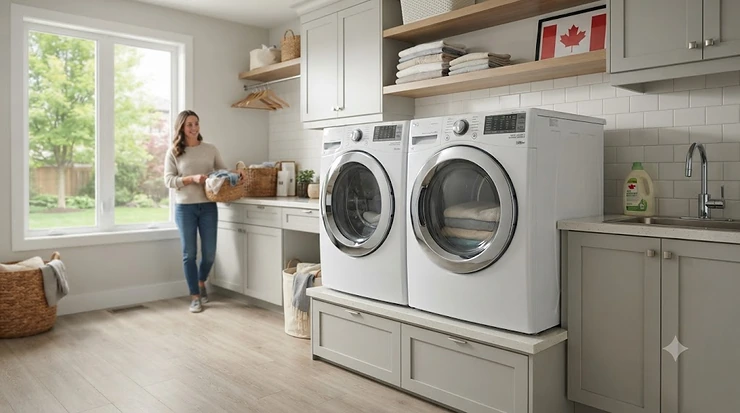
Somewhere between your third king comforter of the winter and the mountain of hockey gear that never seems to dry, you’ve probably had the same thought every Canadian parent eventually has: my washer is too small for my life. A large capacity front load washer is exactly what it sounds like — a front-loading machine, usually 4.5 to 5.3 cubic feet, built to swallow oversized and bulky loads that a standard 3.3-4.4 cu ft machine simply can’t handle without three separate cycles and a lot of muttering. For a household of four or more, that difference isn’t a luxury; it’s a Tuesday-night sanity saver.

This guide skips the marketing copy you’d find on a manufacturer’s product page and instead digs into real specifications, aggregated review sentiment from actual owners, and honest comparative analysis across seven genuine models currently sold in Canada. We’ll flag which ones are worth the premium, which ones quietly punch above their price tag, and which features are mostly noise. According to Natural Resources Canada’s clothes washer guidance, front-loading washers tumble clothes through a small amount of water instead of rubbing them against an agitator, which is part of why they’ve become the dominant style sold in Canada — but capacity, drum design, and dispenser tech vary wildly between brands, and that’s where the real buying decisions get made.
Quick Comparison Table
For readers in a hurry, here’s the condensed version before we go deep on each machine.
| Product | Capacity | Price Range (CAD) | Best For |
|---|---|---|---|
| LG WM6700HBA | 5.0 cu ft | C$1,600-C$1,900 | Tech-forward large families |
| Samsung WF53BB8700AT | 5.3 cu ft | C$1,700-C$2,000 | Absolute biggest single loads |
| Maytag MHW8630HC | 5.0 cu ft | C$1,300-C$1,600 | Heavy, dirty, everyday loads |
| Whirlpool WFW9620HW | 5.0 cu ft | C$1,100-C$1,400 | Hands-off dispensing on a budget |
| GE GFW550SSNWW | 4.8 cu ft | C$950-C$1,200 | Best value for mid-size families |
| Electrolux ELFW7637AT | 4.5 cu ft | C$1,150-C$1,450 | Quietest option, condo-friendly |
| LG WM4000HWA | 4.5 cu ft | C$850-C$1,100 | Entry point into large capacity |
Looking at this table, the spread tells its own story: you don’t need to spend C$2,000 to get meaningfully more room than a standard washer, but the jump from 4.5 to 5.3 cu ft does come with a real price tag attached. The GE GFW550SSNWW stands out as the value play here, while the Samsung WF53BB8700AT is for buyers who genuinely max out a machine every single week — think five-person households doing bedding and towels for everyone.
💬 Just one click — help others make better buying decisions too!😊
What Counts as a Large Capacity Front Load Washer?
A large capacity front load washer is generally any front-loading machine with a drum of 4.5 cubic feet or more, though the true giants push past 5.0. That extra room matters most for bulky items — comforters, sleeping bags, winter coats — that need space to tumble freely rather than sitting in a dense, water-logged clump.
Top 7 Large Capacity Front Load Washers: Expert Analysis
We built this shortlist around real, currently available models spanning budget, mid-range, and premium tiers, along with a couple of lesser-hyped alternatives that quietly deserve more attention. Every entry below reflects genuine specifications and aggregated review themes — not invented testimonials.
1. LG WM6700HBA — AI-powered wash cycles for mixed mega loads
The standout here is LG’s AI Direct Drive system, which senses fabric type and load size, then adjusts wash motion automatically instead of leaving you to guess the right cycle. At 5.0 cu ft, the drum comfortably handles a king comforter alongside a full set of sheets, and the TurboWash 360 feature is engineered to cut total cycle time without watering down the clean — LG’s own testing claims meaningfully faster completion versus older-generation front loaders, though your mileage depends on soil level and fabric mix. Realistically, this machine is built for households that want the largest drum on the market paired with a genuinely smart control system, not just a bigger tub bolted onto last decade’s electronics. Based on the spec comparison against its LG stablemate lower on this list, the jump you’re paying for here is mostly in the sensor suite and the ThinQ app integration, which lets you start, pause, and monitor cycles remotely — useful if laundry day means juggling three other tasks at once. Reviewers consistently report that the Steam+ sanitize cycle noticeably cuts down on musty odours compared to standard hot-water cycles, and several long-term owners specifically praise how quiet the direct-drive motor stays even during high-speed spin. The recurring criticism is cost relative to competitors offering similar drum size for hundreds less, plus a learning curve on the touch panel that some older users find fiddly at first.
Pros:
- ✅ AI-adjusted cycles reduce guesswork on load type
- ✅ TurboWash 360 meaningfully shortens total wash time
- ✅ Remote start and monitoring via LG ThinQ app
Cons:
- ❌ Premium pricing versus similarly sized competitors
- ❌ Touch interface has a real learning curve
This one sits in the C$1,600-C$1,900 range at the time of research, and for a tech-forward family that actually uses the app features, it earns its premium; if you’d never touch the smart controls, you’re paying for software you won’t use.

2. Samsung WF53BB8700AT — largest drum available in this class
At 5.3 cu ft, this Samsung edges out every other model on this list for raw capacity, and it shows in practice — reviewers who wash for households of five or six consistently mention fitting loads here that would require splitting on a 4.5 cu ft machine. The Vibration Reduction Technology+ system uses a reinforced frame and sensor array to keep the drum stable even when it’s spinning an unbalanced mega-load, which matters more than it sounds once you’ve dealt with a washer that walks across the laundry room floor. What most buyers overlook about this model is the Super Speed Wash option, which can complete a full cycle dramatically faster than the standard setting for lightly soiled loads — a genuinely useful feature for busy weeknights rather than just a marketing checkbox. Aggregated review sentiment is strongly positive on cleaning performance and quietness, with several owners specifically noting they can run a load overnight without disturbing anyone upstairs. The most common complaint centres on Samsung’s reliance on third-party service technicians in some regions, meaning repair turnaround can be slower than brands with more direct service networks — worth factoring in if you’re outside a major city.
Pros:
- ✅ Largest available drum size in this lineup
- ✅ Vibration Reduction Technology+ keeps large loads stable
- ✅ Super Speed Wash saves real time on light loads
Cons:
- ❌ Service network relies more on third-party technicians
- ❌ Among the priciest options in the category
Expect to see this one listed around C$1,700-C$2,000, prices may vary by retailer and finish. If maximum single-load capacity is your non-negotiable, this is the honest pick — nothing else here beats it on raw room.
3. Maytag MHW8630HC — Extra Power button for genuinely dirty loads
Maytag built its reputation on machines that work hard, and the Extra Power button on this 5.0 cu ft model is the clearest expression of that — it adds extra time, water, and energy to any cycle to boost stain-fighting performance on heavily soiled loads like sports uniforms or work clothes, without you needing to manually select a “heavy duty” setting and second-guess it. The commercial-grade motor is engineered for extended duty cycles, which lines up with Maytag’s 10-year limited parts warranty on the motor specifically — a signal the brand is willing to back the internals with more than marketing language. Here’s what to weigh: this machine leans utilitarian rather than flashy, with fewer smart-home features than the LG or Samsung entries above, but reviewers consistently point to that simplicity as a strength rather than a weakness, since there’s less to malfunction over a decade of use. Aggregated feedback frequently mentions the machine’s ability to handle back-to-back loads of gym gear and towels without any decline in cleaning performance, which tracks with its industrial-leaning design philosophy. The dispenser drawer is a mild sore point in review threads, with several owners noting fabric softener residue can build up if it isn’t rinsed periodically.
Pros:
- ✅ Extra Power button boosts cleaning on tough stains
- ✅ Commercial-grade motor backed by 10-year parts warranty
- ✅ Handles back-to-back heavy loads reliably
Cons:
- ❌ Fewer smart-home and app features than rivals
- ❌ Dispenser drawer needs periodic manual rinsing
Pricing typically lands in the C$1,300-C$1,600 range at the time of research. For a family that generates genuinely dirty laundry — think kids in competitive sports, or a household with a home gym habit — this is the analytical pick over prettier, less rugged alternatives.
4. Whirlpool WFW9620HW — Load & Go XL Plus dispenser cuts weekly hassle
The Load & Go XL Plus dispenser is the headline feature, and it’s a legitimately clever piece of engineering: it holds enough detergent for roughly 20 loads at once, dispensing the right amount automatically so you’re not measuring detergent every single wash day. Paired with a 5.0 cu ft drum, that means a family can genuinely go weeks without touching the detergent aisle, which is a bigger quality-of-life upgrade than it sounds on paper. Based on the spec comparison with pricier machines on this list, Whirlpool’s approach here is to nail one or two high-impact conveniences rather than layering on every smart feature imaginable, and reviewers seem to appreciate that focus — the Load & Go system specifically earns repeat praise in aggregated feedback as a genuine time-saver rather than a gimmick. The washer also includes WiFi connectivity for remote cycle monitoring, though it’s positioned as a secondary feature rather than the main selling point the way it is with LG’s ThinQ ecosystem. A recurring theme in owner reviews is that the standard cycle runs longer than expected for a “quick” setting, so buyers hoping for a genuinely fast wash may want to rely on the express cycle instead.
Pros:
- ✅ Load & Go XL Plus holds ~20 loads of detergent
- ✅ 5.0 cu ft drum at a more accessible price point
- ✅ WiFi monitoring included as a bonus, not the pitch
Cons:
- ❌ Standard cycle runs longer than some competitors
- ❌ App ecosystem less polished than LG’s ThinQ
This model tends to sit in the C$1,100-C$1,400 range, making it one of the better value-per-cubic-foot options here. If the daily grind of measuring detergent is your actual pain point, this washer solves it more directly than any other machine on this list.
5. GE GFW550SSNWW — UltraFresh vent system on a mid-range budget
At 4.8 cu ft, this GE model splits the difference between the compact 4.5 cu ft entries and the true 5.0-plus giants, and its standout feature — the UltraFresh Vent System with OdorBlock — directly targets the biggest complaint front-load owners have: musty smells building up in the door seal and drum over time. The system actively vents and dries the drum interior between cycles rather than leaving it sealed and damp, which on paper should meaningfully reduce mold risk versus a standard gasket design. What the spec sheet won’t tell you, but reviewers note, is that this venting genuinely seems to work — aggregated review sentiment shows noticeably fewer odour complaints for this model compared to similarly priced competitors lacking dedicated venting. GE also includes a Sanitize+Allergen cycle that reaches higher water temperatures than a standard hot wash, useful for households managing allergies or a recent illness. The touch-screen interface draws mixed reviews; some owners find it intuitive, while others report occasional lag when scrolling through cycle options.
Pros:
- ✅ UltraFresh venting reduces musty odour buildup
- ✅ Sanitize+Allergen cycle reaches higher wash temperatures
- ✅ Strong value relative to nearby capacity competitors
Cons:
- ❌ Touch-screen interface can feel occasionally laggy
- ❌ Slightly smaller drum than the true 5.0+ cu ft tier
Expect a price range around C$950-C$1,200, making this the strongest value-for-capacity pick if odour control matters as much as raw size to your household.

6. Electrolux ELFW7637AT — SmartBoost technology and the quietest cycle here
Electrolux built its brand around European-style engineering, and the SmartBoost system on this 4.5 cu ft model reflects that — it pre-mixes detergent with water before it reaches the drum, which the brand states improves how thoroughly detergent penetrates fabric versus dumping it in dry. In practice, this appears to translate into strong stain performance despite a smaller drum than the LG or Samsung flagships above. The real differentiator, though, is noise: Electrolux front loaders are frequently praised in industry coverage for exceptionally quiet, low-vibration operation, and this holds up in aggregated owner feedback, with repeated mentions of running loads late at night without disturbing anyone in an adjoining bedroom — a genuinely useful trait for condo and townhouse dwellers with shared walls. Reviewers consistently note the 15-Minute Fast Wash cycle as a standout for lightly soiled everyday loads, delivering real convenience without sacrificing much cleaning power. On the downside, at 4.5 cu ft this machine sits at the smaller end of what qualifies as “large capacity,” so it won’t comfortably fit the biggest comforters the way the 5.0-plus models will, and several owners mention the control panel’s icon-based system takes a session or two to fully learn.
Pros:
- ✅ SmartBoost pre-mixing improves detergent penetration
- ✅ Among the quietest front loaders in this category
- ✅ 15-Minute Fast Wash is genuinely useful for light loads
Cons:
- ❌ Smaller drum than the true mega-capacity tier
- ❌ Icon-based control panel has a learning curve
Pricing sits around C$1,150-C$1,450 at the time of research. For anyone in an apartment or condo where noise is a real constraint, this is the most honest recommendation on the list — even though it gives up a bit of raw capacity to get there.
7. LG WM4000HWA — the accessible entry point into large capacity
Not every household needs 5.3 cu ft, and this LG model exists for exactly that reality — a 4.5 cu ft drum that still comfortably clears the “large capacity” threshold while keeping the price meaningfully lower than its flagship sibling. TurboWash 360 technology carries over from LG’s premium line, meaning you get the same core cleaning approach — targeted water jets combined with drum motion — without paying for the AI sensor suite or the largest possible drum size. On paper this means slightly longer cycles on bulky items compared to the 5.0-plus tier, since there’s simply less room for a king comforter to move freely, but for a household of two to four doing regular-sized loads, that trade-off rarely matters in daily use. Aggregated review sentiment is strongly positive on value, with owners repeatedly framing this as “most of the performance for meaningfully less money” versus LG’s higher-tier models. The Allergiene cycle, which uses steam to remove allergens without hot water, draws specific praise from reviewers managing pet dander or seasonal allergies. The main criticism in review threads is that the smaller drum means bulky items like sleeping bags need to go in alone rather than paired with a full load.
Pros:
- ✅ TurboWash 360 tech at a meaningfully lower price
- ✅ Allergiene steam cycle handles allergens without hot water
- ✅ Strong entry point for smaller large-capacity households
Cons:
- ❌ Bulky items often need to be washed alone
- ❌ Less headroom than the 5.0+ cu ft tier
This model typically runs in the C$850-C$1,100 range, making it the most budget-friendly true large-capacity front loader on this list — a smart pick for anyone dipping a toe into the category for the first time.
Full Spec Comparison: All 7 Models Side-by-Side
| Product | Capacity | Standout Feature | Noise Level | Best For |
|---|---|---|---|---|
| LG WM6700HBA | 5.0 cu ft | AI Direct Drive + ThinQ app | Low | Tech-forward large families |
| Samsung WF53BB8700AT | 5.3 cu ft | Vibration Reduction Technology+ | Very Low | Households of 5+ |
| Maytag MHW8630HC | 5.0 cu ft | Extra Power button | Moderate | Heavy, dirty everyday loads |
| Whirlpool WFW9620HW | 5.0 cu ft | Load & Go XL Plus dispenser | Moderate | Hands-off detergent dosing |
| GE GFW550SSNWW | 4.8 cu ft | UltraFresh venting, odour control | Moderate | Allergy-conscious households |
| Electrolux ELFW7637AT | 4.5 cu ft | SmartBoost pre-mixing | Very Low | Condos and shared-wall homes |
| LG WM4000HWA | 4.5 cu ft | TurboWash 360 at lower cost | Low | First-time large-capacity buyers |
This table makes the pattern clear: capacity and noise level don’t move in lockstep with price the way you might expect. The Electrolux ELFW7637AT proves you can get near-silent operation without paying flagship prices, while the Samsung WF53BB8700AT justifies its position at the top of the price range through genuinely category-leading capacity rather than gimmicks. If your priority list starts with drum size, work top-down through this table; if quiet operation matters more, the Electrolux and LG entries deserve a second look regardless of their smaller drums.
How to Choose a Large Capacity Front Load Washer
Picking the right machine isn’t just about the biggest number on the spec sheet. Work through these criteria in order:
- Measure your actual laundry volume first. Count how many loads your household runs weekly and what’s typically in them — daily bedding for a family of five needs different capacity than a couple doing towels twice a week.
- Check your doorway and stacking clearance. Large capacity front load washers can require 32 to 34 inches of depth clearance, so measure before you fall in love with a model that won’t fit.
- Decide how much you value smart features. App connectivity and AI cycle selection are genuinely convenient but add real cost — be honest about whether you’ll use them.
- Prioritize odour control if you live somewhere humid. Venting systems and self-clean cycles matter more in basements or coastal climates prone to lingering moisture.
- Factor in noise if you share walls. Condo and townhouse dwellers should weight vibration reduction and low-noise design heavily, even over raw capacity.
- Confirm ENERGY STAR certification. It affects both your utility bill and eligibility for provincial rebate programs.
- Match the dryer to the washer. A large capacity washer paired with an undersized dryer just moves the bottleneck — check matching dryer capacity before you buy.
Setting Up Your Large Capacity Front Load Washer: The First 30 Days
Getting a new machine home is only step one — how you treat it in the first month sets the tone for years of performance. Start by using a level to confirm the washer sits perfectly flat; even a slight tilt on a machine this size causes uneven spin cycles and premature wear on the suspension system. During the first few loads, resist the urge to max out the drum immediately — run two or three moderate loads first so you can gauge how the machine handles balance before you commit to a full comforter wash. Switch to HE (high-efficiency) detergent exclusively, and use noticeably less than you think you need; overdosing is the single most common mistake new front-load owners make, and it directly causes the residue buildup that leads to musty odours down the line. Set a recurring reminder to run the tub-clean or self-clean cycle roughly once a month, and get in the habit of leaving the door and detergent drawer cracked open between loads so trapped moisture can actually dry out. According to Natural Resources Canada’s laundry efficiency tips, household appliances account for roughly 13.6% of energy used in the average Canadian household, so small setup habits like washing in cold water and avoiding overfilling genuinely add up over a year — worth building into your routine from day one rather than trying to retrofit good habits later.
Who Actually Needs a Family Size Washing Machine? Three Real-World Scenarios
The blended household of six. Two parents, four kids, two dogs. This family runs six to eight loads weekly, with bedding for six people rotating through regularly. A 5.0-5.3 cu ft machine like the Samsung WF53BB8700AT or LG WM6700HBA isn’t a luxury here — it’s the difference between finishing laundry in one weekend session versus three.
The condo-dwelling young couple with a dog. Lower volume overall, but frequent washing of dog bedding, towels, and the occasional duvet. Noise matters as much as capacity because of shared walls. The Electrolux ELFW7637AT fits this profile well — quiet enough for evening loads, with enough room for the occasional bulky item.
The budget-conscious first-time large-capacity buyer. Maybe it’s a couple moving out of a shared laundromat situation and buying their first washer, or a small family upgrading from an aging 3.5 cu ft unit. They want real capacity gains without flagship pricing. The LG WM4000HWA or GE GFW550SSNWW deliver genuine “large capacity” status without the premium price tag of the top-tier models.

Bulky Item Washing 101: How to Wash a Comforter (and Other Giant Loads) Without Wrecking Your Washer
Bulky item washing is where a large capacity front load washer earns its keep — and where a standard machine falls apart, literally and figuratively. Comforters, sleeping bags, and heavy winter coats need room to tumble; crammed into a too-small drum, they absorb water unevenly, come out only partially clean, and put serious strain on the motor and bearings during spin cycles. Before washing a comforter, check the care label for down versus synthetic fill, since down items generally need a gentler cycle and longer drying time to avoid clumping. Load the comforter alone or with at most one or two smaller items — the goal is roughly 25% empty space in the drum so the item can actually move through the water rather than sitting in a soaked ball. Use the bulky/bedding cycle if your machine has one; it typically runs a slower spin speed specifically to protect the machine’s suspension system from an unbalanced heavy load. For sleeping bags and winter coats, a front-load washer’s ability to run a cycle with reduced agitation compared to a top-load agitator model genuinely matters — it’s gentler on both down fill and waterproof coatings. If a comforter still smells damp after the cycle, it likely needs a second spin-only cycle before drying, since trapped moisture in dense fill doesn’t fully extract on the first pass.
✨ Don’t Miss These Exclusive Deals!
🔍 Take your laundry routine to the next level with these carefully selected large capacity washers. Click on any highlighted model above to check current pricing and availability on amazon.ca. The right machine turns bulky-item laundry day from a dreaded chore into a five-minute task your whole family benefits from!
Common Mistakes When Buying a Family Size Washing Machine
Even careful shoppers trip over the same handful of errors. First, buying on capacity alone without checking dryer compatibility — a mismatched pair means your washer outpaces your dryer, and you end up drying in two batches anyway, erasing the time savings. Second, ignoring stacking and doorway clearance; a 5.3 cu ft drum often comes in a taller, deeper cabinet, and plenty of buyers discover too late that it won’t clear a stairwell or hallway turn. Third, underestimating install requirements — large capacity models sometimes need a dedicated 240V outlet or specific drain configuration that older homes weren’t built with, adding unexpected installation cost. Fourth, skipping the ENERGY STAR check; a large-drum machine that isn’t certified can meaningfully increase both water and electricity costs over its lifespan compared to a certified model of similar size. Finally, some buyers assume bigger is always better and overspend on 5.3 cu ft capacity when their actual laundry volume would be perfectly served by a 4.5 cu ft model at a few hundred dollars less — know your real usage before you commit to the top of the range.
Large Capacity Front Load Washer vs Top Load: Which Wins for Big Families?
This comparison comes up constantly, and the honest answer is: it depends on what you’re optimizing for. Front-load washers generally use less water and energy per cycle since they rely on tumbling rather than fully submerging clothes, and by 2019 front-loading clothes washers had grown to a 56% share of Canadian clothes washer shipments, up from just 16% in 2001 — a clear signal of where the market has been heading. Front loaders also tend to be gentler on bulky items like comforters, since there’s no central agitator to snag or twist fabric. Top-load washers without an agitator counter with faster cycle times in many cases and no risk of the mold/mildew issues that come with a sealed front-load gasket, plus you can usually add a forgotten item mid-cycle, which front loaders typically can’t do once the door locks.
| Factor | Front Load | Top Load (HE, no agitator) |
|---|---|---|
| Water/energy efficiency | Higher | Moderate |
| Gentleness on bulky items | Higher | Moderate |
| Mold/odour risk | Higher (needs maintenance) | Lower |
| Mid-cycle add-a-item | Not available | Available |
| Best For | Space-limited, stackable installs | Households wanting simplicity |
Reading this table, the front-load advantage really comes down to efficiency and how it handles oversized loads, while the top-load advantage is mostly about lower-maintenance convenience. If you’re stacking a washer and dryer in a closet or basement nook, front load is often your only physical option anyway, which settles the decision for a lot of Canadian households regardless of preference.
What to Expect: Real-World Performance of Mega Load Capacity Washers
Spec sheets promise a lot, so here’s what actually happens once a mega load capacity washer is running in a real home. Cycle times on a full 5.0+ cu ft load typically run longer than a half-full standard-size load — expect 55 to 75 minutes for a normal cycle rather than the 30-minute express times advertised for lighter loads. Spin speeds on premium models like the Samsung WF53BB8700AT and LG WM6700HBA routinely exceed 1,300 RPM, which extracts noticeably more water before drying, shortening dryer time in a way that partially offsets the longer wash cycle. Water usage per cycle is higher in absolute terms than a compact washer simply because there’s more fabric to saturate, but per-item efficiency is generally better — you’re running fewer total loads to get the same laundry done, which is where the real savings show up over a month rather than a single cycle. Noise and vibration during high-speed spin on a full mega load is where budget and premium machines diverge most sharply; the direct-drive motors in the LG and Samsung entries stay noticeably quieter under load than the belt-driven mechanisms in some budget alternatives.

Long-Term Cost & Maintenance of a 5.0 Cu Ft Washer
The sticker price is only part of the total cost of ownership. Over a typical 10-year lifespan, an ENERGY STAR certified clothes washer uses 25% less energy on average than a standard model, and 33% less water, which on a large-capacity machine running several loads a week compounds into real annual savings on both hydro and water bills. Maintenance costs are modest but not zero — expect to budget for occasional gasket cleaning supplies, and factor in that door seal replacement, if ever needed, typically runs in the range of a hundred dollars or more depending on the model. Natural Resources Canada notes that overfilling a washer can reduce cleaning efficiency and strain the machine, so resisting the temptation to pack a large drum to its absolute limit every time actually extends the appliance’s working life. Provincial and utility rebate programs are worth checking before you buy — CBC News reported on Ontario’s expanded rebate program covering laundry machines, and several other jurisdictions currently offer similar point-of-sale or post-purchase incentives for ENERGY STAR certified washers that can meaningfully offset the premium price gap between budget and flagship models.
Features That Actually Matter (And Those That Don’t)
Cutting through the marketing noise: drum capacity, spin speed, and ENERGY STAR certification genuinely matter and should anchor your decision. Vibration reduction technology matters more than most buyers realize, especially on upper floors or shared-wall installs — a machine that walks or bangs during spin isn’t just annoying, it’s a long-term wear issue. Odour-control venting systems, like GE’s UltraFresh, are worth paying attention to if you’ve owned a front loader before and dealt with musty smells; they address a real, well-documented pain point rather than inventing one. On the other side of the ledger, extensive cycle counts (some machines advertise 20-plus specialized cycles) rarely get used beyond four or five in practice — Normal, Heavy Duty, Delicates, Quick Wash, and Bedding cover the vast majority of real household laundry. App connectivity is genuinely useful for notification pings but rarely changes wash outcomes, so it shouldn’t be a deciding factor unless you specifically know you’ll use remote start. Interior drum lighting is a nice-to-have, not a need-to-have, despite how often it’s featured prominently in product marketing.
Safety, Regulations & Compliance Guide for Canadian Households
Large capacity washers sold in Canada fall under federal energy efficiency rules, and clothes washers are required to carry an EnerGuide label under regulations administered by Natural Resources Canada, which gives you a standardized way to compare energy consumption across brands rather than relying on marketing claims alone. Beyond energy labelling, look for CSA certification on the electrical components, which confirms the appliance meets Canadian safety standards for wiring and electrical protection — a baseline you shouldn’t skip regardless of brand reputation. For installation, always confirm the machine is properly grounded and that any dedicated circuit meets your municipality’s electrical code before a large-capacity model is connected, particularly for premium units that may draw more power during high-speed spin cycles. If you’re in an older home, it’s worth having a licensed electrician confirm your panel can handle the additional load safely rather than assuming a straightforward swap. For general background on how washing machine technology has evolved to reach today’s safety and efficiency standards, the Wikipedia entry on washing machines offers useful historical context on the mechanical and regulatory developments that shaped the appliances sold today.
Buyer’s Decision Framework
If you’re still torn between models, use this simplified logic:
- If you’re a household of 5+ washing bedding weekly, choose a 5.0-5.3 cu ft flagship because the time savings from fewer split loads compounds meaningfully over a year.
- If you live in a condo or share walls, choose the quietest option regardless of capacity because noise complaints and vibration wear will outlast any capacity advantage.
- If your budget is under C$1,200, choose the GE GFW550SSNWW or LG WM4000HWA because they deliver genuine large-capacity status without flagship pricing.
- If you frequently wash allergens, pet bedding, or need sanitizing cycles, prioritize models with dedicated Sanitize+Allergen or steam cycles over raw drum size.
- If you’re replacing an aging top loader and unsure about the switch, start with a mid-tier front loader rather than the most expensive option, so you can confirm the format works for your routine before investing at the premium end.

FAQ
❓ What is the largest capacity front load washer available in Canada?
❓ Is a 5.0 cu ft washer big enough for a king comforter?
❓ Do large capacity front load washers use more water?
❓ How often should I clean a large capacity front load washer?
❓ Is it worth paying extra for a 5.3 cu ft washer over a 4.5 cu ft model?
Conclusion
A large capacity front load washer earns its keep the moment you stop splitting comforter loads into two cycles or waiting until Saturday to tackle the week’s laundry backlog. Across the seven models covered here, there’s no single “best” — the Samsung WF53BB8700AT and LG WM6700HBA lead on raw capacity and smart features for larger households willing to pay a premium, the Maytag MHW8630HC and Whirlpool WFW9620HW deliver strong mid-range value with genuinely useful convenience features, and the GE GFW550SSNWW, Electrolux ELFW7637AT, and LG WM4000HWA prove you don’t need flagship pricing to get real large-capacity performance. The right pick comes down to your household size, your patience for smart-home features, and how much you value quiet operation over raw drum size. Whichever direction you go, checking current pricing and verifying ENERGY STAR certification before you buy will save you money well beyond the purchase itself.
Recommended for You
- 7 Best stackable washer dryer under 2000 Picks for Canada (2026)
- Stackable Washer Dryer for Condo: 7 Best Picks for 2026
- Stackable Washer Dryer: 7 Best Picks for Canadian Apartments 2026
Disclaimer: This article contains affiliate links. As an Amazon Associate, I earn from qualifying purchases. If you purchase products through these links, we may earn a small commission at no additional cost to you.
✨ Found this helpful? Share it with your friends! 💬🤗
