
In This Article
If you’ve ever woken up stuffy-nosed and itchy-eyed despite washing your sheets last night, you already know that “clean” laundry and “allergen-free” laundry are not always the same thing. A steam washer for allergies is a front-load or top-load machine that adds a high-heat steam cycle — usually paired with a dedicated allergen or sanitize setting — to loosen and neutralize dust mite debris, pet dander, and pollen trapped deep in fabric fibres, something a cold rinse and spin simply can’t touch. For allergy sufferers in Canada, where humid summers in Ontario and Quebec keep dust mite populations thriving and long winters mean pet dander gets trapped indoors for months, this small mechanical difference matters more than most people realize.
Here’s the honest picture: no washing machine is a cure for allergies, and no manufacturer’s percentage claim (95%, 99%, 99.9%) should be read as a medical guarantee. What steam-and-allergen cycles do reliably offer is a documented reduction in allergen load on washable fabrics — bedding, pillowcases, stuffed animals, pet blankets — when used correctly and consistently. That’s a genuinely useful tool, not a miracle appliance.
We researched seven real, currently available washers spanning budget, mid-range, and premium tiers, pulled their actual specifications and certifications, and cross-referenced aggregated customer feedback from major Canadian and North American retailers. Below, you’ll find honest analysis (not fabricated hands-on testing), a full spec comparison, and practical guidance drawn from public health resources like Health Canada’s guidance on dust and dust mites — because understanding why steam works matters as much as which model you buy.
Quick Comparison Table
| Model | Capacity | Allergen/Steam Feature | Best For |
|---|---|---|---|
| LG WM4000HWA | 4.5 cu. ft. | Allergiene cycle (AAFA certified, up to 95%) | Smart-home households |
| Samsung Addwash WF45K6500AW | 4.5 cu. ft. | Allergen + Sanitize cycles | Families with forgotten items |
| GE GFW850SPNRS | 5.0 cu. ft. | Sanitize + Allergen (up to 99%) | Odor-and-allergen combo issues |
| Whirlpool WFW94HEAW | 4.3 cu. ft. | Allergen cycle (up to 95%) | Budget-conscious mid-range buyers |
| Electrolux ELFW7637AW | 4.5 cu. ft. | NSF-certified Allergen (95%) + Sanitize (99%) | Stain-and-allergen combo households |
| Maytag MHW6630HW | 4.8 cu. ft. | Sanitize (99.9%) + Steam option | Budget buyers wanting durability |
| LG 24″ Compact Steam Washer | 2.4 cu. ft. | Steam + Sanitary cycle | Condos and small apartments |
Looking at the table, the pattern that jumps out is this: allergen-specific certification (AAFA or NSF) tends to sit in the mid-to-premium tier, while budget machines like the Maytag MHW6630HW lean on a strong Sanitize cycle plus a general steam option rather than a dedicated, third-party-certified allergen percentage. That’s not necessarily worse — hot water and steam still do real work against dust mite proteins — but it does mean the marketing language differs from what the machine can formally claim. If third-party certification matters to you specifically, narrow your search to AAFA- or NSF-certified models first.
💬 Just one click — help others make better buying decisions too! 😊
Top 7 Steam Washers for Allergies: Expert Analysis
1. LG WM4000HWA — AAFA-certified Allergiene cycle with AI fabric sensing
The standout here is certification: the LG WM4000HWA carries an actual Asthma and Allergy Foundation of America (AAFA) certification on its Allergiene cycle, not just an internal lab claim. That cycle uses steam combined with extended hot-water exposure to reduce pet dander, dust, and pollen on fabric by up to 95%, according to LG’s AAFA testing. The washer itself is a 4.5 cu. ft. (127 L) front-loader with TurboWash 360 jets, a 1,300 RPM spin class, and Built-In Intelligence that senses fabric type and load size to auto-select wash motions — useful if you’re the type who never reads the cycle chart. Based on the spec comparison, this model earns its premium price through the combination of a verified allergen claim and genuinely smart automation, rather than through gimmicky extras. It’s best suited to households with pet allergies who want the machine to handle decision-making, and to anyone who already lives in the LG ThinQ ecosystem. Reviewers consistently note that the Allergiene cycle takes roughly 90 minutes — noticeably longer than a Normal cycle — and works best on cotton and linen bedding rather than delicates. A common thread in aggregated feedback is that noise levels are low and reliability has been solid, though the closet-depth design (about 30.25 inches deep) means measuring your laundry nook before ordering is non-negotiable.
Pros:
- ✅ AAFA-certified allergen claim, not just internal marketing
- ✅ AI fabric sensing removes guesswork from cycle selection
- ✅ Closet-depth design fits tight Canadian laundry rooms
Cons:
- ❌ Allergiene cycle runs long at roughly 90 minutes
- ❌ Wi-Fi/ThinQ features add cost some buyers won’t use
Expect this model in the C$1,300-C$1,650 range at the time of research; check current pricing, as it fluctuates. For a household juggling pet allergies and a desire for smart-home convenience, it’s a strong value even at the higher end of that band.
2. Samsung Addwash WF45K6500AW — mid-cycle door lets you rescue forgotten allergen items
What makes this one worth a second look is the small Addwash door built into the main door — you can toss in a stray sock or an allergen-prone item like a stuffed toy mid-cycle without restarting the whole wash. Spec-wise, you’re getting 4.5 cu. ft. capacity, 14 cycles including dedicated Allergen and Sanitize settings, Steam Wash, and VRT Plus vibration control for quieter spins. Here’s what to weigh: the Allergen and Sanitize cycles use elevated water temperature plus steam injection to break down dust mite debris on cotton and linen, which is the same underlying mechanism most competitors use, just packaged with Samsung’s own UI. What most buyers overlook about this model is cycle duration — aggregated user reports (including verified purchaser Q&As on major retail sites) consistently flag that the Sanitary and Allergen cycles run around two and a half hours, considerably longer than the same cycles on some competing brands. That’s a real trade-off for busy households. On the plus side, reviewers report strong day-to-day cleaning performance and appreciate the ability to wash bulky items like comforters without overloading the drum. This is a solid pick for parents who are constantly discovering one more sock, bib, or blanket after the cycle has already started.
Pros:
- ✅ Addwash door rescues forgotten items mid-cycle
- ✅ Dedicated Allergen and Sanitize cycles on the same unit
- ✅ Handles bulky comforters without crowding the drum
Cons:
- ❌ Allergen and Sanitize cycles run notably long (~2.5 hours)
- ❌ Some owners report the unit runs louder than expected
Price sits in the C$1,050-C$1,350 range, prices may vary by finish and retailer. If the Addwash feature genuinely matches how your household does laundry, the extra wait time on allergen cycles is a fair trade.
3. GE GFW850SPNRS — industry-first combined Sanitize + Allergen cycle
The short standout feature is right in the name: GE markets this as an “industry-first” combined cycle that sanitizes fabric and targets allergens like dust mites in a single pass, rated to address 99% of common bacteria and allergens. This is a 5.0 cu. ft. smart front-loader with SmartDispense (holding up to 32 loads of detergent), built-in Wi-Fi, and GE’s UltraFresh Vent System with OdorBlock, which actively vents excess moisture from the drum between loads to discourage mould and musty smells — a genuinely practical feature for allergy-prone households, since damp gaskets are a common secondary allergen source that most buying guides ignore. Based on the spec comparison, the Microban antimicrobial treatment on the gasket and dispenser is a meaningful add for anyone whose allergies are aggravated by mildew odour rather than dust alone. What the spec sheet won’t tell you, but reviewers note, is that the dynamic balancing technology genuinely reduces spin-cycle noise and vibration, which several aggregated reviews specifically praised for stackable installations in condos and townhomes. This machine is best suited to households dealing with a combination of allergy and odour complaints, not just one or the other.
Pros:
- ✅ Combined Sanitize+Allergen cycle addresses 99% of targeted particles
- ✅ UltraFresh Vent System actively fights gasket mould and odour
- ✅ Quiet, well-balanced spin even in stacked installations
Cons:
- ❌ Among the pricier options in this roundup
- ❌ SmartDispense reservoir needs periodic deep cleaning
Look for it in the C$1,450-C$1,750 range at most Canadian retailers; prices may vary seasonally. For anyone whose “allergy laundry” problem is really an allergy-plus-mustiness problem, this is the most targeted fix on this list.
4. Whirlpool WFW94HEAW Duet — steam-boosted Allergen cycle with Precision Dispense
The standout feature here is straightforward value: a tested Allergen cycle removing up to 95% of allergens, paired with a Precision Dispense system that releases detergent, bleach, and additives at the correct moment automatically, all in a 4.3 cu. ft. drum. Reviewers consistently note this Duet-series machine handles everyday loads — towels, bedding, activewear — without needing much pretreatment, thanks to the steam option layered onto standard cycles. Here’s what to weigh: unlike the LG and Electrolux entries above, Whirlpool’s allergen claim doesn’t carry independent AAFA or NSF certification in its published materials, so treat “up to 95%” as a manufacturer figure rather than a third-party-verified one. That doesn’t make it ineffective — the underlying steam-plus-heat mechanism is the same physics at work — but it’s a distinction worth being honest about. The built-in accelerometer and dual-ring ball balancing help keep the drum centred during heavier allergen-cycle loads like duvets, which several owners flagged as a pleasant surprise for a mid-range unit. This is a sensible pick for buyers who want steam-assisted allergen reduction without paying premium-tier prices for smart features they may never use.
Pros:
- ✅ Precision Dispense automates detergent and additive timing
- ✅ Strong vibration control even with bulky duvets
- ✅ Steam option layers onto multiple cycles, not just one
Cons:
- ❌ Allergen claim is manufacturer-tested, not third-party certified
- ❌ Fewer smart-home features than LG, Samsung, or GE rivals
Typical pricing lands in the C$1,100-C$1,400 range; check current price, as Whirlpool runs frequent seasonal promotions. It’s a genuinely solid mid-tier choice if third-party certification isn’t a dealbreaker for you.
5. Electrolux ELFW7637AW — NSF-certified Allergen cycle plus SmartBoost pre-mixing
What sets this one apart on paper is the NSF certification behind its Allergen cycle, claiming removal of up to 95% of allergy-causing particles like pollen and dust, alongside a separate Sanitize option killing up to 99% of bacteria. The 4.5 cu. ft. drum uses Electrolux’s LuxCare Plus Wash system and a SmartBoost feature that pre-mixes water and detergent before the load even starts tumbling, which the company frames as better saturation of every fibre. Based on the spec comparison, the combination of NSF certification (a recognized third-party standard, distinct from AAFA) plus Perfect Steam rising from the base of the drum gives this machine one of the more credibly documented allergen claims in this entire roundup. Aggregated reviewer sentiment is largely positive on stain removal and detergent flexibility — the Adaptive Dispenser accepts pods, liquid, or powder — though a recurring theme in feedback is that Electrolux’s touch controls have a steeper learning curve than dial-based competitors. This is an excellent match for households juggling both stubborn stains (think grass, sports gear, mud) and genuine allergy concerns in the same laundry pile.
Pros:
- ✅ NSF-certified Allergen cycle, a recognized third-party standard
- ✅ SmartBoost premixes detergent for deeper fibre saturation
- ✅ Adaptive Dispenser works with pods, liquid, or powder detergent
Cons:
- ❌ Touch control interface has a learning curve for some users
- ❌ Among the higher-priced options for its capacity class
Expect the C$1,400-C$1,750 range depending on colour finish (white versus titanium); prices may vary by retailer. If independent certification and stain-fighting flexibility both matter to you, this is arguably the best-documented allergen claim on the list.
6. Maytag MHW6630HW — commercial-grade durability with Sanitize and Steam-for-Stains
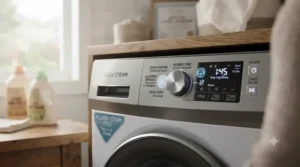
The honest standout here isn’t a flashy allergen percentage — it’s durability and a genuinely powerful Sanitize cycle, tested against three specific bacteria strains (S. aureus, P. aeruginosa, and K. pneumoniae) to remove 99.9% using the hottest water temperature the machine can produce. This 4.8 cu. ft. front-loader also offers a Steam-for-Stains option that can be added to select cycles, plus Maytag’s Commercial Technology build quality: a direct-drive motor and stainless-steel basket backed by a 10-year limited parts warranty. Reviewers consistently note that while Maytag doesn’t market a dedicated, percentage-based “Allergen” cycle the way LG, Samsung, or Electrolux do, the combination of maximum-heat Sanitize plus added steam achieves a very similar practical outcome on dust mite debris — it’s simply framed as bacteria elimination rather than allergen removal in the marketing copy. If you cannot verify a formal allergen certification for this model (and, honestly, we couldn’t find one), that’s worth knowing going in rather than assuming equivalence to certified competitors. What most buyers overlook is the 16-Hour Fresh Hold option, which keeps a finished load smelling fresh via intermittent tumbling if you can’t unload the washer right away — genuinely handy for anyone prone to musty-smell allergic reactions.
Pros:
- ✅ Sanitize cycle tested against three specific bacteria strains
- ✅ Commercial-grade direct-drive motor with 10-year warranty
- ✅ 16-Hour Fresh Hold prevents musty odour buildup
Cons:
- ❌ No dedicated, certified Allergen-percentage cycle
- ❌ Steam is an add-on option, not a standalone deep-steam cycle
Budget around C$950-C$1,150, making the Maytag MHW6630HW one of the better value plays here; check current price for seasonal rebates. For buyers prioritizing longevity and raw sanitizing heat over a marketed allergen number, it’s a smart, honest pick.
7. LG 24″ Compact Steam Washer — the space-saving pick for condos and small apartments
The clear standout feature is footprint: at just 24 inches wide and 2.4 cu. ft. capacity, this compact stackable front-loader brings LG’s steam cleaning and AI Fabric Sensor technology into apartments, condos, and laundry closets where a standard 27-inch machine simply won’t fit — a real consideration for renters in dense Canadian cities like Toronto, Vancouver, or Montreal. Despite the smaller drum, it retains a Sanitary cycle and steam option that work on the same hot-water-plus-steam principle as its larger siblings, just across smaller loads. Based on the spec comparison, this is the clearest trade-off in the whole roundup: you gain space-saving flexibility and Smart Pairing compatibility with matching compact dryers, but you lose total capacity, meaning bulky items like king comforters likely need a trip to the laundromat instead. Aggregated reviewer sentiment on comparable compact LG steam models highlights quiet operation and surprisingly effective stain removal for the size class, with the main recurring complaint being longer wash times relative to load size — a common trade-off with compact drums that use more cycles of agitation to compensate for less mechanical action per rotation. This is the pick for anyone whose actual constraint isn’t budget or allergen percentage — it’s simply whether a washer fits the space at all.
Pros:
- ✅ Genuinely fits 24-inch closets where full-size units cannot
- ✅ Retains real steam and sanitary cycle despite compact size
- ✅ Smart Pairing compatible with matching compact dryers
Cons:
- ❌ Reduced capacity means large bedding needs a laundromat trip
- ❌ Cycle times run longer relative to load size than full-size units
Pricing typically falls in the C$900-C$1,150 range; check current price and in-stock finishes locally. For space-constrained Canadian renters, this is often the only realistic entry point into steam-assisted allergen laundry.
Practical Usage Guide: Getting the Most Allergen-Removing Power From Your Steam Washer
Buying the machine is step one; using it correctly is what actually determines whether your allergy symptoms improve. Start with water temperature: most allergen and sanitize cycles need at least 55-60°C (130-140°F) to meaningfully denature dust mite proteins, so resist the urge to downgrade to a cold or warm setting just to save on energy for allergen-specific loads — save ColdWash for everyday laundry instead. During the first 30 days, run the machine’s tub-clean or Self Clean cycle before your very first load; new washers can carry manufacturing residue that irritates sensitive skin. A common early mistake is overloading the drum on Allergen or Sanitize settings — these cycles rely on fabric tumbling freely through hot water and steam, and a packed drum blocks that circulation, meaning fewer allergens actually get displaced regardless of what the cycle name promises.
For ongoing maintenance, run a monthly tub-clean cycle (using affresh or a similar washer-cleaner tablet) to prevent the gasket and detergent drawer from becoming a secondary mould source — ironic but common in front-loaders, and directly relevant if your allergies include a mould or mildew sensitivity. Leave the door and detergent drawer cracked open between loads to let residual moisture evaporate. Finally, an optimization trick most manuals don’t emphasize: running the Allergen or Sanitize cycle weekly on bedding, rather than saving it for a monthly deep clean, keeps dust mite populations from rebuilding between washes, since mite colonies can reestablish within roughly a week under favourable humidity.
Real-World Scenarios: Which Steam Washer Actually Fits Your Household
Consider three realistic Canadian households. First, a Calgary condo-dwelling couple with one cat and mild pet-dander sensitivity, washing bedding weekly in a stacked closet unit — the LG 24″ Compact Steam Washer fits both the space constraint and the light-to-moderate allergen need, since a full 5.0 cu. ft. drum would be overkill and physically wouldn’t fit their laundry nook anyway. Second, a family of five in suburban Ottawa with two kids, a dog, and frequent guest visits, generating heavy laundry volume alongside genuine dust mite and dander concerns — here the GE GFW850SPNRS or Electrolux ELFW7637AW make more sense, since both combine larger capacity with certified or near-industry-leading allergen claims, and the odour-control features matter more with higher household traffic. Third, a budget-conscious retired couple in a Halifax bungalow who mostly need reliable sanitizing for towels and linens rather than a dedicated allergen number, and who value long-term durability over smart features — the Maytag MHW6630HW is the pragmatic fit, delivering genuine sanitizing heat and a 10-year motor warranty without paying for Wi-Fi connectivity they’d rarely use.
The throughline across all three scenarios: match the machine to your actual laundry frequency and household size first, then layer in the allergen-certification tier your budget allows. A certified Allergiene or NSF Allergen cycle on a machine that’s the wrong size for your space or laundry volume won’t outperform a well-matched, less-certified alternative used consistently.
Problem → Solution: Common Allergy-Laundry Pain Points, Solved
Five recurring problems come up again and again in aggregated customer feedback and allergy-focused cleaning resources, along with practical fixes.
Problem: Bedding still triggers symptoms after washing. Solution: confirm you’re using an Allergen or Sanitize cycle at 55°C or above, not a Normal or Cold cycle — temperature, not detergent brand, is the primary lever here.
Problem: Musty smell develops in the drum between loads. Solution: this points to gasket mould, not the allergen cycle failing; run a monthly tub-clean and leave the door cracked between washes, a step HealthLink BC’s guidance on controlling household allergens also flags as important for reducing mould-related allergy symptoms generally.
Problem: Stuffed animals and soft toys can’t handle a full steam cycle. Solution: many manufacturers recommend a Delicates or gentle cycle with steam added as an option rather than the full Allergen cycle, or freezing the item for 24 hours before a gentle wash to knock down mite populations without heat damage.
Problem: Cycle times feel too long for weekly use. Solution: reserve the full Allergen/Sanitize cycle for bedding and high-contact fabrics weekly, and use a shorter steam-boosted Normal cycle for everyday clothing that doesn’t carry the same allergen load.
Problem: Symptoms persist despite a “95% allergen removal” claim. Solution: remember the percentage applies to fabric allergen load, not airborne allergens circulating from carpets, HVAC filters, or pet bedding that never goes in the wash — a steam washer is one piece of a broader allergen-reduction strategy, not a standalone fix.
How to Choose an Allergen-Removing Washing Machine
Selecting the right allergen-removing washing machine comes down to seven practical criteria, in rough priority order for most allergy-focused buyers.
- Certification type. Look specifically for AAFA (Asthma and Allergy Foundation of America) or NSF certification on the allergen claim, rather than an internal, uncertified manufacturer percentage — it’s the difference between a verified test and a marketing number.
- Water temperature range. Confirm the machine reaches at least 55-60°C on its allergen or sanitize setting; anything cooler struggles to denature dust mite proteins effectively.
- Drum capacity versus household size. A 4.5-5.0 cu. ft. drum suits families washing bedding for three or more people; smaller households or condo dwellers can go compact without losing meaningful allergen performance.
- Cycle duration tolerance. Allergen and Sanitize cycles commonly run 90 minutes to 2.5 hours — factor that into your weekly laundry schedule realistically, not aspirationally.
- Odour and mould control features. Vented gasket systems or antimicrobial drum treatments matter if mould or mildew is part of your allergy profile, not just dust or dander.
- Detergent compatibility. Confirm the dispenser accommodates hypoallergenic, fragrance-free detergents in your preferred form (pod, liquid, or powder), since harsh fragrances can undermine the allergen benefit entirely.
- Warranty and long-term reliability signals. A longer motor warranty (Maytag and LG both offer 10-year terms on select models) often correlates with lower long-term repair costs, which matters since allergen cycles put extra wear on heating elements.
Steam Sanitize Washer vs Regular Sanitize Cycle: What’s the Difference
It’s a fair question, since both terms get thrown around loosely in appliance marketing. A standard Sanitize cycle relies almost entirely on sustained high water temperature — typically the hottest setting the machine’s internal heater can produce — held for an extended period to kill a defined list of bacteria strains. A true steam sanitize washer adds pressurized steam injection into that same hot-water bath, which penetrates fabric fibres more aggressively than hot water alone and can loosen embedded particulate matter (dust mite debris, dander flakes) that a purely thermal cycle might not physically dislodge, even if it kills the organism in place.
| Feature | Standard Sanitize Cycle | Steam Sanitize Washer |
|---|---|---|
| Mechanism | Extended high water temperature only | High temperature plus pressurized steam injection |
| Fibre penetration | Surface and moderate depth | Deeper fibre penetration |
| Typical bacteria reduction | Up to 99.9% (temperature-dependent) | Similar or higher, plus better particulate loosening |
| Best for | Towels, cloth diapers, general hygiene | Bedding, pet items, dust-mite-heavy fabrics |
| Cycle time | Often shorter | Often 20-40 minutes longer |
The practical takeaway from this comparison is that a standard Sanitize cycle is genuinely sufficient for general household hygiene — think towels or cloth napkins — but if allergens specifically are your concern, the added steam step is doing meaningful extra mechanical work, not just marketing padding. Buyers dealing primarily with dust mite or pet dander sensitivities should prioritize models with true steam injection over sanitize-only alternatives, even at a modest price premium.

Dust Mite Elimination: What the Research Really Shows
Dust mites themselves aren’t actually the allergen — it’s their fecal particles and body fragments that trigger reactions, and Health Canada notes that dust mite exposure can even contribute to the development of asthma in genetically susceptible children, which is part of why dust mite elimination gets so much attention in allergy-focused households. Independent health guidance consistently points to two levers that matter most: temperature and humidity control. Washing bedding at 55°C or higher is widely cited as sufficient to kill mites outright, while steam adds an extra margin by helping to physically flush loosened debris out of the fabric during the wash rather than leaving it redistributed on the surface.
What the spec sheet won’t tell you, but broader allergy research suggests, is that dust mite elimination in your washing machine only addresses fabric that actually goes into the wash. Mattresses, box springs, and carpeted floors need separate strategies — encased mattress and pillow covers, regular vacuuming with a HEPA filter, and humidity control below 50% — since none of that goes through your washer at all. A steam washer is one strong tool in a broader dust mite reduction plan, not a replacement for those other measures. Reviewers who report the most noticeable symptom improvement consistently combine a weekly steam-sanitize wash of bedding with these complementary non-laundry steps, rather than relying on the washer alone.
Hypoallergenic Laundry: Habits and Choices That Matter as Much as the Machine
A genuinely hypoallergenic laundry routine depends on more than the washer itself — detergent choice, rinse thoroughness, and drying method all compound the machine’s allergen-reduction work or, in the worst case, undo it. Fragranced detergents and fabric softeners are common secondary irritants for people whose “allergies” are partly a fragrance sensitivity in disguise; switching to a free-and-clear, dye-free, fragrance-free detergent is one of the cheapest, highest-impact changes available, and it costs nothing extra to pair with any of the seven machines above. An Extra Rinse option, where available, helps flush residual detergent that can otherwise sit in fibres and irritate sensitive skin — worth activating specifically on the loads you’re washing for allergy reasons, even if you skip it on everyday laundry to save water.
Drying matters too: high-heat tumble drying after a steam-sanitize wash provides a secondary dust-mite kill step, since mites that survive the wash cycle rarely survive a hot dryer. Line-drying outdoors, appealing as it is for energy savings, actually reintroduces outdoor pollen onto damp fabric — a genuine trade-off for pollen-sensitive households during high-count seasons, even though it remains fine for households whose main concern is dust mites or pet dander rather than pollen specifically. Building a consistent weekly rhythm — hypoallergenic detergent, an extra rinse, a steam-sanitize cycle, and hot-air drying — does more for symptom control than any single machine feature in isolation.
Long-Term Cost & Maintenance of Steam Washers
Steam and allergen cycles use more energy and water per load than a standard wash — expect roughly $0.15-0.25 CAD extra per allergen or steam cycle in most Canadian electricity markets, based on typical energy-cost estimates for added heating and steam generation. Run weekly on bedding for a household of four, that adds up to a modest but real annual cost, generally still far cheaper than a comparable investment in dry-cleaning or professional upholstery steam cleaning over the same period. Total cost of ownership should also factor in maintenance: front-load washers with rubber door gaskets need periodic tub-clean cycles (roughly monthly) to avoid mould buildup, and heating elements on machines run frequently through high-temperature Sanitize or Allergen cycles may see slightly more wear than machines used mostly on Normal or Cold settings.
Warranty length is a genuinely useful proxy for expected longevity here — the 10-year motor warranties on the LG WM4000HWA and Maytag MHW6630HW suggest both manufacturers are confident their direct-drive mechanisms will hold up under frequent high-heat cycling, which matters more for allergy-focused households running these cycles weekly rather than occasionally. Buyers should also budget for periodic washer-cleaner tablets (a modest ongoing cost) and factor in that models with SmartDispense or Adaptive Dispenser reservoirs, like the GE GFW850SPNRS and Electrolux ELFW7637AW, need their detergent tanks emptied and cleaned periodically to avoid residue buildup, an easy-to-forget maintenance step that isn’t always highlighted at the point of sale.
✨ Ready to stop guessing and start comparing real listings? Check current availability and pricing for any model above on Amazon.ca!
🔍 Don’t Miss These Exclusive Deals!
Take your laundry routine to the next level with one of the steam washers featured above. Click through to check current pricing and availability — these machines can help you build a genuinely healthier, more allergen-conscious home your whole family will notice.
Safety, Certification & Regulations Guide for Canadian Buyers
For Canadian shoppers, a few regulatory and safety touchpoints are worth knowing before you buy. Look for CSA (Canadian Standards Association) certification or an equivalent recognized mark on the electrical components of any washer, standard on all major-brand models sold through Canadian retailers, confirming the appliance meets Canadian electrical safety codes. Beyond electrical safety, allergen-specific certifications like AAFA and NSF are American in origin but widely recognized and referenced by Canadian allergy organizations; the Canadian Lung Association’s home air-quality guidance reinforces many of the same humidity- and dust-control principles these certifications are built around, which is a useful cross-check if you want to verify a manufacturer’s claim independently.
On installation: front-load washers with steam cycles generate more internal heat and moisture than standard washers, so proper dryer-vent-style room ventilation (or at minimum, a well-ventilated laundry closet) reduces the risk of the exact mould growth that can undermine the allergen benefit you bought the machine for in the first place. If you have young children, confirm child-lock functionality is active on the control panel, standard on every model in this roundup, since Allergen and Sanitize cycles run at water temperatures hot enough to cause burns if a curious child were to somehow interrupt a cycle mid-run. Finally, always register your appliance with the manufacturer promptly — in addition to activating extended warranty terms on select models, registration is how Canadian buyers get notified fastest in the rare event of a safety recall.
Price Range & Value Analysis
| Model | Price Range (CAD) | Certification Level | Value Verdict |
|---|---|---|---|
| LG WM4000HWA | C$1,300-C$1,650 | AAFA certified | Strong value for smart-home buyers |
| Samsung Addwash WF45K6500AW | C$1,050-C$1,350 | Manufacturer-tested | Good mid-tier all-rounder |
| GE GFW850SPNRS | C$1,450-C$1,750 | Manufacturer-tested, industry-first combo | Best for allergy + odour combo |
| Whirlpool WFW94HEAW | C$1,100-C$1,400 | Manufacturer-tested | Solid budget-mid steam pick |
| Electrolux ELFW7637AW | C$1,400-C$1,750 | NSF certified | Best-documented allergen claim |
| Maytag MHW6630HW | C$950-C$1,150 | Not allergen-certified | Best durability-per-dollar |
| LG 24″ Compact Steam Washer | C$900-C$1,150 | Manufacturer-tested | Best for tight spaces |
This value analysis makes the trade-off explicit: paying more generally buys you a verified, third-party certification rather than a fundamentally different steam mechanism, since the underlying hot-water-plus-steam physics is broadly similar across every model here. The Maytag MHW6630HW and LG 24″ Compact Steam Washer prove that a genuinely useful allergen-reduction routine doesn’t require the top of the price range, provided your household’s certification priorities are flexible.
Frequently Asked Questions
❓ Does a steam washer really remove allergens?
❓ What's the difference between a steam cycle and a sanitize cycle?
❓ Can steam washers eliminate dust mites in mattresses and pillows?
❓ Do I need a special detergent for a steam washer for allergies?
❓ Is a steam washer worth it for someone with mild allergies?
Conclusion
Choosing a steam washer for allergies really comes down to matching three variables: how much you value third-party certification versus a strong manufacturer-tested claim, how much capacity your household actually needs, and how much space you genuinely have to work with. The LG WM4000HWA and Electrolux ELFW7637AW lead on verified allergen certification, the GE GFW850SPNRS tackles allergen and odour issues together, the Samsung Addwash and Whirlpool WFW94HEAW offer dependable mid-tier performance, the Maytag MHW6630HW wins on durability-per-dollar, and the LG 24″ Compact Steam Washer solves the space problem entirely for condo and apartment dwellers.
None of these machines will single-handedly resolve someone’s allergies — that’s simply not how allergens work, and any guide claiming otherwise isn’t being straight with you. What a well-chosen steam washer can do is meaningfully cut the allergen load sitting in your bedding and soft goods, especially when paired with fragrance-free detergent, a consistent weekly wash schedule, and the complementary non-laundry steps (mattress encasements, humidity control, HEPA vacuuming) that public health resources consistently recommend alongside it. Start with the model that fits your space and budget honestly, then build the habit around it — that combination is what actually moves the needle for allergy sufferers.
Recommended for Yo
- Energy Star Smart Dishwasher: 7 Best Picks for 2026 (Canada)
- Quietest Smart Dishwasher: 7 Silent Picks for 2026 (Under 40 dB)
- dishwasher works with Alexa Google Home: 7 Smart Picks (2026)
Disclaimer: This article contains affiliate links. As an Amazon Associate, I earn from qualifying purchases. If you purchase products through these links, we may earn a small commission at no additional cost to you.
✨ Found this helpful? Share it with your friends! 💬🤗
